WDM data center program gives free tuition to learn new career

Add Axios as your preferred source to
see more of our stories on Google.
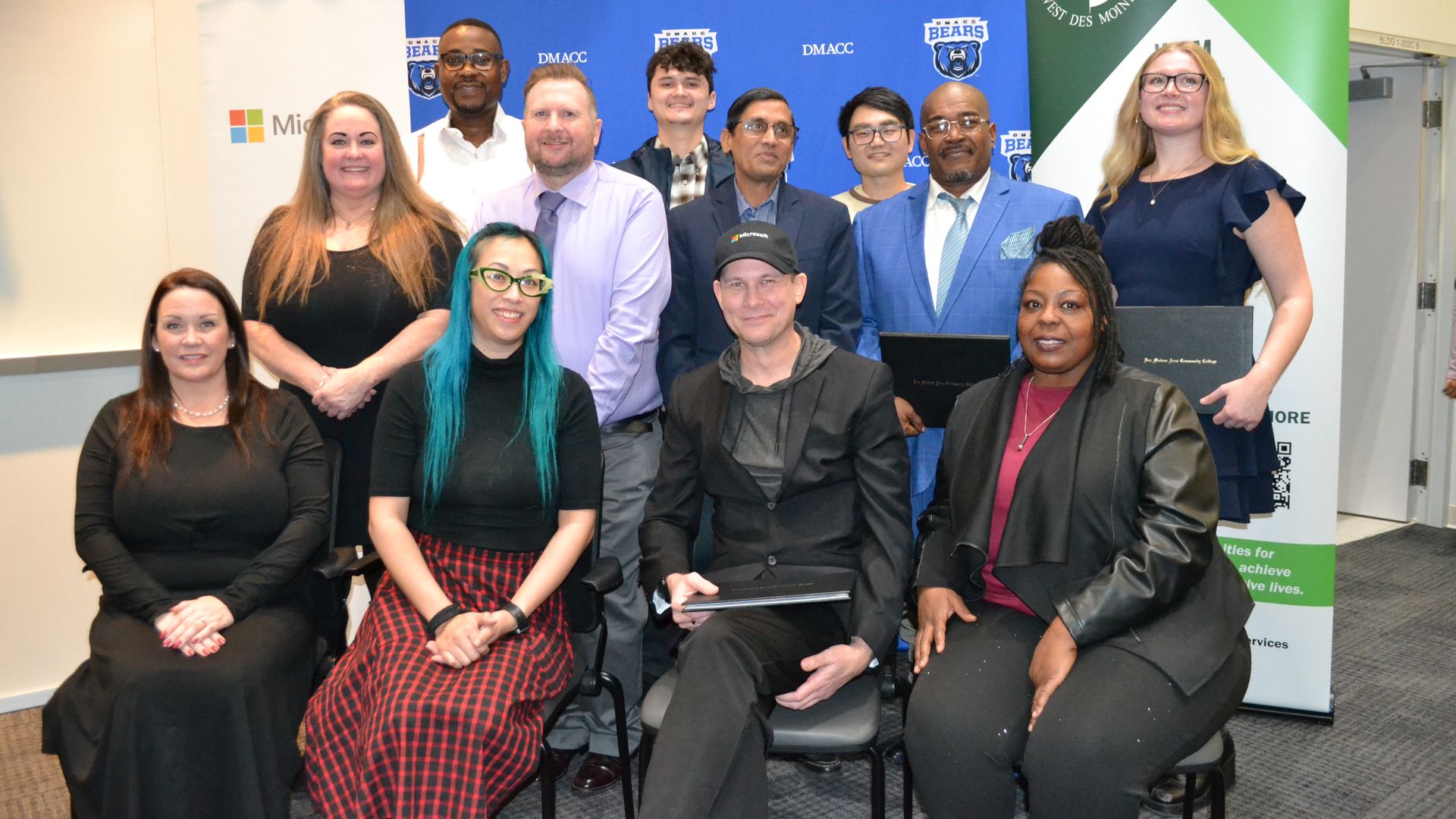
The West Des Moines data center academy cohort. Photo: Courtesy of Audrey Kennis
Ramero Jackson was at home, unable to continue his work as a truck driver because of a medical issue, when he stumbled across a post for a free data center training program through the City of West Des Moines.
Why it matters: Jackson, who was selected for the program last year, now works in Altoona at an IT company contracted by Meta after completing the 15-week course, which helps prep underemployed people for a career in the growing data center industry.
State of play: West Des Moines launched the program with funding from Microsoft and in collaboration with Des Moines Area Community College last year.
- Nearly 70 people applied. Fifteen were selected, and 14 completed the program. The selected students had to have used West Des Moines Human Services in some way, like the food pantry, clothing closet or utility assistance.
- Students continued to have access to the city's services, says human services director Audrey Kennis, noting the stability needed to pursue a new career.
- The cohort included high school and college graduates, immigrants and a wide age range. Two students were offered Microsoft internships, while the majority found data center jobs around the metro, which typically start around $24 an hour, Kennis says, with the potential to go up into $30+ an hour.
Zoom in: Jackson's wage is similar to what he made before, but he says the long-term picture is what matters, including a less physically demanding job and more room to advance and build toward retirement.
- Jackson was 50 when he enrolled, and says the experience has shown his kids and grandkids that it's never too late to learn something new.
- "Hopefully ... they see that with hard work and determination, they can do anything they want to do," he says.
What's next: West Des Moines is in conversations about bringing the program back for a second cohort, potentially in the fall.