Iowa's only native hare is steadily disappearing

Add Axios as your preferred source to
see more of our stories on Google.
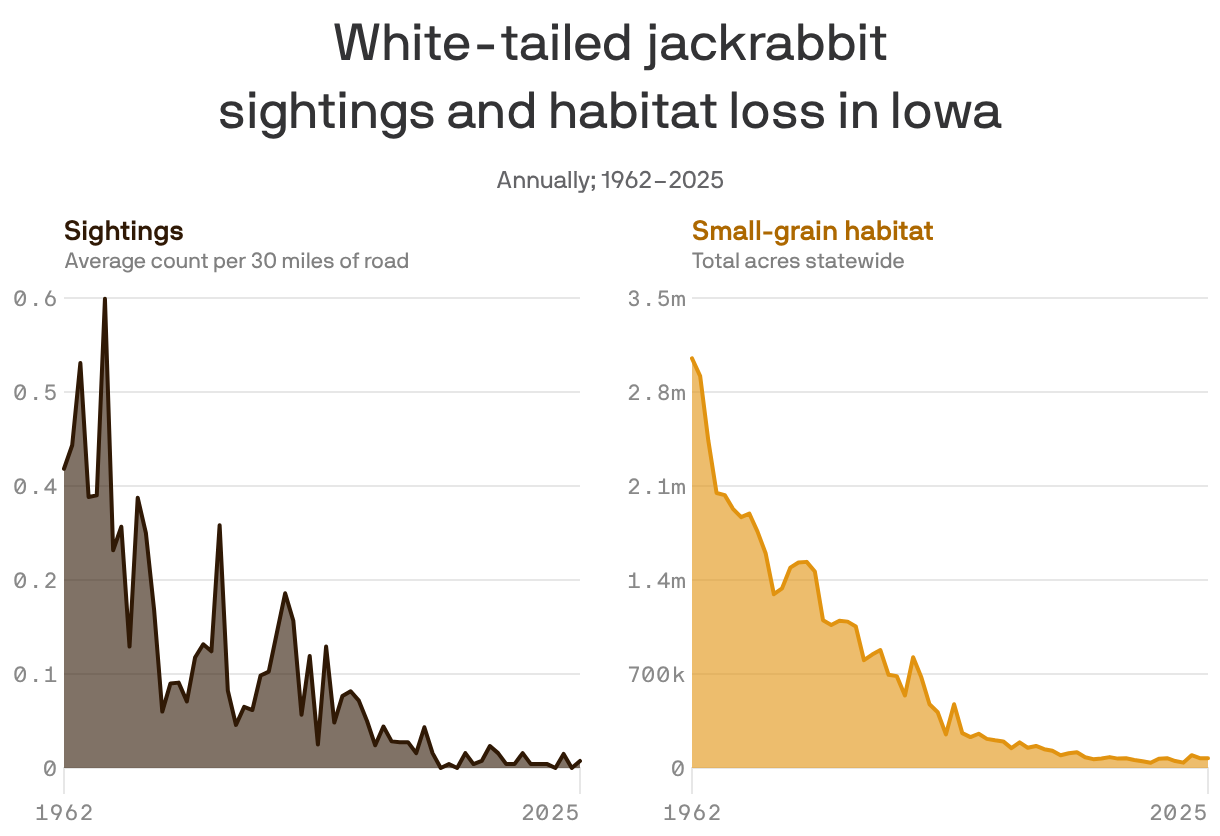
Iowa's only native hare is steadily losing population in the state due to farmland shifting from small grain crops to majority corn and soybeans over the decades.
Why it matters: The white-tailed jackrabbit, once common across northwest and north-central Iowa, now barely registers on the state Department of Natural Resources' annual statewide surveys.
State of play: The Iowa DNR has conducted roadside wildlife surveys since 1962, counting jackrabbits across 200 routes statewide.
- In the late 1960s, counts averaged around 0.6 rabbits per route.
- In 2008, the statewide count hit zero for the first time. The DNR ended jackrabbit hunting around 2011 because numbers had gotten so low that losing even a handful felt significant, DNR researcher Todd Bogenschutz tells Axios.
The big picture: Jackrabbits like wide-open, short-grass landscapes. They rely on speed and their vision to escape predators, and they need to see threats coming from a distance.
- Through much of the 20th century, Iowa farmers commonly used a rotation of corn, oats and hay, which provided a good habitat.
- Today's corn and soybeans grow too tall for jackrabbits to use, especially during their nesting period in the spring.
The intrigue: White-tailed jackrabbits, which are faster and bigger than regular rabbits, still occasionally turn up on survey routes, Bogenschutz says.
What's next: While they're not endangered, the Iowa DNR considers them a species of conservation need, though increasing the population will be difficult unless farmers grow more oats or switchgrass.
- The DNR is asking the public to report sightings online to help gather more information.