Pesticide liability fight shifts to Congress, Supreme Court

Add Axios as your preferred source to
see more of our stories on Google.
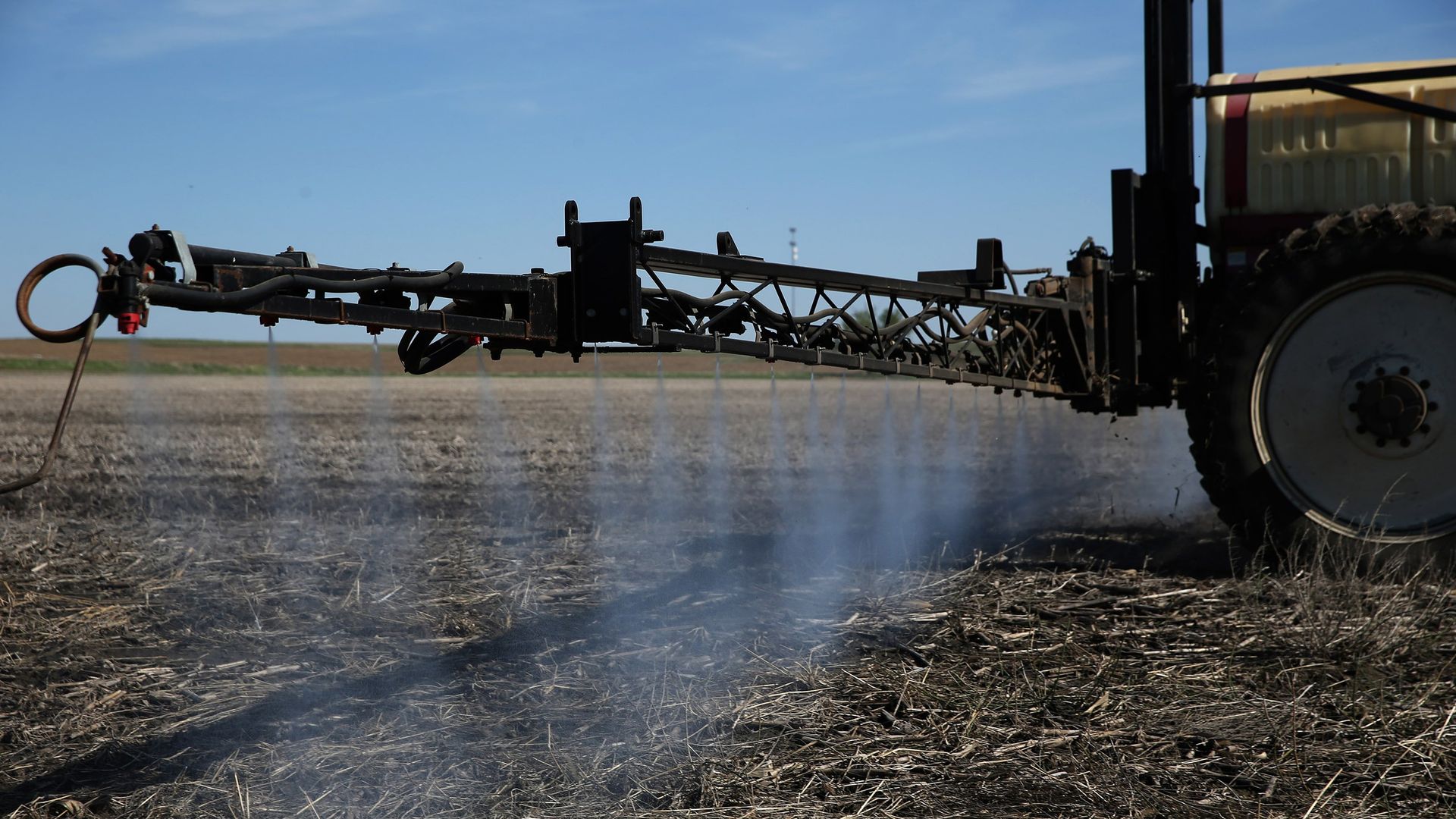
An Iowa farmer was the subject of a 2015 Chicago Tribune story as his family questioned whether a cocktail of Roundup for weed control prior to planting was necessary. Photo: Abel Uribe/Chicago Tribune/Tribune News Service via Getty Image
Pesticide and herbicide makers' efforts to shield themselves from future "failure-to-warn" lawsuits have shifted from farm states like Iowa to Congress and the U.S. Supreme Court.
Why it matters: Food safety, liability law and agriculture could see major changes in Iowa, a state with among the highest cancer rates in the nation.
Catch up quick: Litigation over Monsanto's weedkiller Roundup — whose main ingredient is glyphosate — exploded after the International Agency for Research on Cancer classified the chemical as a probable carcinogen in a 2015 report.
- Plaintiffs, many with non-Hodgkin lymphoma, alleged Monsanto/Bayer failed to warn users about cancer risks.
- Bayer has paid about $11 billion to settle roughly 100,000 claims. Iowa-specific payouts aren't public, but farm states account for many plaintiffs, with tens of thousands of lawsuits still pending.
State of play: Iowa's 2025 pesticide labeling fight was part of a broader national push backed by Bayer, with about a dozen states introducing legislation aimed at limiting cancer lawsuits based on state labeling requirements.
- Bills passed in North Dakota and Georgia make EPA-approved labels sufficient, effectively barring many failure-to-warn claims.
- A similar bill in Iowa was unsuccessful.
The latest: A rare bipartisan coalition of progressive advocates and leaders aligned with Make America Healthy Again (MAHA) last month helped defeat a provision in a congressional appropriations bill that would have prevented pesticides from carrying warnings on their labels about health effects beyond those recognized by the EPA, The Hill reports.
Yes, but: The focus is now shifting to the upcoming Farm Bill, where similar liability protections could be inserted into broader agricultural policy — a move some lawmakers and advocates say is likely as negotiations progress this year.
- Separately, Bayer is seeking Supreme Court review of pesticide labeling preemption issues — asking the court to rule that federal pesticide law bars state failure-to-warn suits if EPA labels don't require additional warnings.
What they're saying: Companies should not be punished under state laws for complying with federal warning label requirements, Bayer CEO Bill Anderson said in a statement after the Supreme Court agreed to review a labeling case.
- Anderson has said that the chemical is safe when used correctly and that its use is critical in feeding the world.
The other side: Federal efforts could preempt state laws, limiting citizens' ability to file lawsuits against manufacturers, George Kimbrell, co-executive director of the Center for Food Safety, a public-interest group based in Washington, D.C., tells Axios.
- The coordination among groups sends a clear signal to congressional leadership that the issue will face bipartisan resistance, Elizabeth Kucinich — former director of the center, and a supporter of Robert F. Kennedy Jr.'s presidential campaign in 2024 — said in a news release.
What we're watching: Whether "Farm Bill 2.0" includes provisions sought by companies such as Bayer and whether Iowa's congressional delegation will support it.