Iowa's income growth lags that of most other states


Add Axios as your preferred source to
see more of our stories on Google.
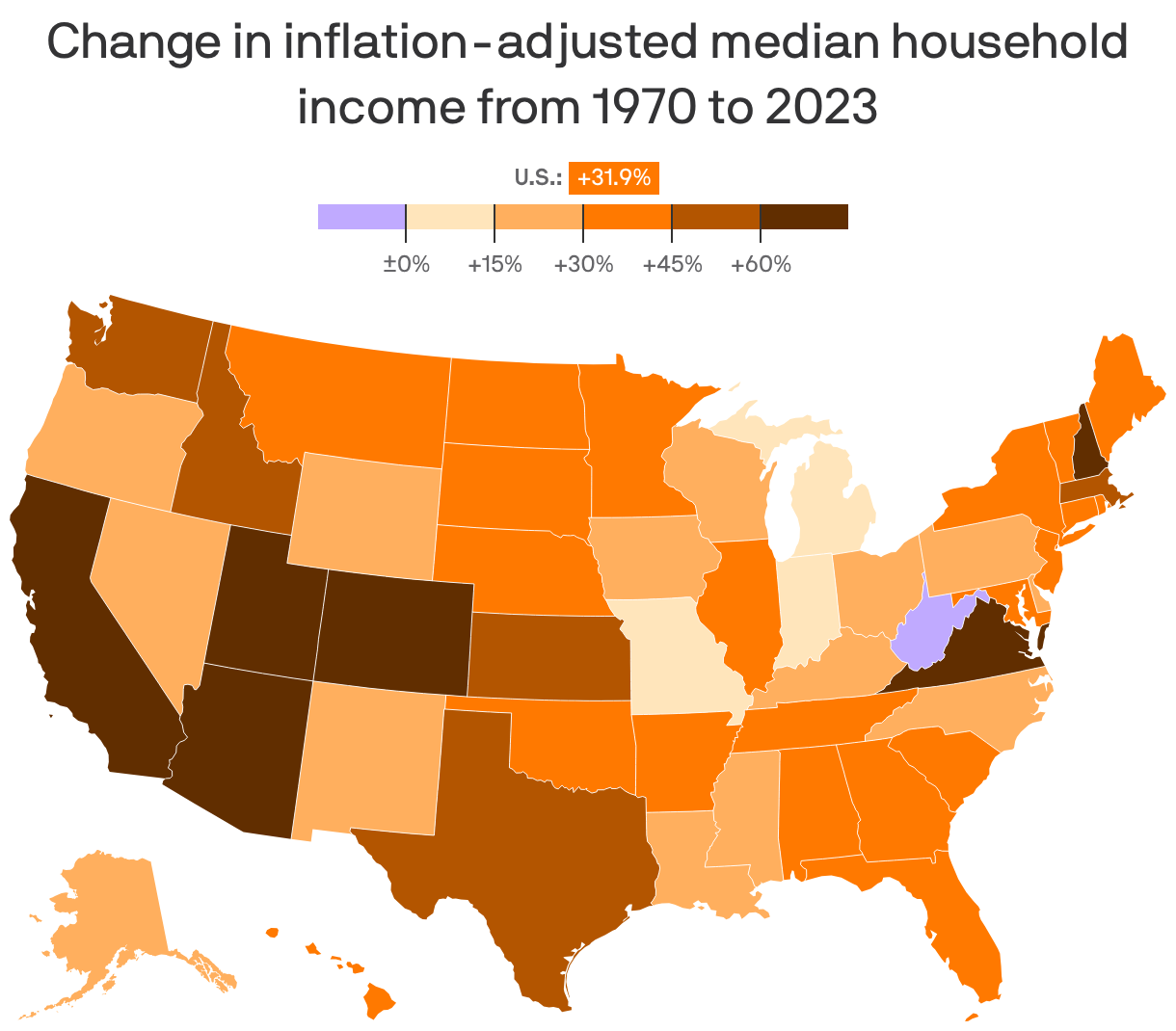
Iowans' incomes increased just over 20% over the past five decades but trailed the gains seen nationally, according to data from a new Urban Institute analysis.
Why it matters: Lagging income growth can make it harder for Iowa to attract and retain workers, especially younger professionals with more geographic flexibility.
By the numbers: After adjusting for inflation, Iowa's median household income rose from $59,325 in 1970 to $71,433 in 2023.
- The national median increased by nearly 32% over that period, from $58,930 to $77,719.
The big picture: Iowa's growth ranks among the 10 lowest in the nation.
- The lowest was West Virginia, which declined -0.4%.
Yes, but: Iowa's growth still outpaced two surrounding states — Missouri (+13.3%) and Wisconsin (+18.7%).
State of play: Income alone does not determine a family's prosperity, but it does offer a snapshot of economic growth.
- The most important factor tied to income change is educational attainment.
- Another contributor is immigrants: "This could be because immigration leads to economic growth, immigrants seek out growing areas, or both," according to the report.