Ankeny Regional Airport plans expansion, attracting bigger jets

Add Axios as your preferred source to
see more of our stories on Google.
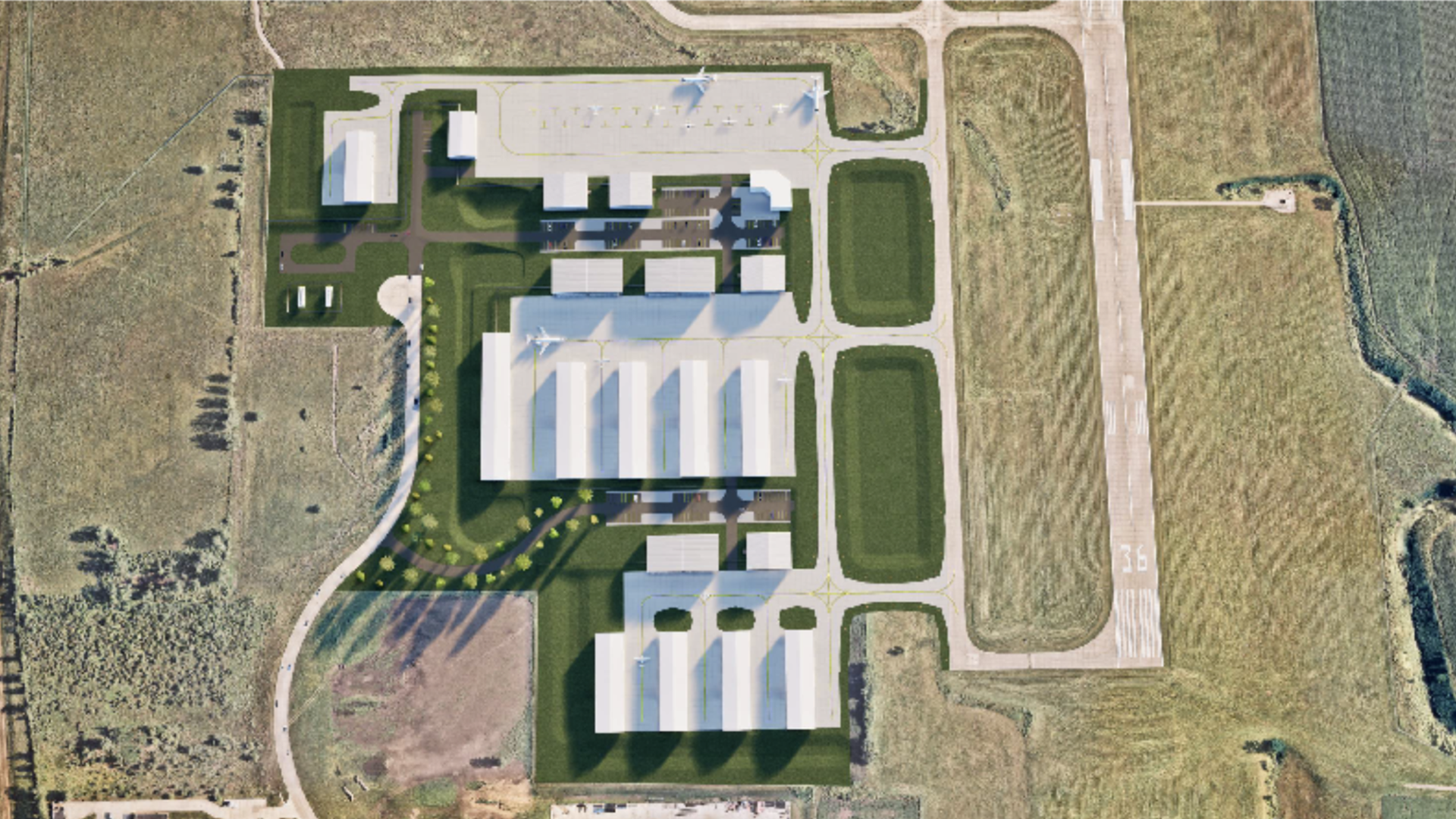
The proposed South Corporate Terminal. Rendering: Courtesy of Ankeny Regional Airport
While the Des Moines airport's growth is getting the spotlight, the Ankeny Regional Airport is quietly taking off, too.
The big picture: The smaller airport mostly serves private clients, including Fortune 500 companies, caucus candidates and entertainers.
Driving the news: This spring, the airport is renovating and extending its milelong main runway, adding 500 feet to the north to accommodate larger jets that previously couldn't land at the facility.
- After securing Federal Aviation Administration funding, the runway will be reconstructed in the spring, costing costing $12+ million. Planes will need to go elsewhere or use the airport's shorter runway for a month.
- "This 500 feet is going to increase the economic viability of our airport," airport manager Paul Moritz tells Axios.
State of play: As Ankeny and the Des Moines metro grow, demand for more hangar space and improved infrastructure at the regional airport is increasing, he says.
- Fast-growing Casey's is headquartered nearby and recently built a large new hangar. Iowa State Patrol, which conducts aerial traffic enforcement, also built a hangar.
- The 84 leasable smaller hangars at the airport are full and there's an 80-person waitlist, Moritz says.
What's next: The airport is also eyeing building a second terminal on its 35 acres off the South Corporate Woods Drive interchange, near the Iowa Department of Transportation station
- The current terminal is nearly maxed out, and the South Corporate Terminal project would allow additional hangars and more traffic. Estimated costs for some of its initial phases are around $9 million.
Between the lines: Plans are still far off and there's no guarantee another terminal will be built, especially with rising costs in construction and obtaining funding, Moritz says.
- The airport is funded by federal and local tax dollars, and though the area's tax base has grown, costs such as metal for hangars have outpaced increased funding.
- Lease payments made by people who use the hangar and the land also help fund the airport.
What they're saying: "From an economic standpoint, it's very good to have a busy airport that has a lot of business flights coming in and out," Moritz says. "These companies want to be here."