Robotaxis could wreck parking revenue, airport official warns

Add Axios as your preferred source to
see more of our stories on Google.
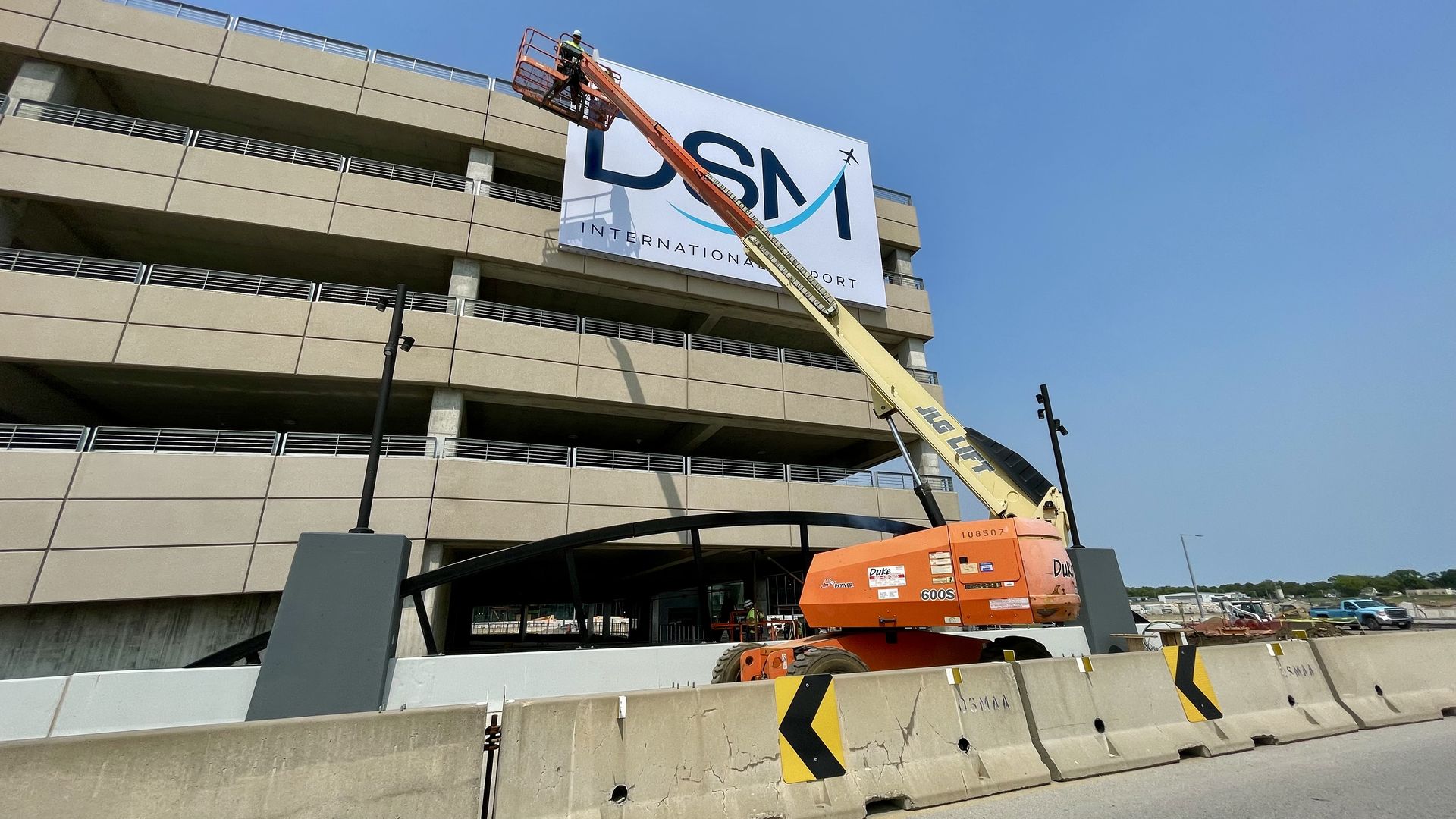
Crews installed signs on a new $49 million Des Moines International Airport parking garage in June. Photo: Jason Clayworth/Axios
Self-driving vehicles could significantly reduce revenue at Des Moines International Airport, CEO Brian Mulcahy told the Des Moines City Council last week.
Why it matters: The airport's operational budget relies heavily on parking revenue, which is expected to bring in nearly $22 million — about one-third of the airport's total revenue — in the upcoming fiscal year starting next June.
- A significant move toward autonomous ride services could threaten that funding source.
State of play: The airport owns or manages most of the nearby parking, including a 1,122-space ramp that opened this year.
- The $49 million ramp had been in planning stages for years as part of the airport's ongoing expansion, with parking demand included in its ongoing budgets.
Yes, but: Commercial autonomous ride services like Waymo, which weren't a reality when DSM's airport expansion planning started, are now rapidly gaining popularity.
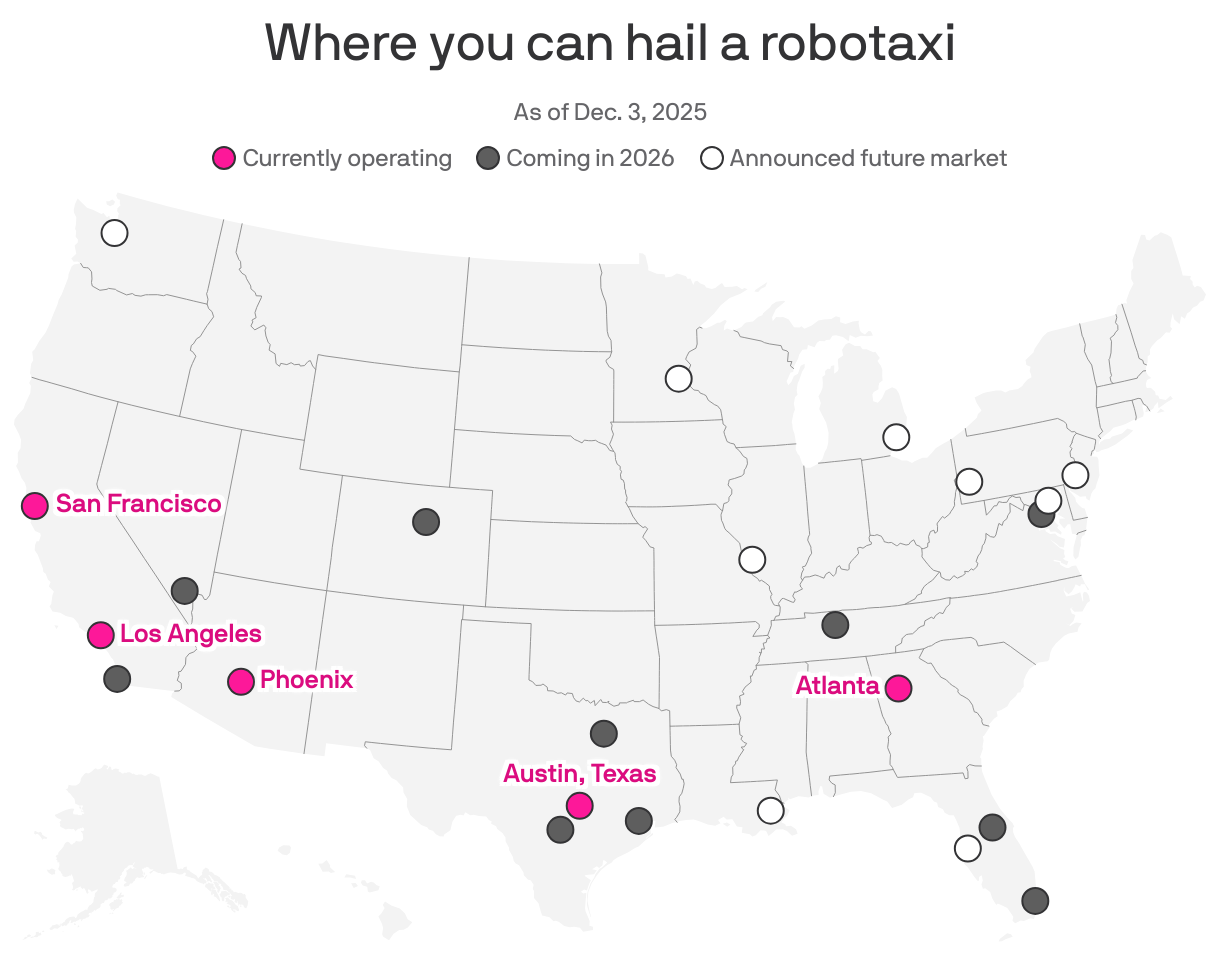
- They're already cruising in Atlanta, Austin, Los Angeles, Phoenix and San Francisco.
- Almost 20 additional markets in cities such as Minneapolis and St. Louis have been announced, with many anticipated to start service next year.
What they're saying: As robotaxis expand, fewer travelers might drive themselves to the airport, Mulcahy said during last week's council meeting.
- "The future advent of robotaxis and things like that are really kind of a concern because that could seriously impact quite a bit of our revenue," he said.
The other side: Since 2022, Waymo has partnered with some airports and has not been informed that the service reduces parking needs or revenue, the company said in an unattributed statement to Axios.
- Company officials declined to comment on Mulcahy's statements.
The intrigue: The airport parking industry has for years wrestled with revenue hits linked with a surge in ride-hailing services like Uber and Lyft, the New York Times reports.
- Mulcahy didn't give the council examples of other airports affected by robotaxis, saying DSM officials believe they'll have a clearer understanding of its potential impacts in the coming years.
Between the lines: Shared autonomous vehicles could greatly affect transportation systems, speeding up the move away from car ownership and helping to reduce traffic congestion.
- That could mean fewer parking lots, gas stations, and even streets will be needed in the future, Darrell West, a fellow at the Brookings Institution's Center for Technology Innovation, wrote in a recent paper.
What we're watching: How quickly commercial autonomous vehicles — especially robotaxis like Waymo's — expand beyond big metros into smaller cities.