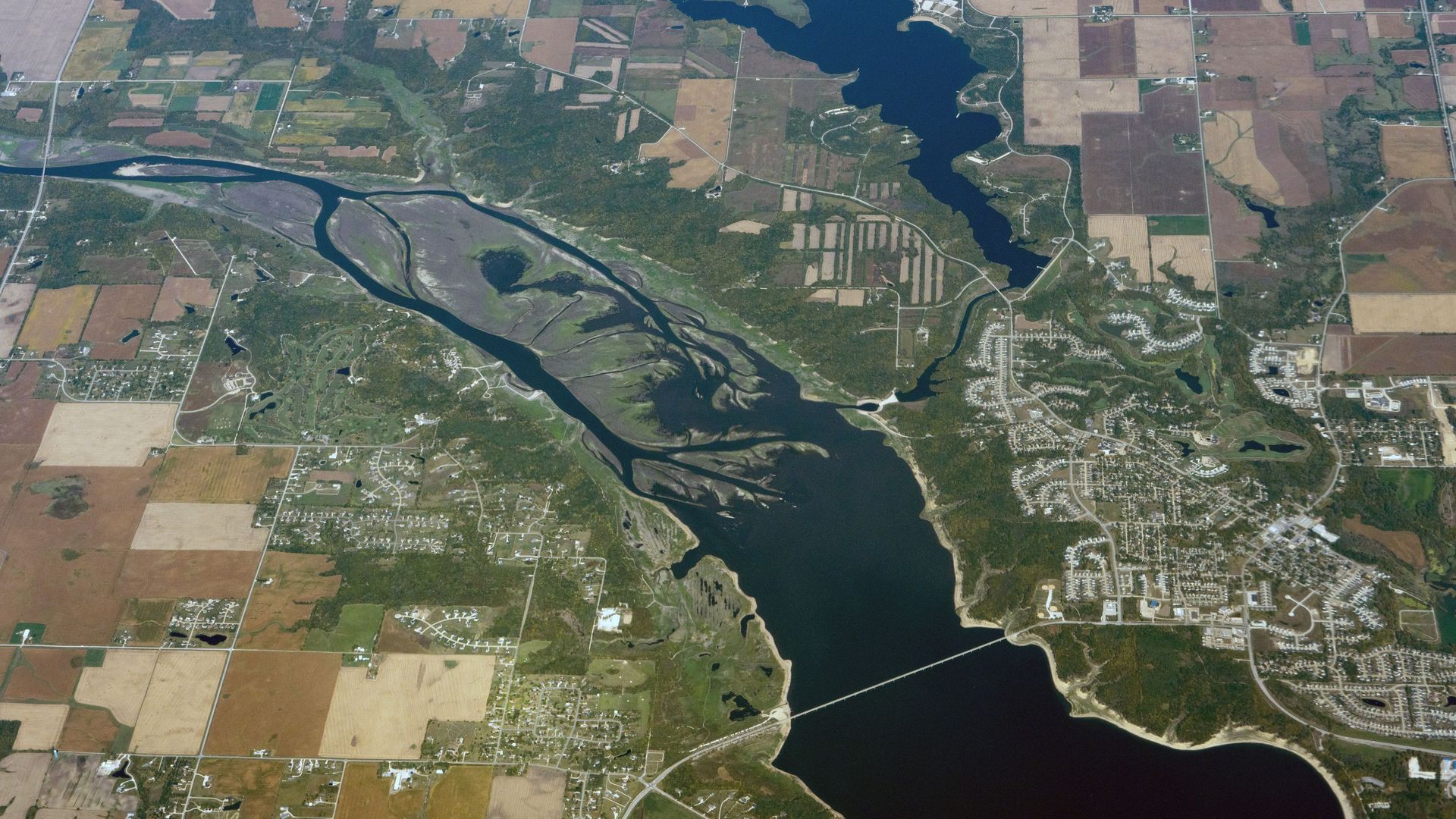
Saylorville Lake, a reservoir on the Des Moines River near Camp Dodge. Photo: Marli Miller/UCG/Universal Images Group via Getty Images
Minnesota required farmers to implement buffer strips in 2017, which are planted between cropland and waterways to slow erosion and filter pollutants before they reach the water.
Iowa incentivizes and helps farmers add buffer crops through the state's Nutrient Reduction Strategy — though it would need dramatically more to make a dent in the state's nitrate levels, per American Public Media.
CAFO oversight: Minnesota requires most large animal confinements to hold federal National Pollutant Discharge Elimination System permits, which impose more comprehensive rules for facilities that discharge waste into waterways.
But states are in charge of determining what CAFOs need permits.
In 2023, Minnesota had 1,566 CAFOs and 1,009 had permits. Iowa had 4,025 CAFOs, but only 157 permits. Neighboring Nebraska had 1,555 CAFOs and 489 permits.
Iowa lawmakers have recently considered requiring medium and large CAFOs to obtain permits, though those efforts have not passed in the Legislature. Iowa's medium and large CAFOs have to follow the state's manure management plan.
Nitrogen application: Minnesota also has restrictions on fall and winter manure application.
Iowa doesn't allow manure application on frozen or snow-covered ground. The state does allow it in the fall, but because there aren't crops on the ground, it can lead to more nitrogen loss, Schmidt says.