The raid that changed Postville

Add Axios as your preferred source to
see more of our stories on Google.
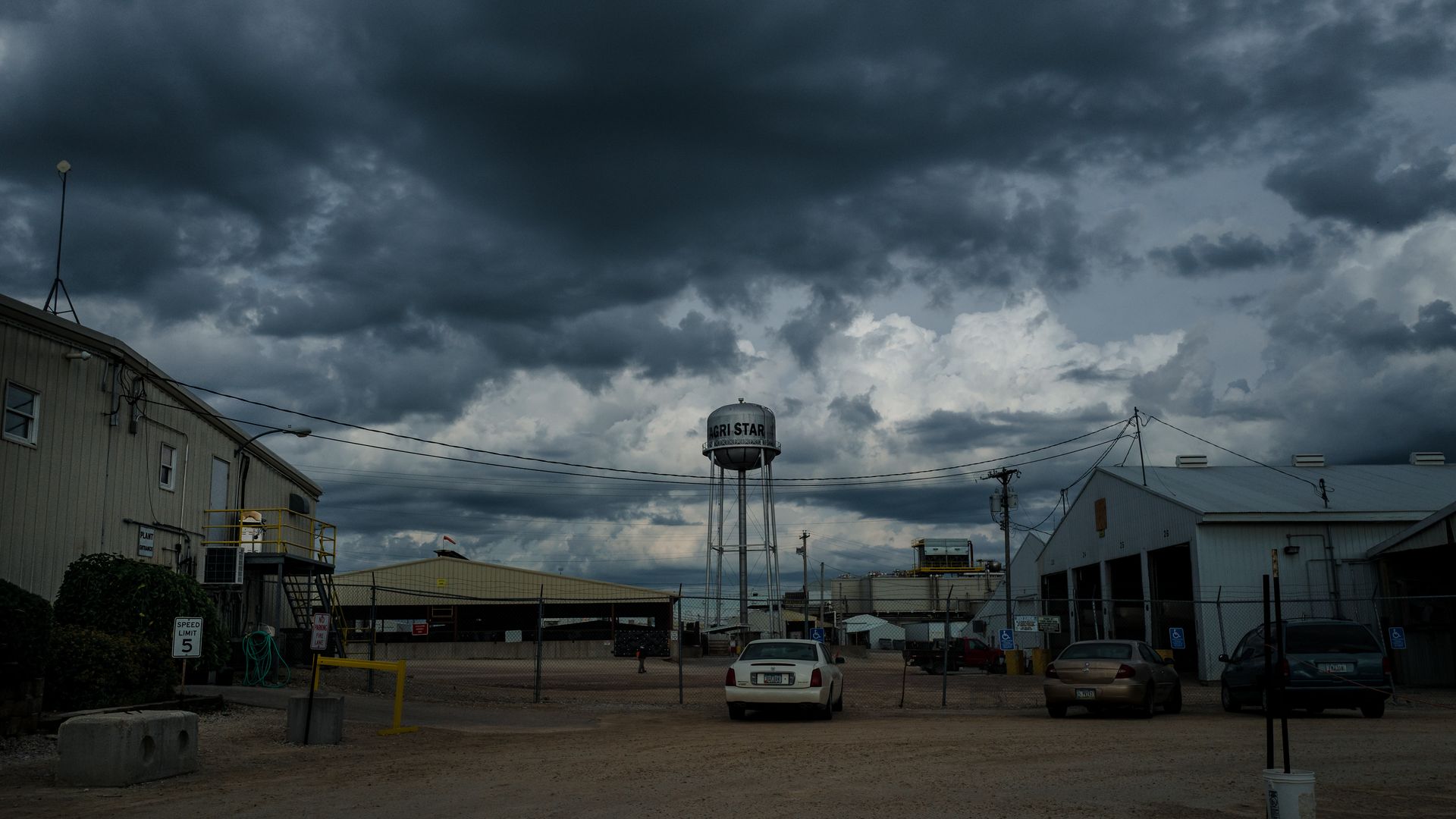
Photo: Ryan Christopher Jones/The Washington Post via Getty Images
It's been 17 years since helicopters and federal customs agents surrounded Postville, Iowa, and conducted the largest immigration raid in history at the time, with 389 people detained and 287 ultimately deported.
Why it matters: "I actually think that Postville raid was, in a sense, a microcosm of what we are experiencing today," says Sister Mary McCauley, a local retired nun who served at St. Bridget Catholic Church in 2008.
Flashback: In 1987, Agriprocessors, a kosher meatpacking plant, opened in town. It was the largest plant of its kind at the time and attracted a Hasidic Jewish population to fill management posts, as well as workers from Mexico and Guatemala.
- In 2006, Jewish publication Forward reported abusive labor practices endured by immigrants inside the plant, including shortened paychecks, lack of safety training and workers who lost limbs to machines.
The May 2008 raid on Postville was at the time the largest in U.S. history, per CBS.
- Former Agriprocessors CEO Sholom Rubashkin was later convicted in a series of immigration offenses and fraud charges, resulting in a 27-year sentence, CBS reports. President Trump commuted his sentence in 2017.
- Managers pleaded guilty to charges of harboring.
Zoom in: The raid split families. Some workers were deported, and others returned from detention to their kids five months later with ankle monitoring bracelets on, McCauley says.
- University of Michigan researchers found that the trauma of the raid resulted in local Latina mothers giving birth to lower-weight infants at higher rates.
The other side: U.S. Immigration and Customs Enforcement (ICE) did not respond to Axios' requests for comment.
- Since January, the White House's crackdown on immigration seems to have caused 1.5 million immigrants to leave the country, according to data published this month by Pew Research.
- The labor force in June was composed of 19% immigrants, which is a decrease of one percentage point, or 750,000 workers, compared with last year, according to Pew.
Some residents say they still feel aftershocks from the raid nearly 20 years later, and some families are still dealing with similar situations.
State of play: The Agriprocessor facility was sold in 2009 and became Agri Star Meat & Poultry. It remains the town's largest employer, with over 300 employees.
- Bob Schroeder, a Postville resident, told KCRG in January that Postville has "never quite returned" after so many people were deported and others fear a new raid. Next door in Omaha, a June ICE raid at Glenn Valley Foods took half of its workforce.
- "The biggest thing was the kids ... kids lost their parents," Schroeder said.
The intrigue: Despite its 2,500-person population, Postville's town slogan is "Hometown to the World," due to its diversity, with 30% of residents born outside the U.S.
- About 60% of Postville households speak a language other than English, compared with just 9% of the state, according to 2023 U.S. Census data.
What they're saying: McCauley says comprehensive immigration reform for workers still has yet to come, despite the country having had both Democratic and Republican presidents since 2008.
- In the aftermath, McCauley says, locals in Postville worked to rebuild their community, offering food, places to stay or simply a welcoming attitude.
- "I can still see the face of a young gentleman when he came back (in 2008) after he had served about three months in prison and he just said, 'Why do people hate us?'" McCauley said.
The latest: In Ottumwa, 200 workers had their legal visas revoked this summer after Trump ended a Biden-era program providing temporary protections for people from certain countries.