Heavy rains are spreading lawn diseases and fungus

Add Axios as your preferred source to
see more of our stories on Google.
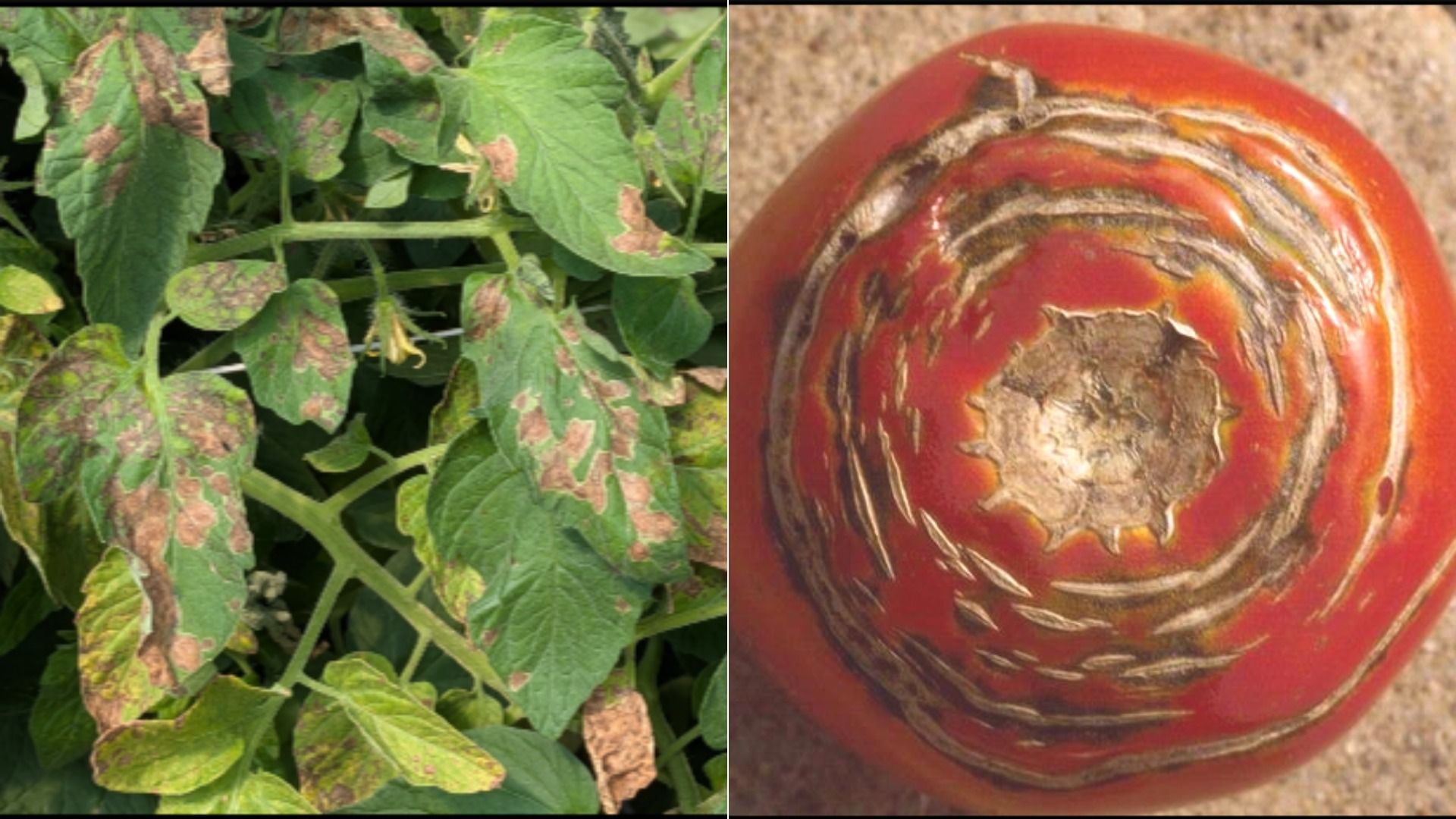
Photos: Courtesy of Iowa State Extension
This year's heavy downpours and intense heat have left Iowans with cracked tomatoes, mildew-covered flowers and lawns speckled with orange rust.
State of play: The combination has prompted more gardeners to reach out to Iowa State this summer to ask for help on their yards and projects, says Aaron Steil, consumer horticulture extension specialist at Iowa State University.
Driving the news: The wet weather has revived plant diseases and pests not seen in years, Steil says.
- Summer annual weeds such as crabgrass, purslane and lambsquarters are "having a great time," Steil says. He advises cutting them before they go to seed, which can prevent bigger problems next year.
- In grass lawns, diseases like rust fungus (which leaves an orange residue on shoes) and leaf spot are also on the rise, particularly in shady or poorly drained areas.
Zoom in: The more extreme weather has also slowed tomato ripening and supercharged weeds, Steil says.
- Tomatoes are staying green for longer, due to high temperatures above 86°, which slows their photosynthesis process.
- And once they ripen, gardeners are finding cracks on their produce from their sudden growth due to the heavy rainfall. They may look unappetizing, but they're still good to eat, Steil says.
- Powdery mildew has also been more common on plants like lilacs, bee balm and garden phlox.
What's next: Keep harvesting even damaged produce to encourage new growth through early October, Steil says. Removing diseased plants helps reduce reinfection next year.
- For perennials: Relocate plants prone to mildew into sunnier spots in late August or early September. Water at the base to avoid wetting leaves.
And for lawns: Fertilize in fall, reseed bare spots now, and avoid trying to grow grass in deep shade.
- Fungicides aren't usually worth the cost for home lawns.