Casey's skips the Buc-ee's bloat

Add Axios as your preferred source to
see more of our stories on Google.
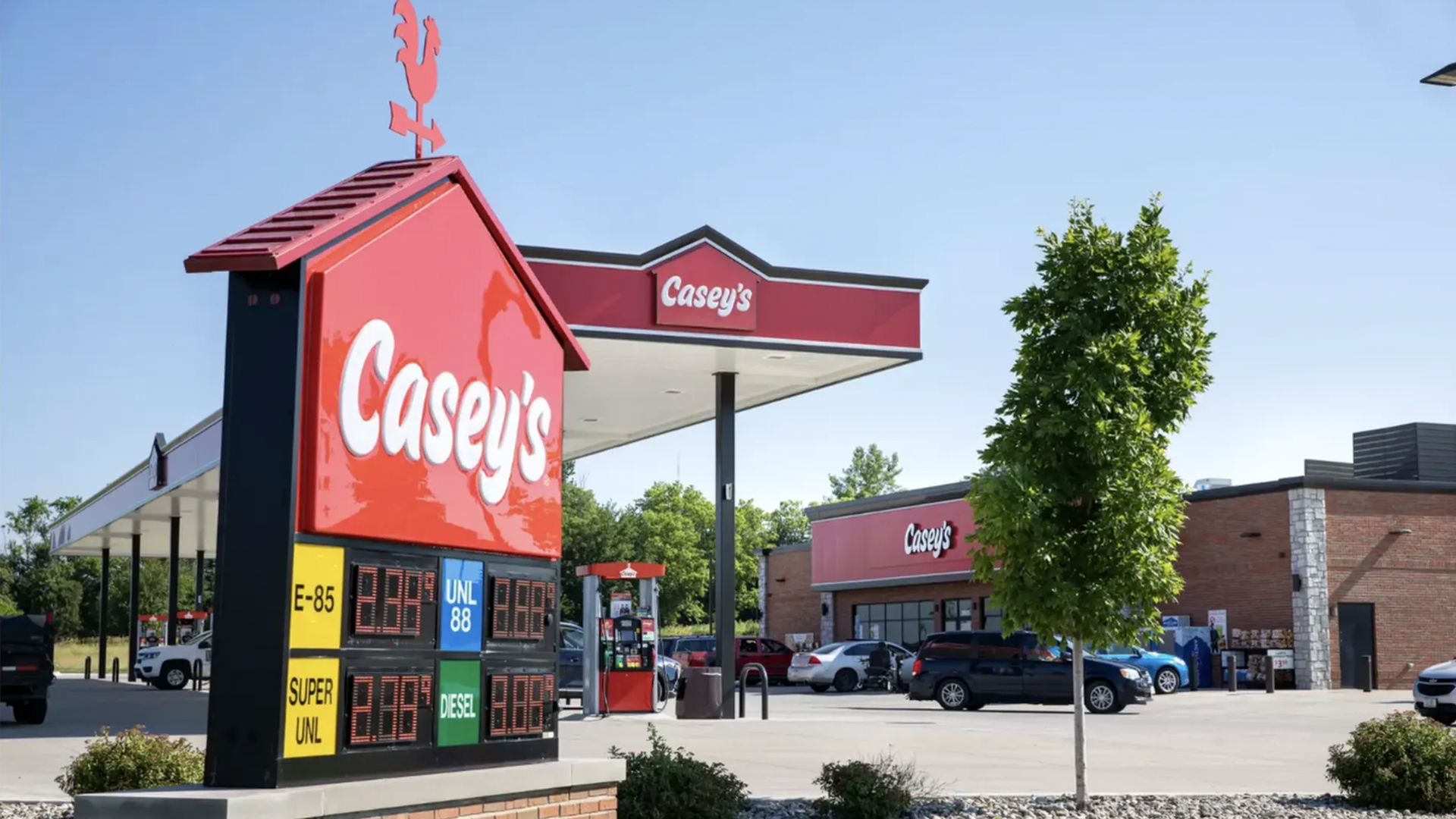
Photo: Courtesy of Casey's
Bigger isn't always better — at least that's what Casey's is betting on for the time being.
The big picture: Gas station companies nationwide are building bigger stores to encourage customers to stay and browse, especially as more electric vehicles hit the roads.
State of play: During a Q&A with reporters this month, Casey's CEO Darren Rebelez noted that while EV customers stay at the gas station to charge for 30 minutes — most return to their cars after making their purchases inside.
- "If we see a trend where people want to spend more time in the actual store, then we'll have the ability to accommodate that," Rebelez said. "But from what we've seen so far, they prefer to actually spend the time in the car."
By the numbers: Casey's is already larger than the average gas station because of its kitchen, Rebelez said. The average size of a store is 2,500 to 4,000 square feet, per CSP.
- Meanwhile, Sheetz on the east coast is expanding its stores, averaging 7,000 square feet and adding drive-thrus, the New York Times reports.
- QuikTrip, which is expanding in the Midwest, averages 7,000 square feet.
- Buc-ee's, the southern gas station, has locations as big as 75,000 square feet.
Yes, but: Some communities want more say on where gas stations go. Denver is barring new gas stations within a quarter-mile of an existing one.
- Some Windsor Heights residents did not want Casey's to open near a Kum & Go off University Avenue last year, saying they wanted to use the space for a more unique development, the Register reported.
- It was ultimately built after council approval.