Mapped: Iowa's childhood hunger crisis

Add Axios as your preferred source to
see more of our stories on Google.
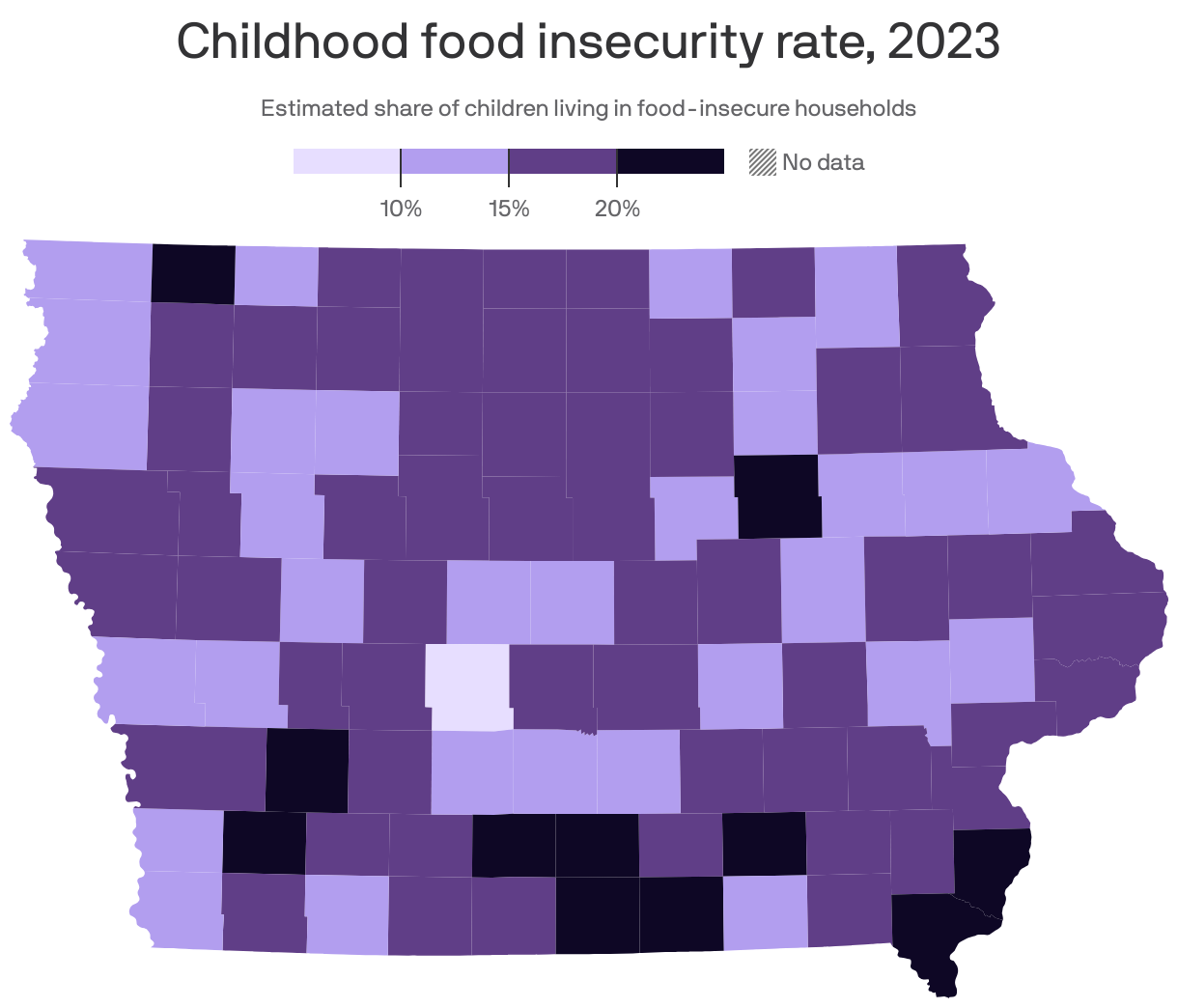
About 1 in 6 children in Polk County live in food-insecure households, per new estimates first shared with Axios from Feeding America, a nationwide network of food banks.
The big picture: Potential cuts or changes to federal food aid programs like SNAP and food tariffs could affect millions of Americans and exacerbate the childhood hunger crisis.
By the numbers: Nearly 20,000 Polk County kids didn't have enough to eat or didn't know where their next meal would come from in 2023, per the report.
- That's about 7,000 more children than in 2021.
- Statewide, Iowa's rate of child food insecurity was 16.6% in 2023, affecting just over 120,000 children. That's an increase of about 51,000 kids since 2021.
State of play: The end of pandemic-era assistance programs and Iowa's prior rejection of over $29 million in federal summer food assistance for children contributed to the metro's recent challenges, advocates for families have said.
Zoom in: More than a third of working households in the DSM metro area do not earn enough money to cover a bare-bones budget, according to a report released last month by United Way of Central Iowa.
- Area food pantries have had record monthly demand multiple times over the last two years.
The latest: State government officials announced this month that they will launch a pilot program as an alternative to the previously rejected summer cash benefit card assistance.
The big picture: Nationally, an estimated 14 million, or 1 in 5, children live in food-insecure homes, per the report.