Transit redesign reopens contentious debate

Add Axios as your preferred source to
see more of our stories on Google.
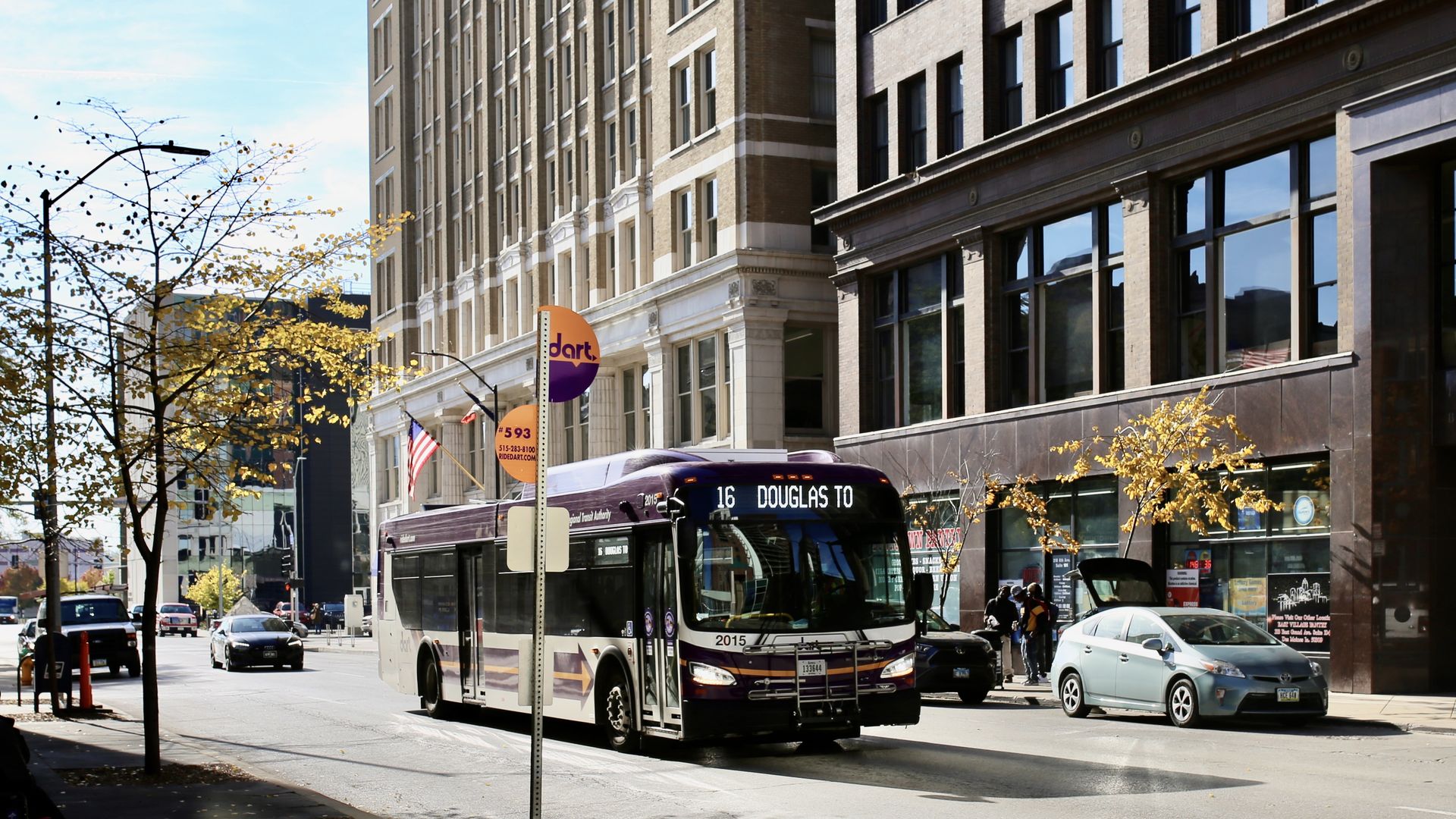
Just over 55% of Axios DSM readers who participated in our poll this week said they prefer DART's high-ridership redesign concept. Photo: Courtesy of DART
As DART prepares to redesign its network, the agency will revisit whether metro cities' payments are still fair, CEO Amanda Wanke told the Des Moines City Council this week.
Why it matters: The discussions may complicate upcoming service decisions after years of budget challenges and what Wanke described as "precarious" suburban membership linked to cost-sharing agreements.
Catch up quick: DART provides millions of rides yearly, with a dozen metro governments paying about 70% of its $43.4 million annual budget.
- A new contribution formula is being phased in over the next four years, requiring DSM to pay a more significant share of the costs to better align with the service it receives.
- DSM is considering increasing its franchise fee on gas and electricity from 5% to 7.5% to cover its share.
Yes, but: Some metro cities have questioned the service's value for their residents.
- Grimes and Pleasant Hill are pulling their membership this July and in 2026, respectively — a move that yanks DART's regular bus services from those communities and reduces the agency's budget by more than $1 million annually.
- Grimes this month hired a new transit service.
State of play: DART's "Reimagine" project to modernize and better align services with current travel patterns will be implemented in summer 2026.
- The agency is currently soliciting public feedback on two general concepts: focusing services in busy areas or providing broader coverage across the metro with less frequency.
Zoom in: The redesign will affect the number of miles driven in each community, requiring the agency to revisit its financial tier system later this year, Wanke said during the DSM City Council presentation.
What they're saying: DSM Councilperson Linda Westergaard questioned the fairness of city residents facing higher franchise fees while their suburban counterparts will pay a lower share of DART's expenses in the coming years.
- City manager Scott Sanders said the rhetoric that "feels like there's a charity aspect" to DSM needs to change, saying that its population attracts a more significant share of federal revenue to the agency, which is not often recognized.
The other side: Wanke said she recently made a presentation before the Ankeny City Council and councilmembers feel what they pay compared to the services they receive is "very out of whack."
What's next: The DART Commission will meet on May 6 to consider community feedback on a ridership- or coverage-focused system.
- A final vote on funding levels and service direction is scheduled for May 19, with a new draft of its service network anticipated in August.