Iowa's iconic butterfly at risk amid population threats

Add Axios as your preferred source to
see more of our stories on Google.
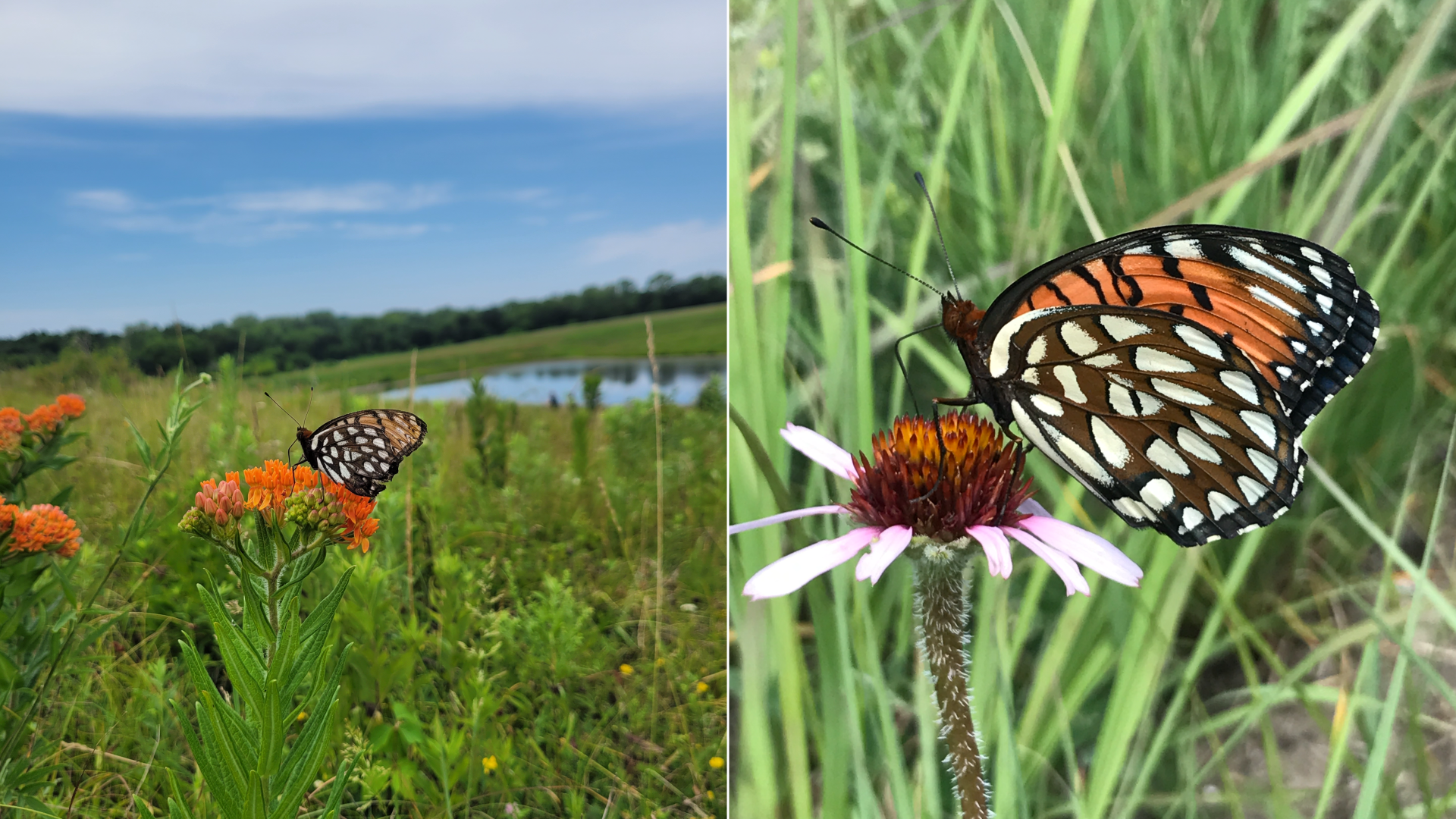
Photos: Courtesy of Jessica Fliginger and Iowa DNR
Regal fritillaries, the iconic butterflies of Iowa, are facing an increasing threat of population decline.
Why it matters: Fritillaries rely on vast, untouched prairie lands, yet with only 0.1% of Iowa's original prairie remaining, the Iowa DNR has classified them as a species of "special concern."
Driving the news: The U.S. Fish and Wildlife Service announced last month it may classify the regal fritillary as a threatened species, which would grant it protection.
State of play: They're big, flashy, beautiful butterflies that look similar to monarchs, but are unique in their ways, Stephanie Shepherd, a DNR biologist, tells Axios.
- Fritillaries, unlike monarchs, remain in Iowa throughout the year and lay eggs annually.
- For survival, they need 20-40 acres of undisturbed prairie containing bird's-foot and blue prairie violets.
- In central Iowa, the butterflies can be found at Chichaqua Bottoms Greenbelt.
What's happening: Females are laying eggs, which will hatch before winter.
- The larvae will feed on violets in the spring, breed and continue the cycle.
Yes, but: The violets they rely on are the first to vanish when prairies are disturbed.
- Their seeds are also pricey and are rarely included in prairie restoration mixes.
The intrigue: Regal fritillaries are so deeply connected to Iowa that several efforts have tried to have them designated as the state's official butterfly. (Lean in close, and you might hear an "ope" from them.)
What's next: For the last two summers, the Iowa DNR has conducted special surveys to monitor its populations.
- Shepherd says there's hope. Fritillaries have been found on reconstructed prairies that incorporate the species' violet of choice.
- The DNR plans to use more violet seeds as it plants new prairies.