Iowa's dwindling prairie-chicken population

Add Axios as your preferred source to
see more of our stories on Google.
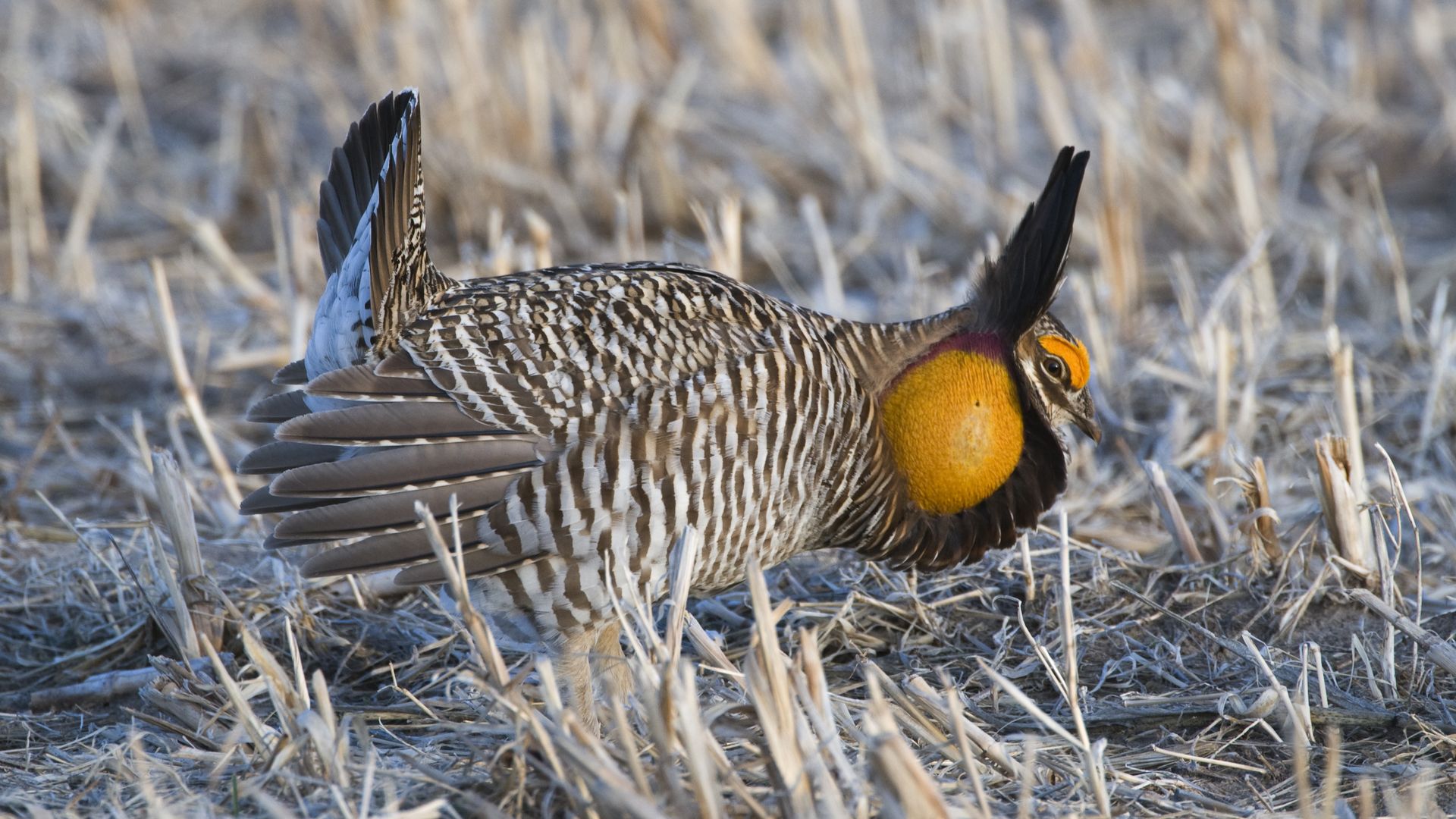
A greater prairie-chicken in the Nebraska Sandhills. Photo: David Tipling/Education Images/Universal Images Group via Getty Images
Tens of thousands of greater prairie-chickens once roamed Iowa's abundant grasslands, but these days only 60 remain and the state is watching that number drop.
Why it matters: Habitat loss has resulted in a roller coaster journey for the unique chickens, whose survival can indicate healthy grasslands ecosystems.
Threat level: If they're unable to recoup, they may not have a future in the state where they once thrived, says Stephanie Shepherd, an Iowa Department of Natural Resources biologist.
Driving the news: To draw attention to them, the DNR will host its annual "Prairie Chicken Festival" at the Kellerton Grasslands Bird Conservation Area on April 6 — a little over an hour south of Des Moines.
- Starting at dawn, curious spectators are invited to watch the birds' courtship "dance," where males stamp, puff out their chests and call out to females.
Zoom in: Greater prairie-chickens are similar in size to today's common chicken, but what makes them unique are the males' bright orange air sacs and their "famously acrobatic" courtship dances.
Catch up fast: In the 1800s, prairie-chickens were prominent across Iowa, but they died out in the 1950s due to loss of grasslands and unregulated hunting.
- They were reintroduced in the '80s near the Loess Hills, but struggled to thrive because of too many trees and a lack of genetic diversity.
- The species was reintroduced again around Kellerton from 2012-2017 with some initial success as 25 to 50 birds became 100 to 150, Shepherd says.
Yes, but: In the last few years, their population has shrunk back down to just 65 to 70 birds. A self-sustaining flock is 800 birds.
- "We don't have the right and enough habitat for them," Shepherd says.
How it works: Prairie-chickens not only need "enormous" stretches of grass for survival, but they also want a diverse mix of grasslands to thrive, she says.
- They want short grass for breeding, thicker grass for nesting and open areas once they're brooding.
Zoom in: While Kellerton offers the best public grassland in Iowa, it's still not enough to support a full population of prairie-chickens.
- The area provides about 6,000-7,000 acres of grassland, but some researchers believe the chickens need 50,000 acres for a viable population.
Zoom out: Other Midwestern states have been able to host stable populations, including Kansas, Nebraska and South Dakota.
- But even those have been decreasing, Shepherd says.
What's next: The DNR will continue to monitor the prairie-chickens for the next 10 years and assess whether Iowa can support a population.