How Irish immigrants settled across Iowa

Add Axios as your preferred source to
see more of our stories on Google.
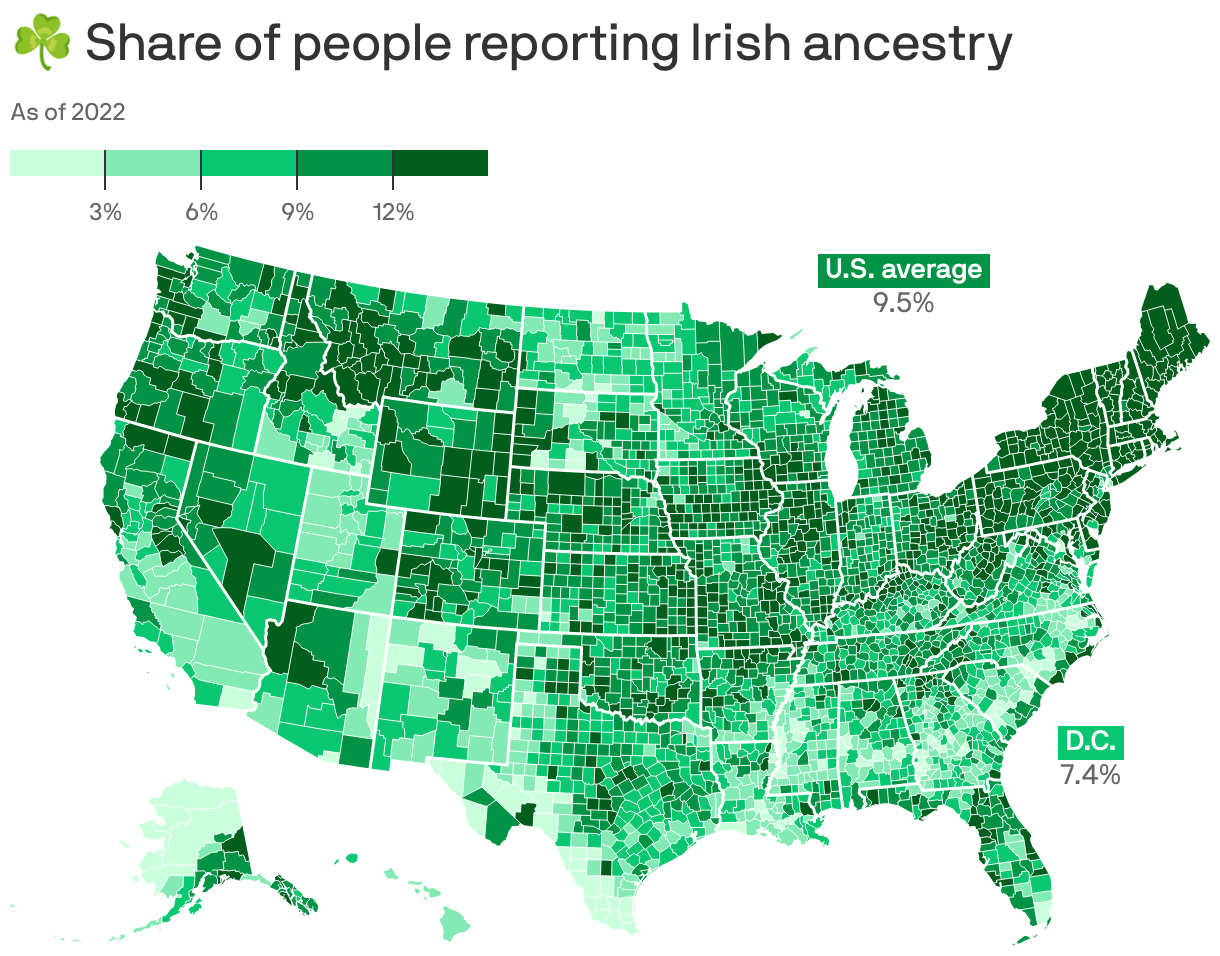
St. Patrick's Day is Sunday and we're celebrating how Irish immigrants helped shape the state.
Why it matters: Iowa's Irish immigration story isn't much different from what draws immigrants here today — the push from inhospitable lands and the pull of a more fertile place to call home.
- Today, 13% of Polk County residents claim Irish heritage. That's higher than the national 9.5% average.
Flashback: Land on Iowa's east side became available to immigrants after settlers displaced native tribes from the Black Hawk War in 1832.
How it started: While some Irish immigrants worked in Dubuque's mines early on, their big growth in the area came during Ireland's Great Famine of 1845-1852.
- After arriving on the East Coast in the U.S., many decided to move west after hearing from churches and family members about Iowa's fertile land near the Mississippi, especially Dubuque and Davenport.
State of play: Once they arrived in Iowa, Irish immigrants steadily moved further west across the state, including to central Iowa.
- One of the most prominent places near Des Moines they formed was "Churchville" in Madison County, including St. Patrick's Irish Settlement Catholic church.
Yes, but: Irish immigrants, who were generally Catholic, often faced discrimination.
- In the 1850s, the strongly anti-immigrant and anti-Catholic "know nothing" movement gained prominence in Iowa.
- The American Protective Association formed in Clinton in the late 1880s and opposed Roman Catholics and their growing influence in the state.
- Iowa's Ku Klux Klan members in the 1920s also opposed Irish Catholics.
State of play: Today, Irish influence remains prominent, including throughout many of the Mercy hospitals and Catholic schools across the state.
The big picture: Iowa has experienced three waves of immigration, starting with the settlers who forced indigenous tribes to leave their land, followed by European immigrants in the 1800s and most recently, refugees in the 1970s up until now.