DART routes under consideration for cuts

Add Axios as your preferred source to
see more of our stories on Google.
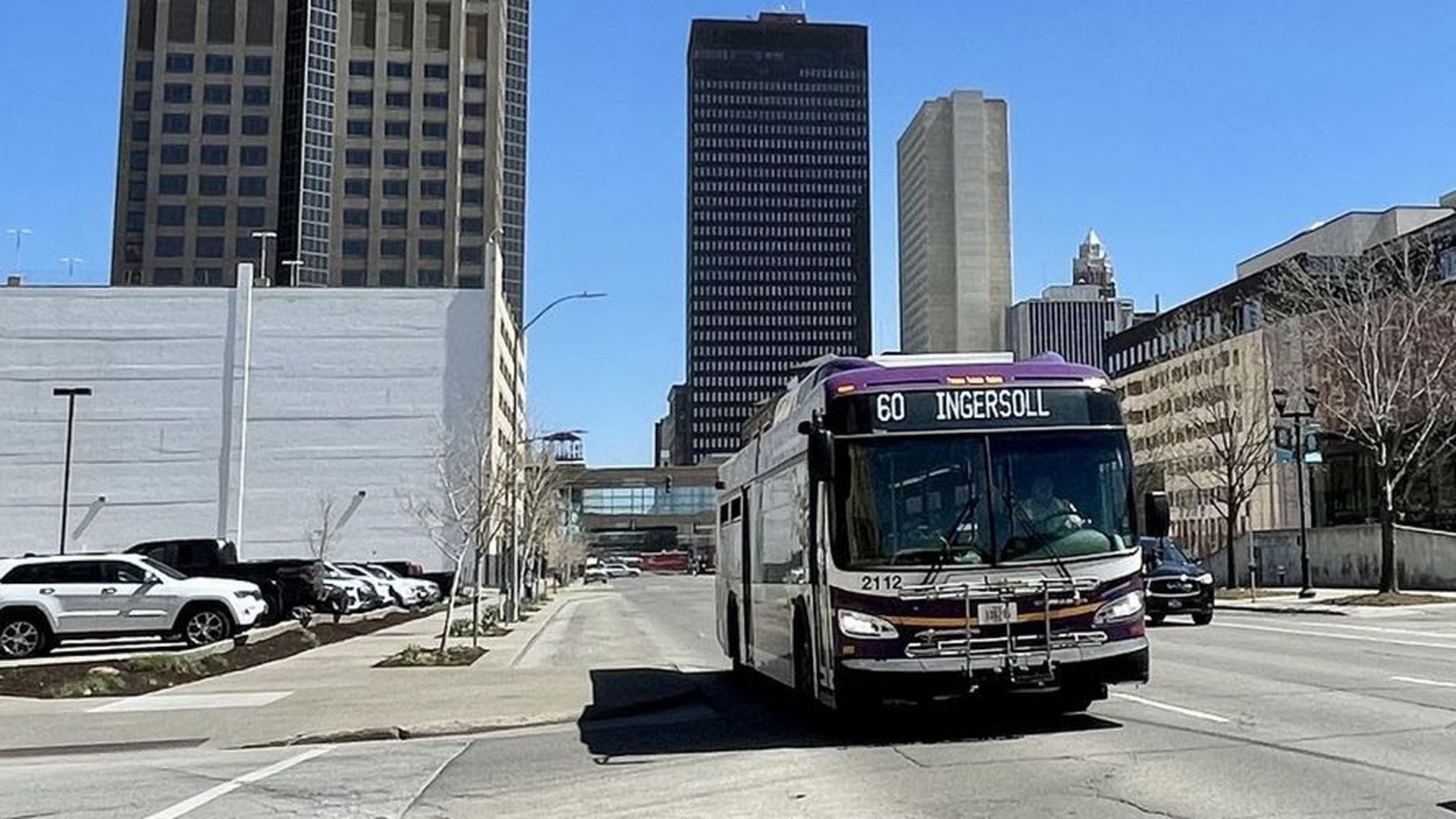
DART on Grand Avene. Photo: Jason Clayworth/Axios
DART is considering reducing its bus services in Des Moines by up to 40% over five years.
Why it matters: As the metro's only public transport system, cuts to DART would hurt riders' ability to get around the metro.
- More than 60% of its users don't own a car and 43% earn under $20,000 a year, according to a recent survey from the agency. The majority of riders use the buses to get to work and health care appointments.
State of play: To help fund DART, CEO Amanda Wanke recently told the Polk County Board of Supervisors that the county and participating cities will have to temporarily increase property taxes.
- Des Moines, which has the most routes in the metro, would also have to provide additional funds because it already has the highest property tax rate allowed under state law.
- The City Council will consider increasing franchise fee rates early next year, which would increase utility bills.
Zoom in: Without additional funding from Des Moines, route frequency in the city would decrease, resulting in riders waiting longer for transfers. The most popular routes would extend from 15 to 30 minutes during peak hours and go hourly at all other times.
- Daily routes around the fairgrounds, East 14th Street, Beaver Avenue, Jordan Creek Town Center and Ingersoll would be reduced to mostly weekdays.
- The D-Line downtown shuttle would be eliminated, as well as fewer shuttles during the Iowa State Fair.
- 3,000 fewer passengers would be able to ride on weekdays.
What's next: DART starts its public input process tomorrow to allow community members to share what bus services they want under its current funding.
- The agency will give details on service cuts if they're needed next spring and get more feedback then. Cuts would occur November 2024.
Go deeper: DART routes risk cuts without property tax increases