Police expand controversial license plate surveillance across Des Moines metro

Add Axios as your preferred source to
see more of our stories on Google.
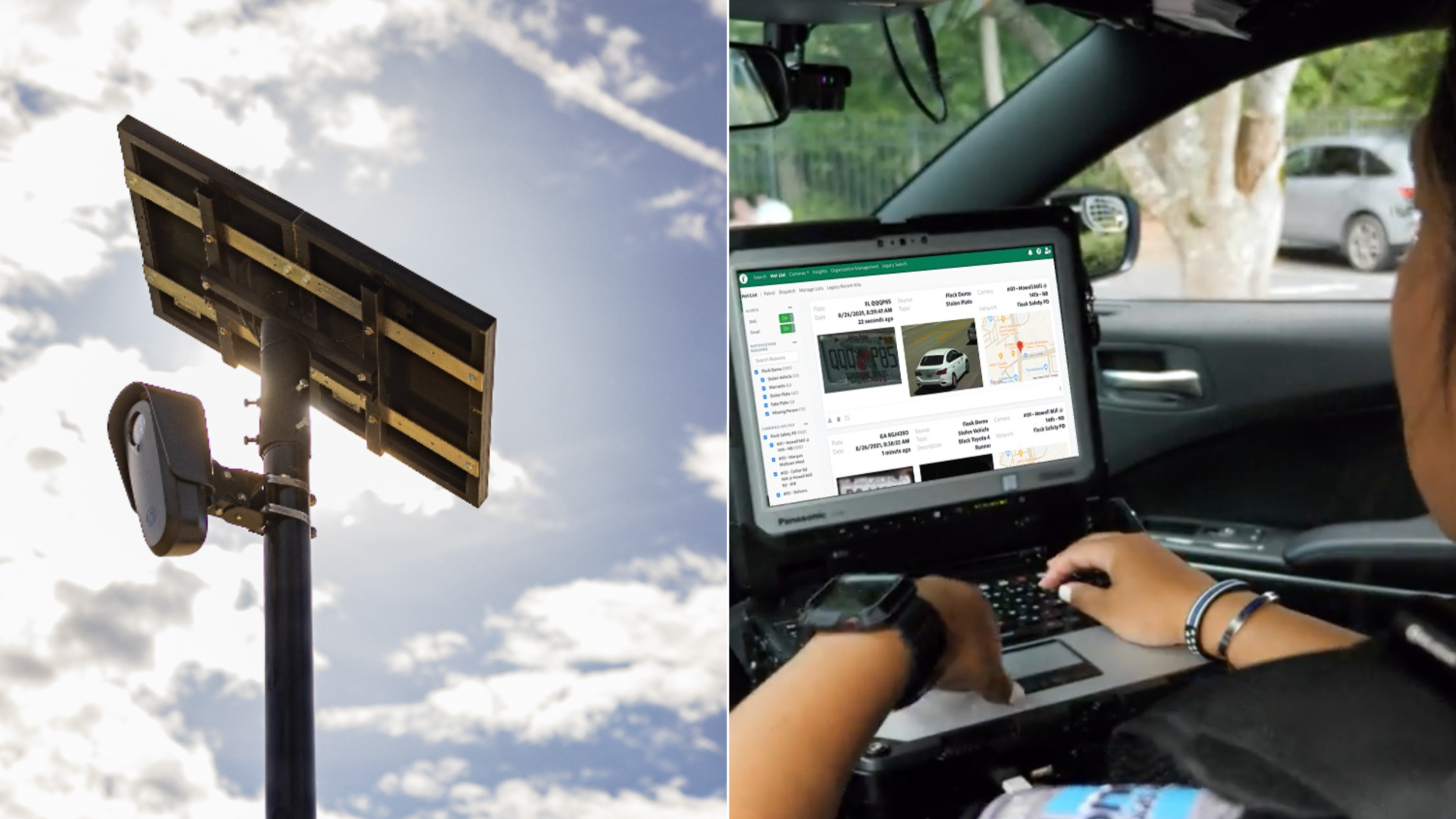
Camera systems like these alert investigators across the nation when things like stolen vehicles are identified via license plates. Photos: Courtesy of Flock Safety
License plate cameras that can track vehicles and feed into a national law enforcement network will expand in Urbandale and be added for the first time in Waukee.
- Des Moines and Johnston police are also considering the systems, department officials tell Axios.
Why it matters: There's a growing polarization among law enforcement and civil liberty groups about how the quickly developing technology is being used.
- Advocates contend it helps nab thousands of criminals but groups like the ACLU say it's a "startling picture" of routine and mass government surveillance.
Catch up fast: Flock Safety, a Georgia-based company launched in 2017, is now used by more than 3,700 U.S. law enforcement agencies and captures billions of vehicle photos each month.
- License plate recognition systems used by DSM metro departments are focused on plates and contain no facial recognition, company spokesperson Connor Metz tells Axios.
- Its "Vehicle Fingerprint" technologies also allow searches for unique features like a roof rack or bumper stickers without knowing the license plate.
Driving the news: Waukee will install about a dozen Flock cameras in coming months under a nearly $35,000 first-year contract approved this week, police chief Chad McCluskey tells Axios.
- They'll play a vital role in preventing and detecting criminal activity, he says.
Meanwhile, Urbandale released first-year results of its system prior to a City Council vote to expand their use earlier this month.
- The cameras helped law enforcement arrest nearly 60 people with warrants, recover 14 stolen vehicles and find a missing juvenile, according to the council document.
- Altoona, Ankeny, Clive, Pleasant Hill and West Des Moines already use the systems, according to research conducted by Urbandale city staff.
Of note: About 15 Iowa law enforcement agencies use Flock, Metz tells Axios.
- The company denied our request to list them.
How it works: Footage is deleted from Flock's system after 30 days but law enforcement agencies use their own retention policies to determine when to dispose of the materials they've downloaded, Metz tells Axios.
- Agencies must provide a reason to verify the legitimacy of a search and it must be specific, meaning agencies can't mass download footage, he says.
The other side: The technology allows governments to track the moves of millions of innocent people and goes far beyond what was imagined when it was first developed, Pete McRoberts, ACLU of Iowa's policy director, tells Axios.
- "It's not lost on anybody that really destructive and abusive governments all over the world have insisted on electronic surveillance," McRoberts says.
What's next: If Johnston decides to move forward, its system would be deployed around summer 2024 at the earliest, chief Dennis McDaniel tells Axios.
- There is no specific timeline for a decision in Des Moines, Sgt. Paul Parizek tells us.