Why I want to rename Des Moines' Robert D. Ray Asian Gardens

Add Axios as your preferred source to
see more of our stories on Google.
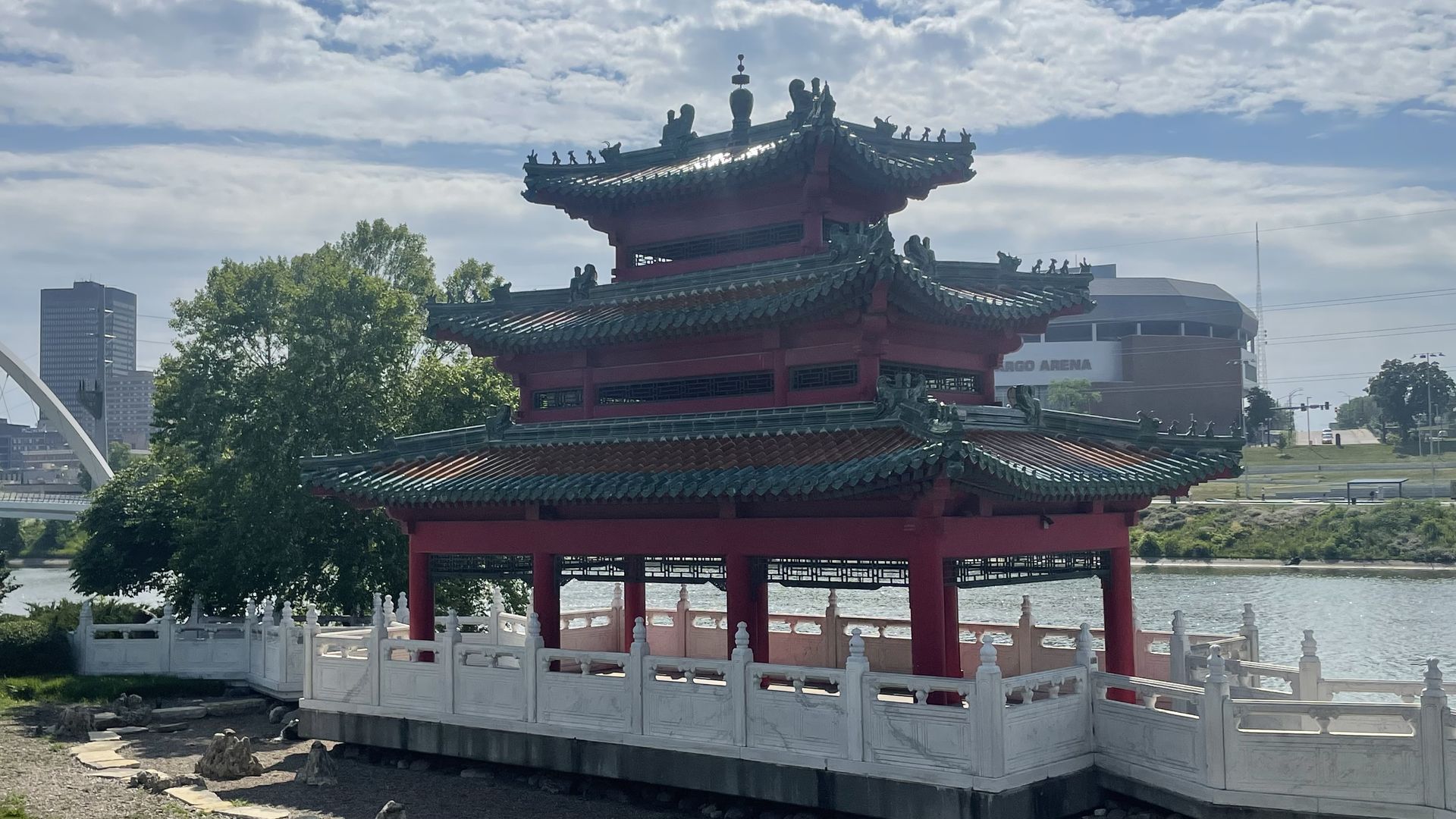
The Robert D. Ray Asian Gardens. Photo: Linh Ta/Axios
Linh here — I want to rename the downtown Robert D. Ray Asian Gardens.
Driving the news: I have no beef with Ray, one of Iowa's most fondly remembered governors who is well-known locally for his humanitarian work.
- His compassionate actions to welcome Tai Dam and southeast Asian refugees are a bright spot in our state's history, including for my own family.
Yes, but: We often forget to acknowledge the refugees themselves — people who weren't just blank slates when they arrived in Iowa.
- One example of this: The state's most visible monument to Asian residents and culture is named after a white governor.
- And don't get me wrong — I don’t want to entirely strip his public name; I applaud the recognition of his works at places like the Robert D. and Billie Ray Center at Drake University.
State of play: The narrative around this time period often focuses on Ray and his courage in making Iowa the only state with its own refugee resettlement program.
- When locals ask how my parents arrived in Iowa, they often talk about Ray's story and how he "let them in" despite local pushback.
- But all the refugees also brought their own culture, families and work ethic. Many of them took low-paying jobs at meatpacking and manufacturing plants and very few used government assistance.
- My parents had their own lives before they were forced quickly into survival mode after the Vietnam War broke out. They overcame major hurdles to learn English, build a business and start a family here.
What they're saying: Matt Walsh, a DMACC professor who wrote "The Good Governor: Robert Ray and the Indochinese Refugees of Iowa," suggests two notable Tai Dam figures worthy of recognition.
- Wing Cam, a political leader who helped the community resettle into Iowa from a refugee camp in Thailand.
- Houng Baccam, who worked for the state's refugee program for over 30 years.
Quick take: While Ray is deserving of recognition and should be known nationally, Walsh also says it's smart to explore whether any Asian Americans also deserve recognition with statues in our state.
What's next: It sometimes feels like Iowa's Asian American story ends when we talk about Ray's humanitarian gesture. But our history is not frozen in time.
- I want our public monuments to reflect something that's grown even bigger than what our city imagined those decades ago.
- I want our Asian monuments to reflect the determination of our refugee population — how second generations of children are now Hawkeyes, Cyclones and Panthers. How they're our friends and neighbors. And how at its core, Iowa is truly about fields of opportunities.