Shelter launches fish farm, "agrihood" in downtown Des Moines

Add Axios as your preferred source to
see more of our stories on Google.
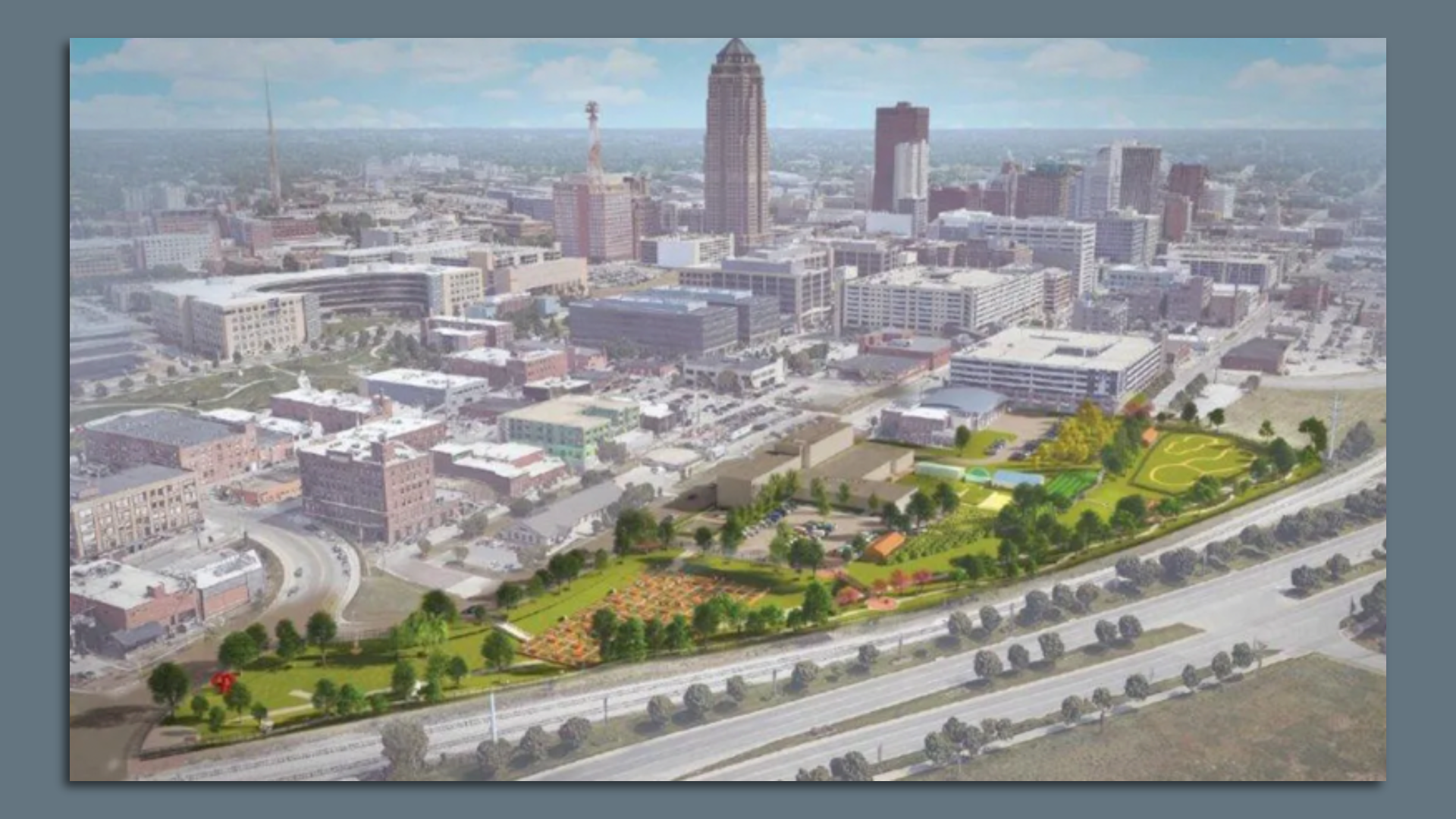
A downtown agrihood is being added to a mostly flood-prone area just off of Martin Luther King Jr. Parkway. Rendering courtesy of Confluence via CISS
Central Iowa Shelter & Services (CISS) in downtown Des Moines is launching an indoor aquaponics system to grow tilapia.
Why it matters: The crops will help offset food expenses, with some being sold to supplement shelter programs.
- Plus, people residing at the shelter will assist with the operations, helping them learn new job skills.
Catch up fast: A group of churches formed what is today known as CISS about 30 years ago to assist people experiencing homelessness.
- Its current facilities have 207 beds, most that are adjacent to more than four acres of flood-prone property.
What's happening: CISS' greenhouse is more than a decade old, but it recently expanded to add an aquaponics program, which filters fish waste that’s used for plant fertilizer in a pesticide-free cycle.
- The system is now in place and fish will be added in coming months. The cycle is expected to produce hundreds of market-sized tilapia each month.

Meanwhile, the property surrounding CISS is being developed into an "agrihood" — an urban area with farm production. Fruit and nut trees will be planted, while raised garden beds will be able to float, avoiding destruction when flooding occurs.
- The vision is a park-like area that's open to the public, allowing anyone to harvest some of the estimated 75,000 pounds of food a year it will produce when fully developed.
Driving the news: February marked the first month that lettuce was harvested from the new greenhouse space, Aaron Thormodsen, CISS' urban farm manager, tells Axios.
- More than 1,000 pounds was distributed to partners or sold to area businesses, he says.
- Other vegetables, including tomatillos and peppers, are still in trial stages.
Of note: The total investment for the aquaponics and agrihood developments is expected to be around $6 million, paid through grants and private donations.
- Final development depends on fundraising and is likely years out, Thormodsen says.
