After complaints, clothing recycler pulls bins from Des Moines

Add Axios as your preferred source to
see more of our stories on Google.
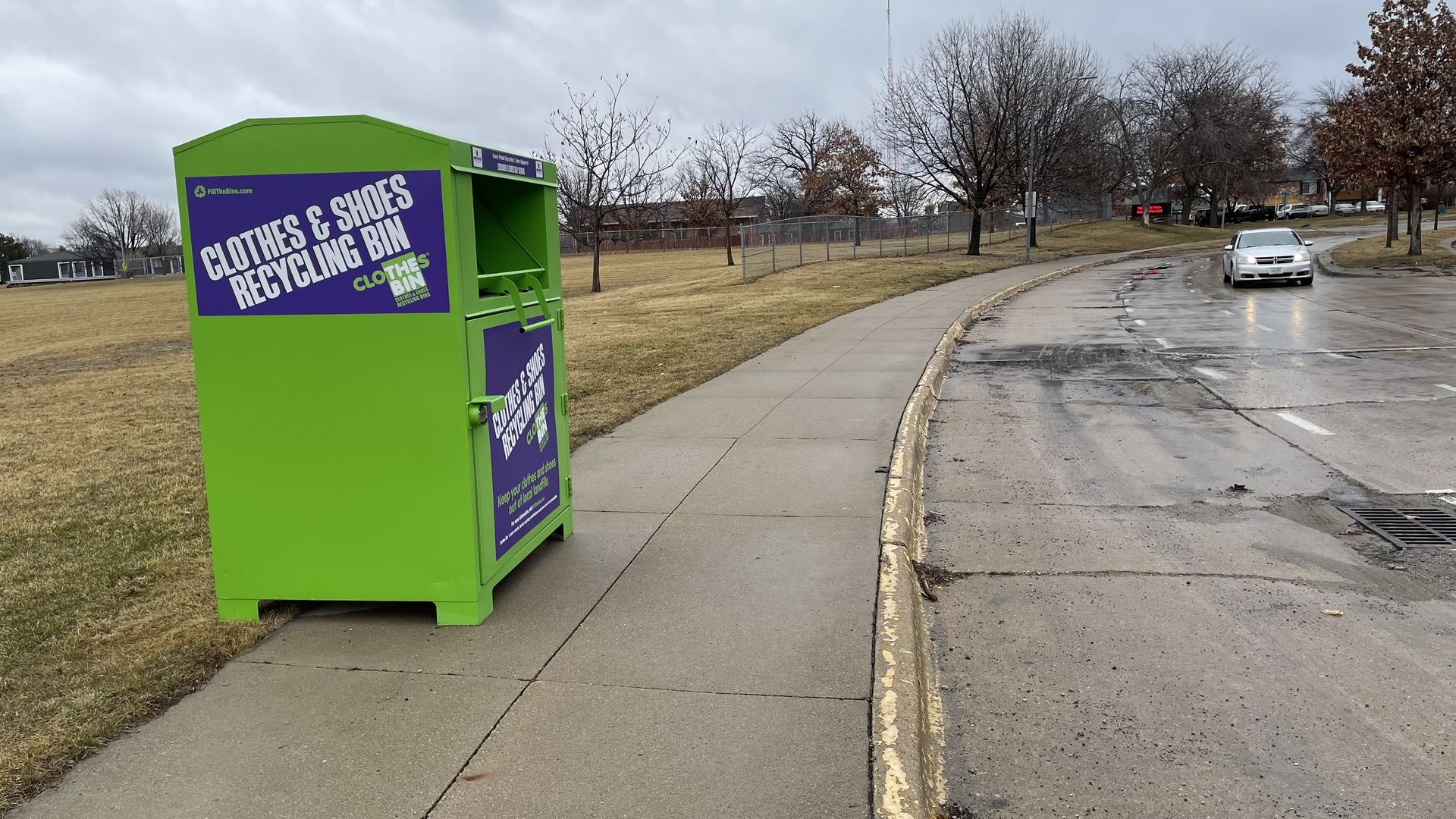
This bin near 16th and Crocker streets at DSM's Edmunds Elementary is in the right-of-way of a bus drop-off lane, a zoning officer told city council members this week. Photo: Jason Clayworth/Axios
A textile recycler has removed 13 collection bins in Des Moines following a string of violation notices from the city, he tells Axios.
Why it matters: The action could make recycling some items more of a pain, as DSM's residential recycling program doesn't accept clothing.
Yes, but: Multiple nonprofits already recycle textiles and some offer pickup services, Councilperson Member Linda Westergaard noted in a meeting this week.
- She compared the recycling bins to unsightly dumpsters on a front yard.
Catch up fast: Clothes Bins —a national franchise of vivid green collection drop boxes — markets itself as a convenient way to divert clothing from the landfill.
- The for-profit business makes money by selling the items to textile recyclers, making donations non-tax deductible.
Zoom in: Clive businessman Brad Burtnette began adding the bins to sites throughout central Iowa last year.
- He shares some profits with nonprofits and schools that host the bins. That amounted to just over $12,100 for those groups, which Burtnette says went mostly to schools between May 2022 and last month.
- He did not disclose his business' profits.
What's happening: The city treats these bins like waste collection receptacles under an ordinance that generally requires they be in a backyard.
- At least 11 sites have been issued code enforcement notices from the city of DSM since June, according to information presented to the council this week.
Driving the news: City zoning officials this week provided the City Council with photos of a bin that was partially blocking a sidewalk and one with items laying on the ground.
- Members then directed zoning enforcement officials this week to draft recommendations about better regulating the containers.
Of note: Code enforcement, which could include fines, is on hold while the city researches and considers the council's direction, Erik Lundy, a DSM zoning enforcement officer, said at this week's meeting.
What they're saying: Overflow problems are rare because the bins have sensors that alert to a needed pickup. They also have a phone number for people to report problems, Burtnette says.
- Even so, some council members expressed concern that other recycling operators could launch similar programs. More specific regulations could help avoid future problems, they said.
State of play: Burtnette says his goal now is to grow the bin program outside of DSM.
- Bins at eight DSM school sites remain because those are generally overseen by the district rather than the city.
- Eight more schools have requested bins, he notes.