Where the Colorado governor candidates stand on ballot measures

Add Axios as your preferred source to
see more of our stories on Google.
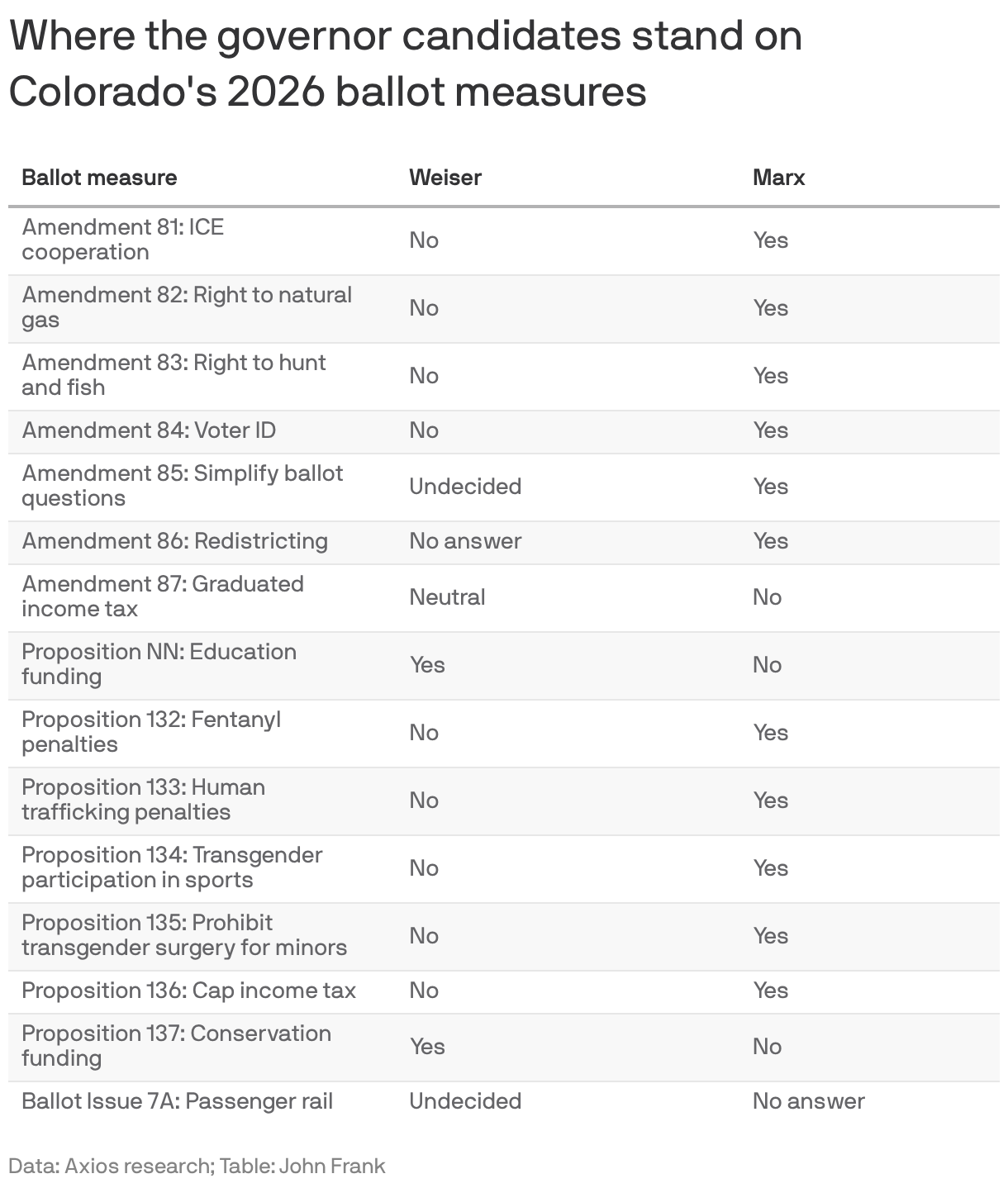
Colorado's ballot questions are dividing the candidates for governor — and in some instances, putting Democratic Gov. Jared Polis on the same side as the Republican who wants his job.
Why it matters: Where the top-of-the-ticket candidates stand could help undecided voters make sense of 14 statewide ballot questions.
- The results will also determine the next governor's budget and authority, with possible changes to immigration enforcement, criminal penalties and transgender rights.
State of play: Democrat Phil Weiser and Republican Victor Marx are split on several major measures, particularly those involving social issues and constitutional protections.
Likewise, the candidates differ on the tax questions.
- Weiser supports Proposition NN, which would lift a state revenue cap under the Taxpayer's Bill of Rights to boost school funding. He also backs Proposition 137, which would divert sporting goods sales tax revenue to conservation, parks and wildfire prevention.
- Marx opposes both, arguing they would essentially erase TABOR refunds for the foreseeable future.
On one of the ballot's biggest tax questions, Weiser's staying silent.
- Weiser says a pending lawsuit prevents him from weighing in on Amendment 87, which would replace Colorado's flat income tax with a tiered system.
- Marx is steadfast against it. "Nearly doubling the top income tax rate will not make Colorado more prosperous. It will make other states more attractive," he said in a campaign statement.
The intrigue: Marx has an unlikely ally in the term-limited Polis, who opposes the $2.7 billion tax increase and calls it a "HUGE blank check to politicians."
- Both agree on capping Colorado's income tax rate at the current 4.4% through Proposition 136.
Polis and Marx also support Amendment 85, which would require plain-language ballot questions, and Amendment 86 to prohibit congressional redistricting mid-decade.
- The other side: Weiser opposes the redistricting measure and hasn't taken a position on the plain-language proposal, which some suggest is a Trojan horse.
The bottom line: Whoever wins will inherit voters' decisions — and the budget constraints and policy mandates that come with them.