Colorado candidates refuse to debate



Add Axios as your preferred source to
see more of our stories on Google.
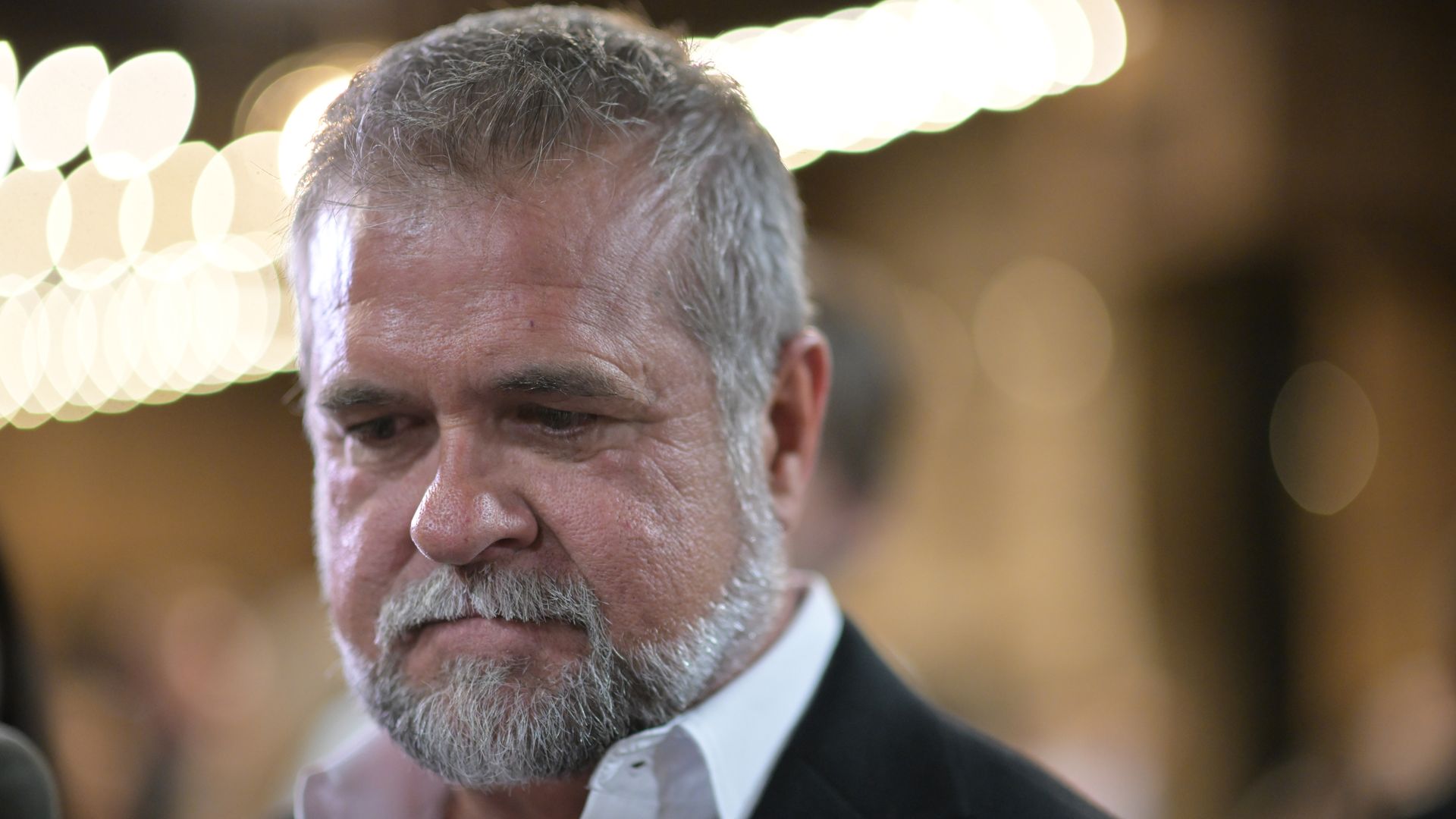
Colorado Republican gubernatorial candidate Victor Marx. Photo: Hyoung Chang/The Denver Post via Getty Images
Political debates used to be a campaign staple. Now, candidates increasingly see them as optional — or a political liability.
Why it matters: In a midterm cycle dominated by unprecedented spending on contrast ads, the candidates are reluctant to challenge each other face-to-face.
- It's a sign of how campaigns have evolved, and an erosion of norms: Candidates — fueled by their parties and super PACs — still try to tear apart the opposition, but they just do it from a distance.
- In the age of short, shareable video clips, TV debates offer candidates near-equal parts opportunity and risk: An electric moment can travel far and wide, but so can an unforced error.
Driving the news: Colorado's most prominent no-show is Victor Marx, the Republican candidate for governor from Colorado Springs.
- He most recently declined to debate at the Club 20 meeting in Grand Junction — historically a must-stop for Colorado candidates — and turned down other invitations from local media, including one he initially accepted.
- Instead of a moderated debate, he's pushed for a one-on-one conversation with this Democratic rival, Attorney General Phil Weiser, who dismissed the idea.
What they're saying: Some are dissing Marx's approach.
- "Victor Marx is unwilling to present himself to the voters of Colorado unless it is under conditions he unilaterally dictates," wrote Aaron Harber, an independent journalist who planned to moderate a debate until Marx backed out.
The intrigue: Other candidates, including Democrat Manny Rutinel in the closely watched 8th Congressional District race, didn't agree to a primetime TV debate. His rival, U.S. Rep. Gabe Evans, has proposed three debates, but Rutinel hasn't accepted them.
- Even Secretary of State Jena Griswold, who oversees elections, is refusing a TV debate with her opponent for attorney general, Republican District Attorney Michael Allen.
The big picture: Colorado candidates aren't the only debate-dodgers. Of 10 closely watched races for governor, five — Arizona, Florida, Nevada, Ohio and Texas — have no debates on the books, according to an Axios review.
- Four years ago, just two of those contests went without a debate.
The bottom line: Brett O'Donnell, a veteran GOP debate-prep consultant, said the disappearance of debates is bad for democracy but a sign of how the campaign and media landscape are changing.
- "We live in a world where people get impatient after watching something for 15 seconds online," O'Donnell added. "How many people will actually watch an hour-long debate?"
Editor's note: This story has been updated to clarify that Gabe Evans has proposed three debates in the 8th Congressional District race, but Manny Rutinel hasn't accepted those debates and no major debates are currently scheduled.