Denver's food service renaissance

Add Axios as your preferred source to
see more of our stories on Google.
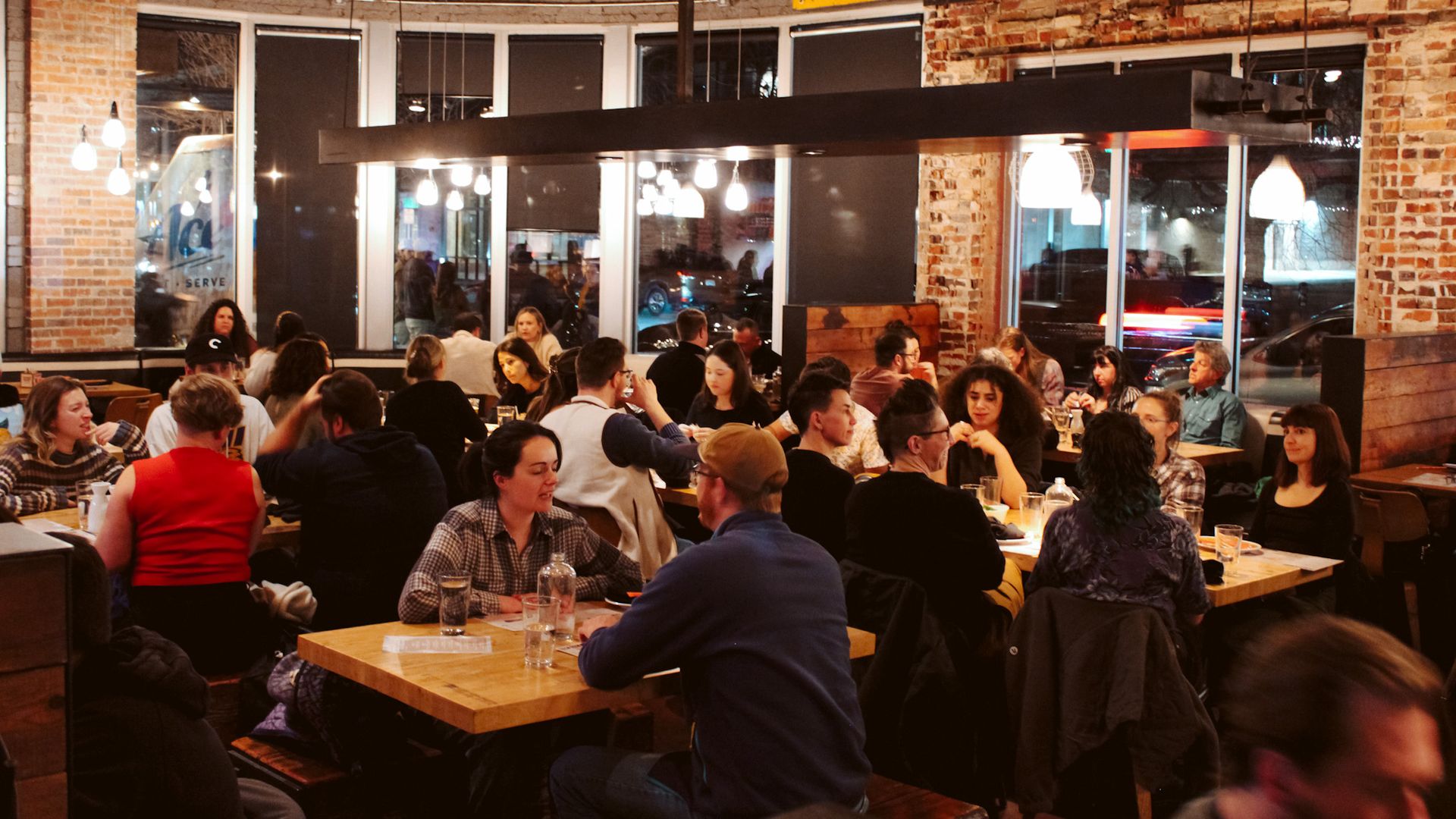
Ace Eat Serve. Photo: Courtesy of Ace Eat Serve
As soon as physical menus could return, Josh Wolkon ditched QR codes at his restaurants, Steuben's and Ace Eat Serve.
- Wolkon tells us he "hated" the barcode, a pandemic-era staple. He was itching to bring back the human touch that had disappeared from the dining experience.
Why it matters: As the cost of dining out increases, some Denver-area restaurateurs are betting that more personal "high-touch hospitality" can make the experience worth the price — and get people out of the house and off their screens.
State of play: For some restaurants, better service means getting back to the basics, and when done well, it can even provide a space for people to find community.
- Adam Moore, co-owner of Fortezza Ristorante in Niwot, says he tries to create a more welcoming experience: "People kind of like a story in fine dining," he adds, noting how his wait staff might explain how a potato makes its way from a local farmer's harvest to a plate.
The big picture: Restaurants increasingly need to justify an outing by providing the best possible service, award-winning restaurateur Bobby Stuckey tells us.
- For Wolkon, hospitality extends beyond the meal. He wants his self-described mid-priced restaurants to serve as gathering places.
- Ace Eat Serve hosts Mahjong Mondays, drawing more than 100 people, and partners with nearby gyms to offer classes.
- "You can show up to Ace with 20 people," Wolkon says.
Yes, but: More high-touch hospitality doesn't change persistent questions about what service should cost — or who should have to pay.
- Restaurants are fine-tuning their tipping policies. Wolkon, for example, says he's unsure what to do for counter service.
- At a sit-down restaurant, by contrast, gratuity should reflect the temporary relationship diners build with their server and other staff, he adds.
What we're watching: How the industry balances service, customer cost and paying their staff a livable wage — a tension already fueling minimum wages debates in cities like Denver.