AI can show where wildfire risk is greatest in Colorado

Add Axios as your preferred source to
see more of our stories on Google.
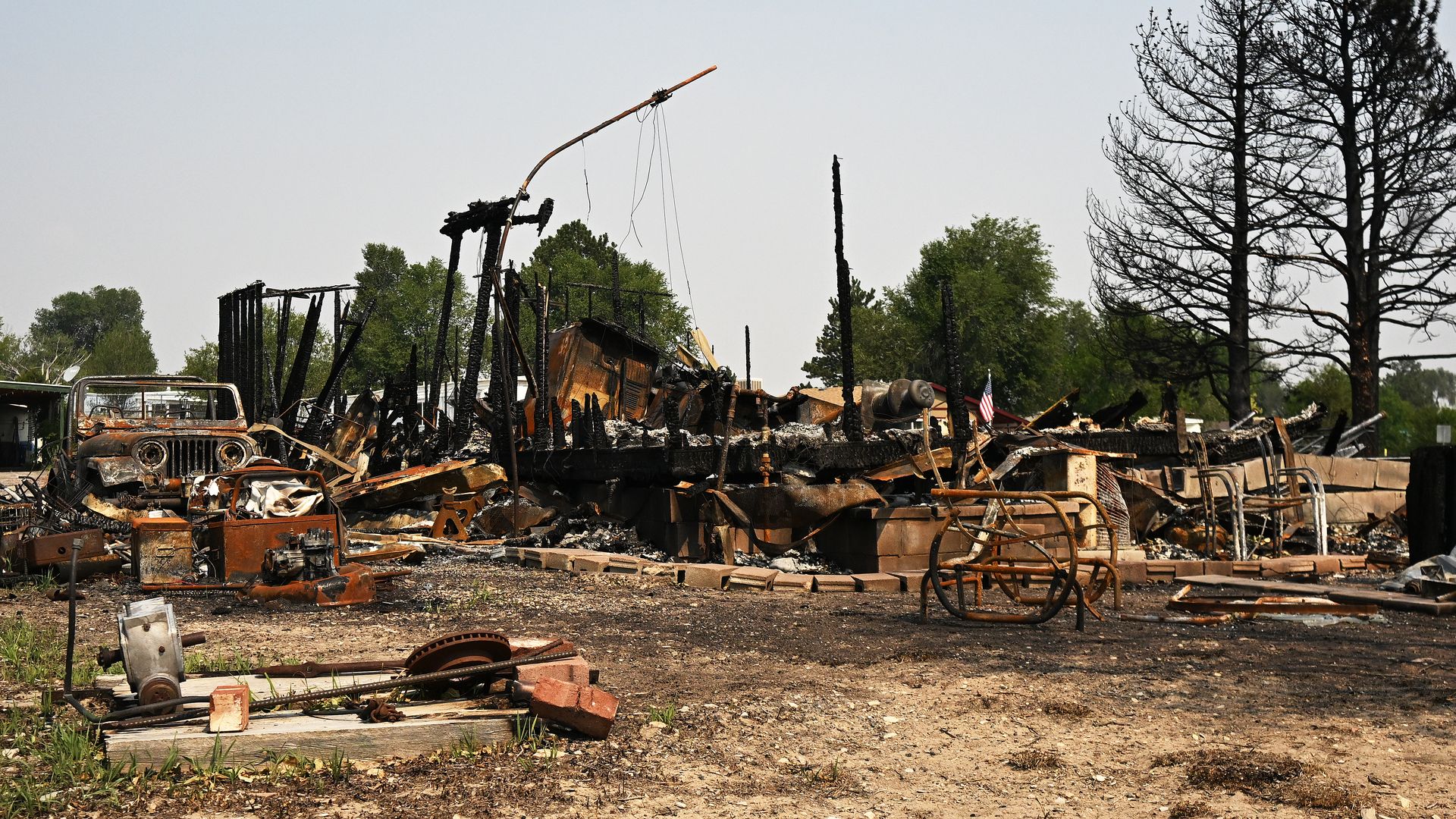
Homes and property torched in the Aspen Acres Fire in Colorado City. Photo: RJ Sangosti/Denver Post via Getty Images
Colorado is now requiring wildfire-prone communities to adopt new building and property standards — and an AI analysis, exclusively shared with Axios, shows how much work remains.
Why it matters: The updated rules are designed to prevent fast-moving wildfires like the 2021 Marshall Fire by building a buffer zone from trees and other plants that can catch fire and spread embers.
Driving the news: In Jefferson County, for example, more than 50% of structures have tree canopy hanging over their roofs, according to a report from Colorado-based Vexcel, a data analysis firm.
- 78% of the roughly 255,000 structures analyzed in the county have trees within 5 feet — considered the most critical buffer for defensible space to reduce ember ignition and direct flame contact.
Threat level: The proportion of homes at risk "can definitely be eye-opening," said Ford Freyberg, a Vexcel product manager based in Denver.
Zoom in: Even though wildfire risk is lower in Denver, the city's homeowners are far from prepared.
- 53% of structures have trees overhanging rooflines.
- 76% of the 250,000 structures analyzed have trees within 5 feet, and 93% have other structures within the same space.
- 94% have vegetation within 30 feet, an important setback that can minimize the fire's intensity and ability to spread.
Meanwhile, El Paso County is better prepared. Just 34% of its structures have overhanging trees.
- 57% have trees within 5 feet of structures.
- 77% have no buffer from vegetation within 30 feet.
What they did: Vexcel — formerly owned by Microsoft — used its proprietary aerial images collected by fixed-wing aircraft and applied an AI algorithm to identify at-risk properties.
- By using planes, it provides a higher resolution than satellite imagery, allowing a more detailed analysis.
The big picture: Such an analysis is critical after Colorado began requiring wildfire-prone localities to implement baseline rules for new construction and substantial renovations. Local authorities can also make the rules more stringent.
- "I think these codes will save lives, I think they will save property, I think they will save people money," Crystal Lambert, Colorado's Wildfire Resiliency Code Board chair, told CPR.