Colorado Connector carries a $5B price tag

Add Axios as your preferred source to
see more of our stories on Google.
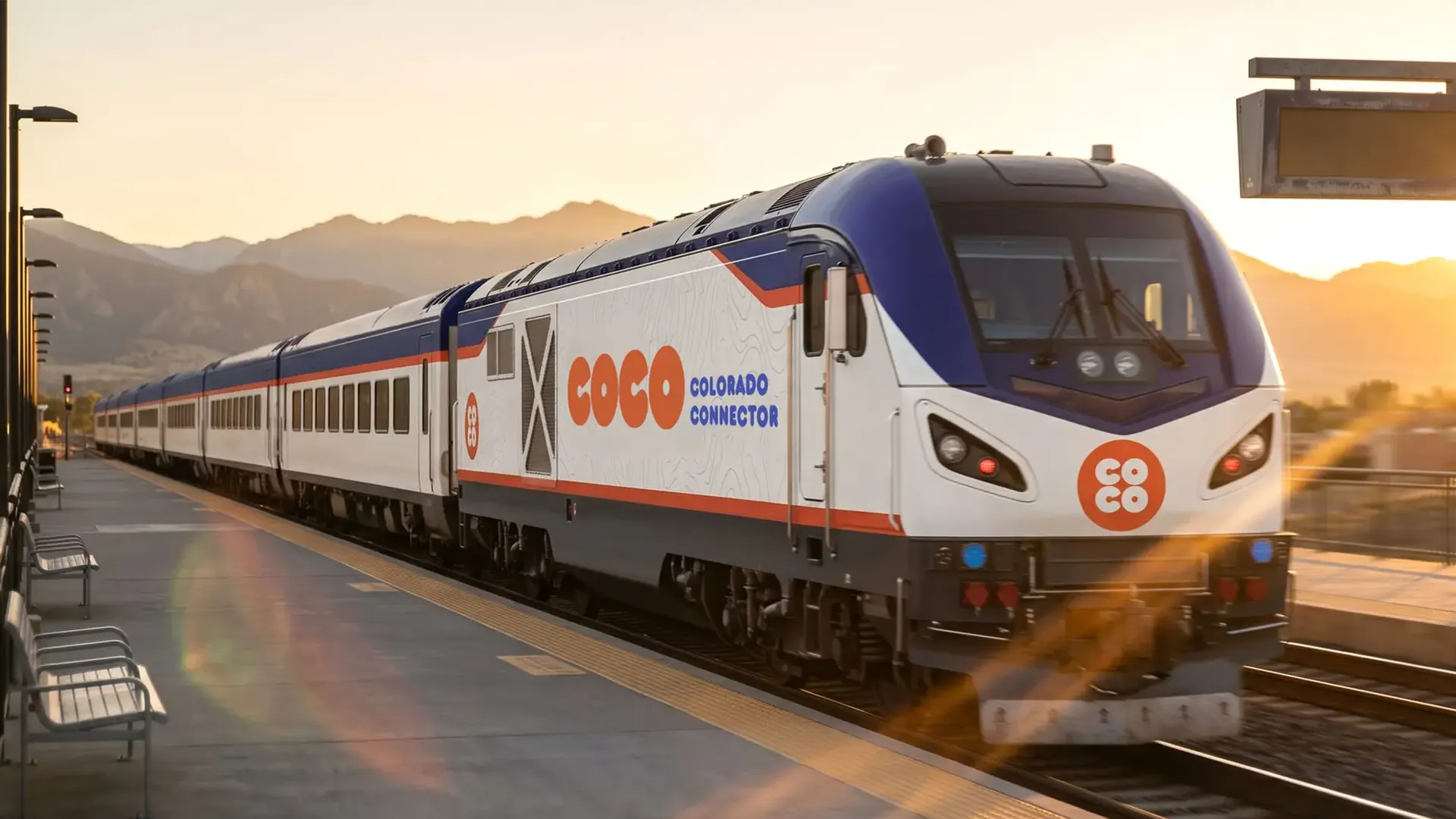
Rendering: Courtesy of FRPRD
The proposed Colorado Connector passenger train system between Fort Collins and Pueblo is estimated to cost $4.7 billion to build and up to $200 million annually to operate, according to a plan released Monday.
Why it matters: Known as CoCo, the train is billed as a transit game-changer that would connect 12 Front Range communities along roughly 190 miles and possibly even neighboring states to the north and south.
Driving the news: To cover the cost, the Front Range Passenger Rail District is proposing a 0.333% tax hike for communities within five miles of a station.
- The tax — expected to appear on the November ballot — would generate $295 million a year.
State of play: Regardless of whether the hike is approved, the service will begin in 2029 with three daily round trips between Denver's Union Station and Fort Collins.
- Stops along the way include Westminster, Broomfield, Louisville, Boulder, Longmont and Loveland.
- The $332 million price tag is paid by existing tax and fee revenue from the Regional Transportation District (RTD) and Colorado Transportation Investment Office.
The $1.7 billion second phase is contingent on voter approval of the new tax and would extend passenger rail service south to Colorado Springs and Pueblo with two daily round trips by 2032.
- The stops south of Denver include Littleton, Sterling Ranch and North Colorado Springs.
The full build-out would cost another $2.7 billion and incrementally increase the frequency of the train. The main routes — Denver to Fort Collins and Denver to Pueblo — would increase to 10 and eight round trips a day, respectively.
- This secondary phase also includes the possibility of connections to Cheyenne, Wyoming, Trinidad and New Mexico.
What they're saying: Based on ridership studies, Interstate 25 bottlenecks and the popularity of long-distance bus transit in Colorado, the rail district's general manager, Sal Pace, said, "We expect the trains to be full."
What's next: The passenger rail district board is anticipated to consider the plan July 31 and to vote Aug. 28 to send the tax hike to the November ballot.