Denver ranks among America's fittest cities

Add Axios as your preferred source to
see more of our stories on Google.
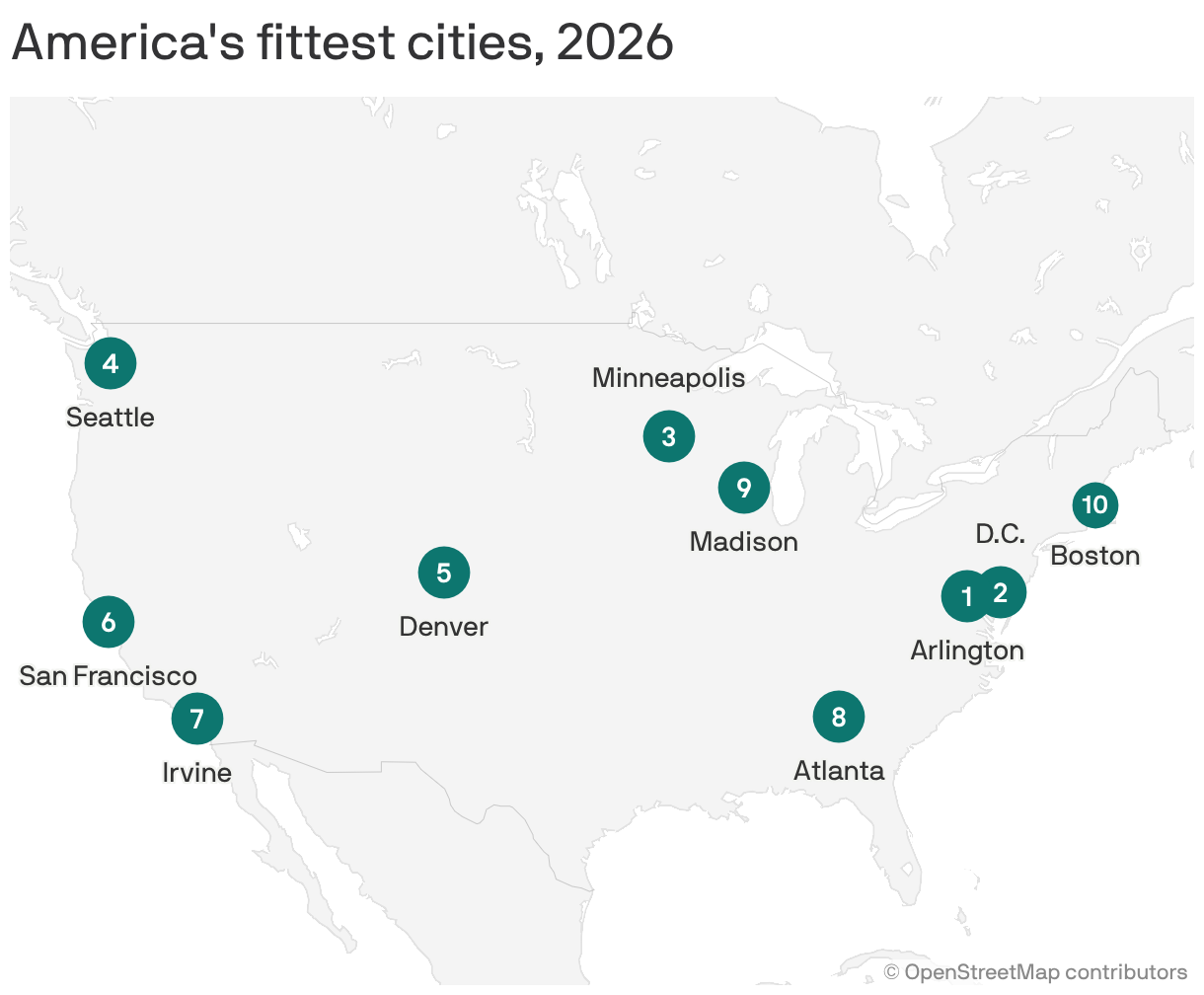
Denver is among America's fittest cities, according to a new report from the American College of Sports Medicine and the Elevance Health Foundation.
Why it matters: The ranking reinforces Colorado's reputation as one of the nation's healthiest states and suggests Denver's investments in parks, trails and recreation are paying dividends and supporting residents' active lifestyles.
The big picture: Denver ranked No. 5 in the report, which scores the nation's 100 largest cities based on residents' health indicators, cities' parks and recreation infrastructure, environmental conditions and more.
The highest-ranked cities generally have:
- Lower obesity and chronic disease rates
- More residents who walk, bike and exercise regularly
- Better access to parks, recreation facilities and active transportation
Between the lines: The ranking comes as Denver continues investing in parks and outdoor recreation, from the future 155-acre Park Hill Park to millions of dollars for improvements at La Alma-Lincoln Park and other projects guided by the city's long-term "Game Plan for a Healthy City."
- The city also benefits from a climate that makes it easy to get outside year-round.
- Yes, but: The report cautions that air quality remains a key health factor — one that often deteriorates here during summer wildfire smoke and ground-level ozone season.
Zoom out: Aurora ranked No. 31, and Colorado Springs came in at No. 40.
What they're saying: "The cities that consistently rank at the top aren't succeeding because of one program or one investment," Former College of Sports Medicine president Stella Volpe said in a statement.
- "They've built systems that support healthier living over time. They are the ones creating environments where physical activity can easily become a part of everyday routines."
The bottom line: The report finds there are "two types of cities:" One where "healthy choices are built into everyday life, and another where structural barriers continue to limit long-term health."
- Denver, at least according to this index, falls firmly into the first camp.