Public lands face increasing threats in Trump era, advocates warn

Add Axios as your preferred source to
see more of our stories on Google.
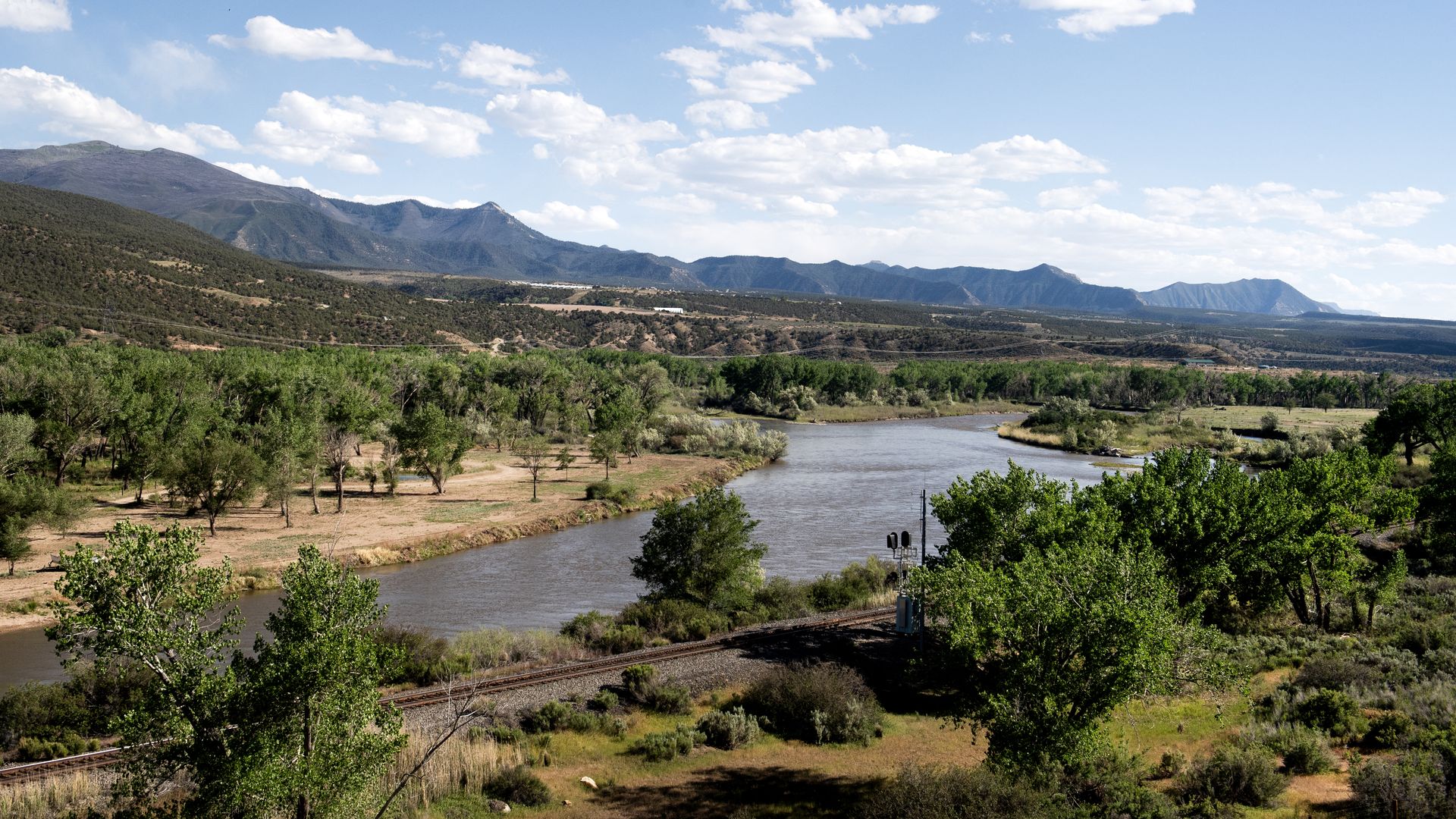
The Colorado River near Parachute, Colorado, on May 15. Photo: Jason Connolly/AFP via Getty Images
The future of public lands is increasingly uncertain in the Trump era, conservation advocates warned Friday at an outdoor industry summit held in Denver.
Why it matters: About 36% of Colorado is public land, totaling roughly 24 million acres and fueling the state's $18 billion outdoor recreation industry.
Threat level: National forests, wildlife refuges and other public lands face a convergence of threats that is testing the country's conservation system in new ways.
- The Trump administration and Republican lawmakers are looking to sell millions of acres of public land for development and energy extraction.
- Other threats include climate change, underfunding and degradation caused by overcrowding.
What they're saying: "There's no [better] time for people to stand up … to protect our public lands … than today," said Ken Salazar, former interior secretary and Colorado U.S. senator, at the summit on the sidelines of the Outside Days festival.
What we're watching: Conservation organizations are pushing a ballot initiative for November that would generate $175 million for public lands and outdoor recreation.
- The measure would redirect existing taxes on sporting goods equipment into a special account that would focus on wildfire mitigation, state parks, river and forest restoration and other outdoor causes.
- "It's a lot of money, but it's nowhere near meeting the need that we have — about a $4 billion need," said Alan Salazar, the CEO of Denver Water, who supports the measure, Initiative 308.
Yes, but: In years without excess revenue, the measure could siphon money from the general fund, the discretionary spending account used for education, health care and other key government functions.
The bottom line: The decisions made in the next decade could determine the future of some of America's most iconic landscapes — and whether future generations inherit the same access to public lands that Americans enjoy today.