Oct 27, 2025 - News
Colorado's first freezes are coming later in the year


Add Axios as your preferred source to
see more of our stories on Google.
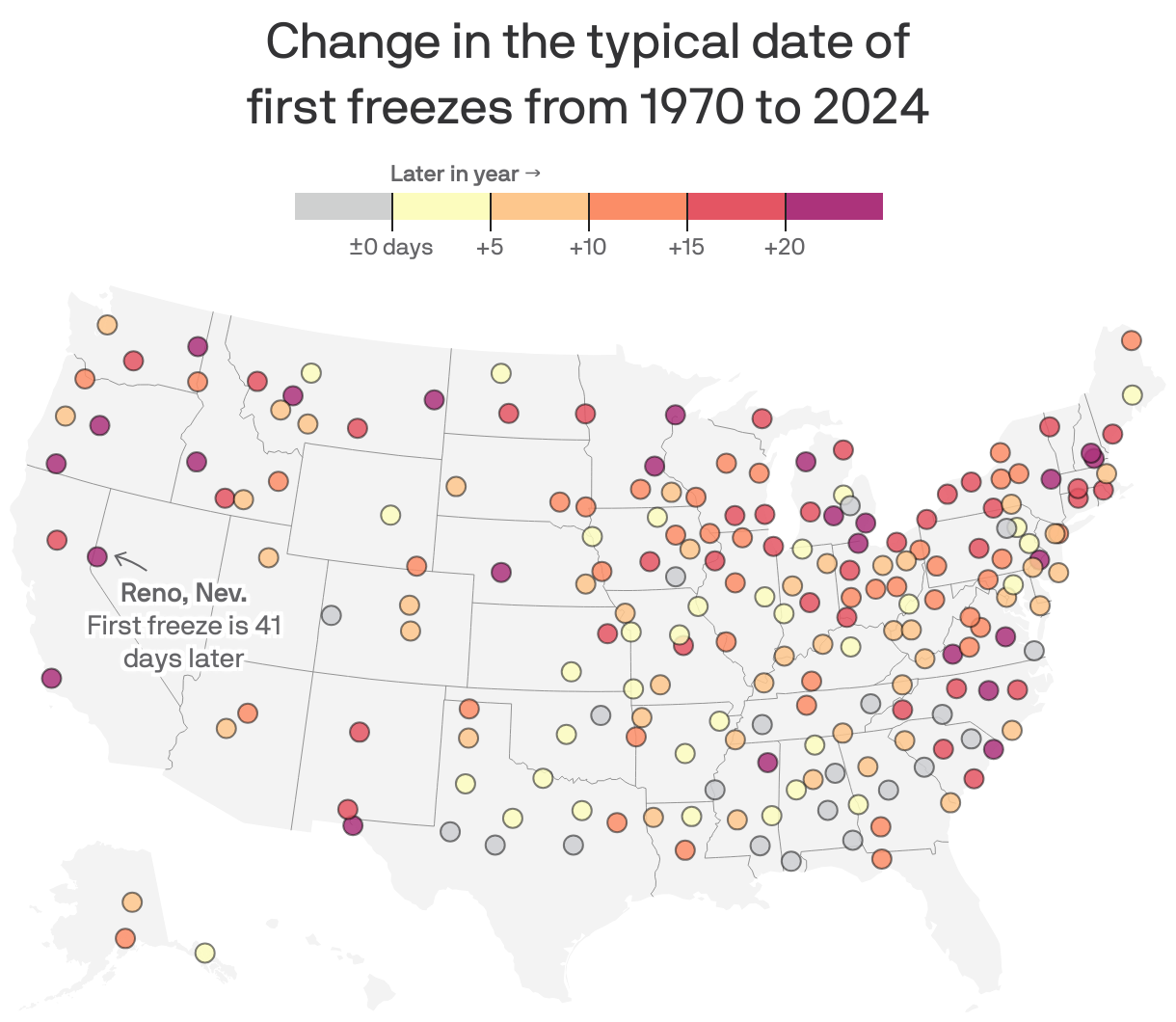
This year's first freeze arrived two weeks later than normal, and fresh data shows that's the new norm.
Why it matters: It's another indication of fall warming amid climate change, which affects farmers, gardeners and allergy sufferers.
State of play: Denver saw its first freezing temperatures Oct. 19 when lows reached 32 at the airport.
- The city usually gets the first freeze around Oct. 7. "We had to wait another 12 days for the first freeze," Fox31 meteorologist Greg Perez says.
By the numbers: Compared to 1970, the first freeze is arriving five days later in Denver, according to a new report from Climate Central, a climate research group.
- In Colorado Springs, freezing temperatures now happen a week later.
Yes, but: In Grand Junction, the first freeze lands four days sooner compared to 1970.