Oct 2, 2025 - News
Report: Coloradans are aging fast — and the state isn't ready


Add Axios as your preferred source to
see more of our stories on Google.
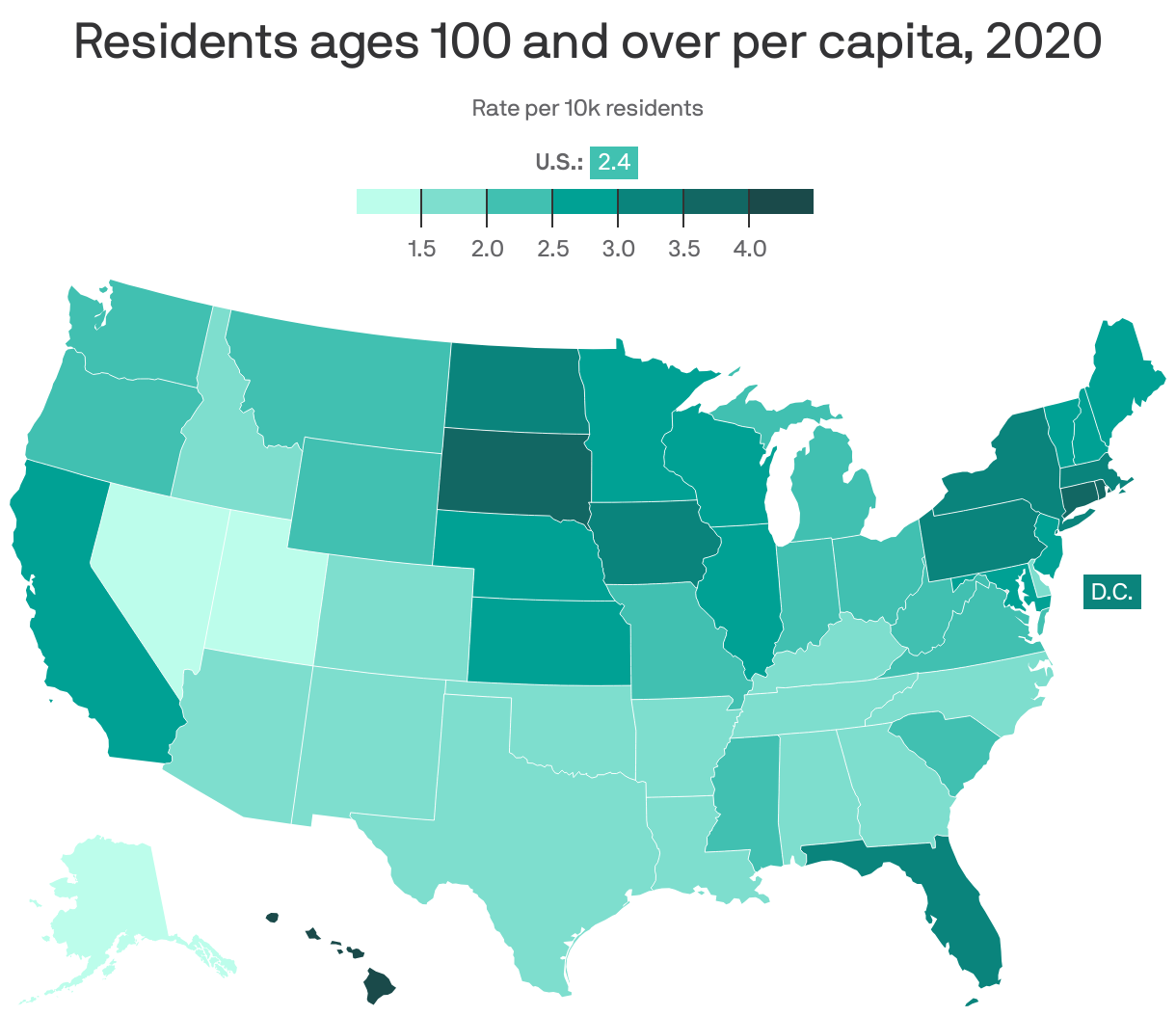
The number of centenarians — people aged 100 or older — in the U.S. grew by 50% from the 2010 census to the 2020 count, per a new Census Bureau analysis.
By the numbers: The 2020 census tallied about 80,100 centenarians, up from roughly 53,400 a decade earlier.
- In Colorado, 962 residents had reached triple digits out of the state's nearly 5.8 million people.
The big picture: The gray wave is building. Coloradans age 65 and older are projected to increase nearly 30% over the next decade, per a recent report from the Colorado Fiscal Institute (CFI) and AgeWise Colorado.
State of play: The report warns Colorado isn't ready.
- Safety-net programs are already strained. The report estimates long-term Medicaid care costs alone will climb by nearly $850 million by 2050.
- At the same time, revenue isn't keeping pace — thanks in part to Colorado's strict TABOR tax limits, according to the report.
What's next: CFI and AgeWise Colorado are pushing state lawmakers to confront the issue in the 2026 legislative session, which begins in January.
- "We need long-term planning, targeted investments, and the political courage to confront structural barriers like TABOR and federal disinvestment," Kathy White, CFI's executive director, said in a statement. "If we don't act, we will leave thousands of older Coloradans behind."