Colorado launches study on drones vs. wolves

Add Axios as your preferred source to
see more of our stories on Google.
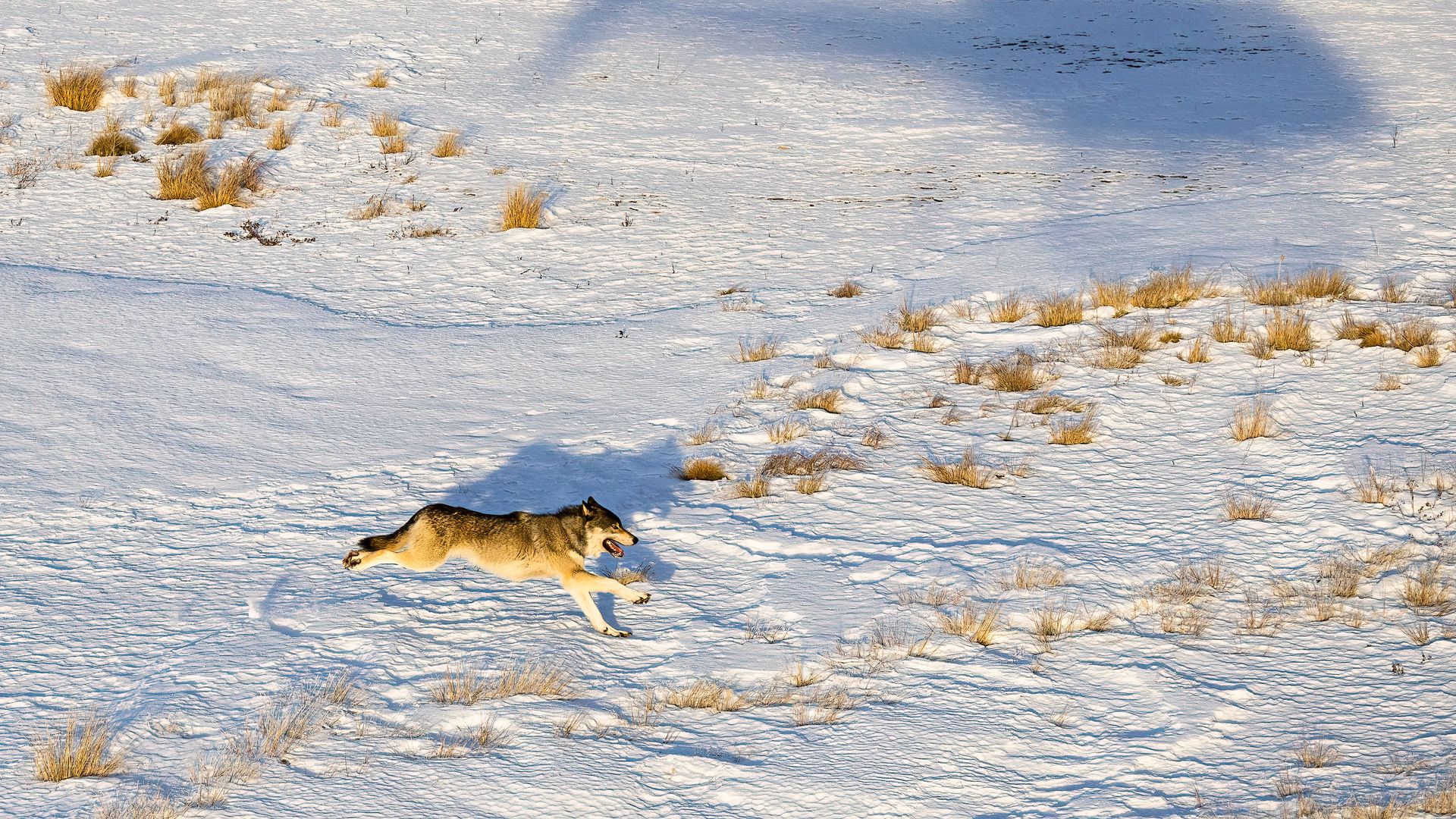
A wild gray wolf in Colorado. Photo: Courtesy of Colorado Parks and Wildlife
Colorado wildlife officials are studying whether drones can keep gray wolves away from livestock.
Why it matters: The central tension of Colorado's wolf reintroduction program, narrowly approved by voters and launched in late 2023, is the predator's tendency to kill ranchers' cattle — losses that have already cost the state hundreds of thousands of dollars and triggered lethal management actions.
The big picture: Biologists on the California-Oregon border have seen some success hazing wolves with drones, including fewer livestock deaths, the AP reported.
- Outfitted with speakers, the machines blast rock music, movie clips and human voices to spook wolves.
- In one case, a pilot simply said, "Hey wolf. Get out of here." The wolf dropped the cattle and ran.
Driving the news: Colorado Parks and Wildlife just launched a grant-funded multiyear study to test whether drones could work here, agency spokesperson Luke Perkins tells Axios Denver.
- Researchers will evaluate drones not just as deterrents but also as tools for tracking, counting and monitoring wolves.
- They'll examine how wolves respond — and whether the hazing effect fades once the animals get used to the machines.
Yes, but: Drones have limitations, including cost.
- A night-vision model with a loudspeaker runs around $20,000, per the AP.
- Pilots must be trained — and available to fly at night when wolves hunt, Perkins notes.
- Battery life and Colorado's rugged terrain also pose hurdles.
Between the lines: Drones could backfire by spooking livestock along with wolves, potentially harming the livestock's health, Colorado Cattlemen's Association executive vice president Erin Spaur tells Axios Denver.
What they're saying: At the end of the day, Spaur says, "We're looking for any tool in the toolbox to find relief for producers. So if this works ... we're all in."
What we're watching: State officials plan to release early findings as the research progresses.