Denver falls behind big cities in return-to-office push

Add Axios as your preferred source to
see more of our stories on Google.
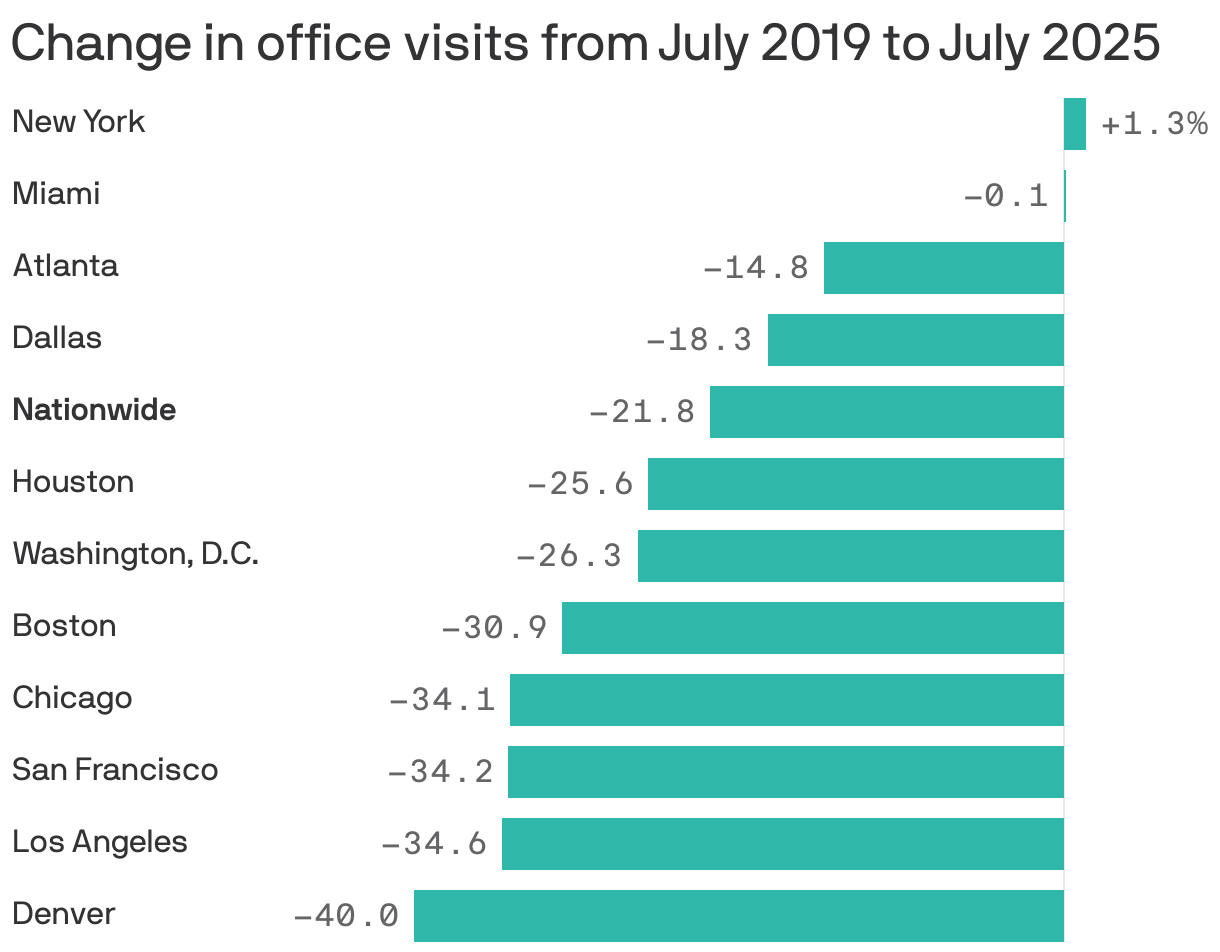
While major U.S. cities are seeing a post-pandemic surge in office returns, Denver is clinging to its work-from-home ways, a new analysis shows.
Why it matters: Predictions that the pandemic would permanently alter the city and the way Denverites work are proving correct.
By the numbers: July office visits in Denver were down 40% from July 2019, per Placer.ai, which tracks foot traffic at 1,000 commercial office buildings with ground-floor retail nationwide.
- That's nearly double the national average decline of 22% and in stark contrast to cities like New York, where visits now surpass pre-pandemic levels.
State of play: Denver saw average weekday employees downtown in June fall 39% from 2019, according to the Downtown Denver Partnership.
- Meanwhile, office vacancy rates in the city's core climbed to 37% in the second quarter, data from commercial real estate firm CBRE shows.
What they're saying: Placer.ai points to Denver's role as "an emerging hub for tech startups" and "one of the most remote-friendly labor markets in the U.S." as reasons why employees are not returning to the office as quickly as other cities.
Yes, but: That same dynamic is a pain point for Mayor Mike Johnston, who's banking on a downtown "revitalization" to reverse pandemic-era declines.
- A "core part" of his strategy, Johnston's spokesperson Jordan Fuja tells Axios Denver, "is expanding housing, retail, and activation events downtown to bring people in to work and to create a true neighborhood that doesn't solely rely on an ever-changing workforce."
What we're watching: Johnston has required city employees back to the office three days a week. But looming layoffs starting Aug. 18 to address the city's $250 million budget gap could shrink the in-office headcount further.