Homelessness rises despite fewer people living on Denver streets

Add Axios as your preferred source to
see more of our stories on Google.
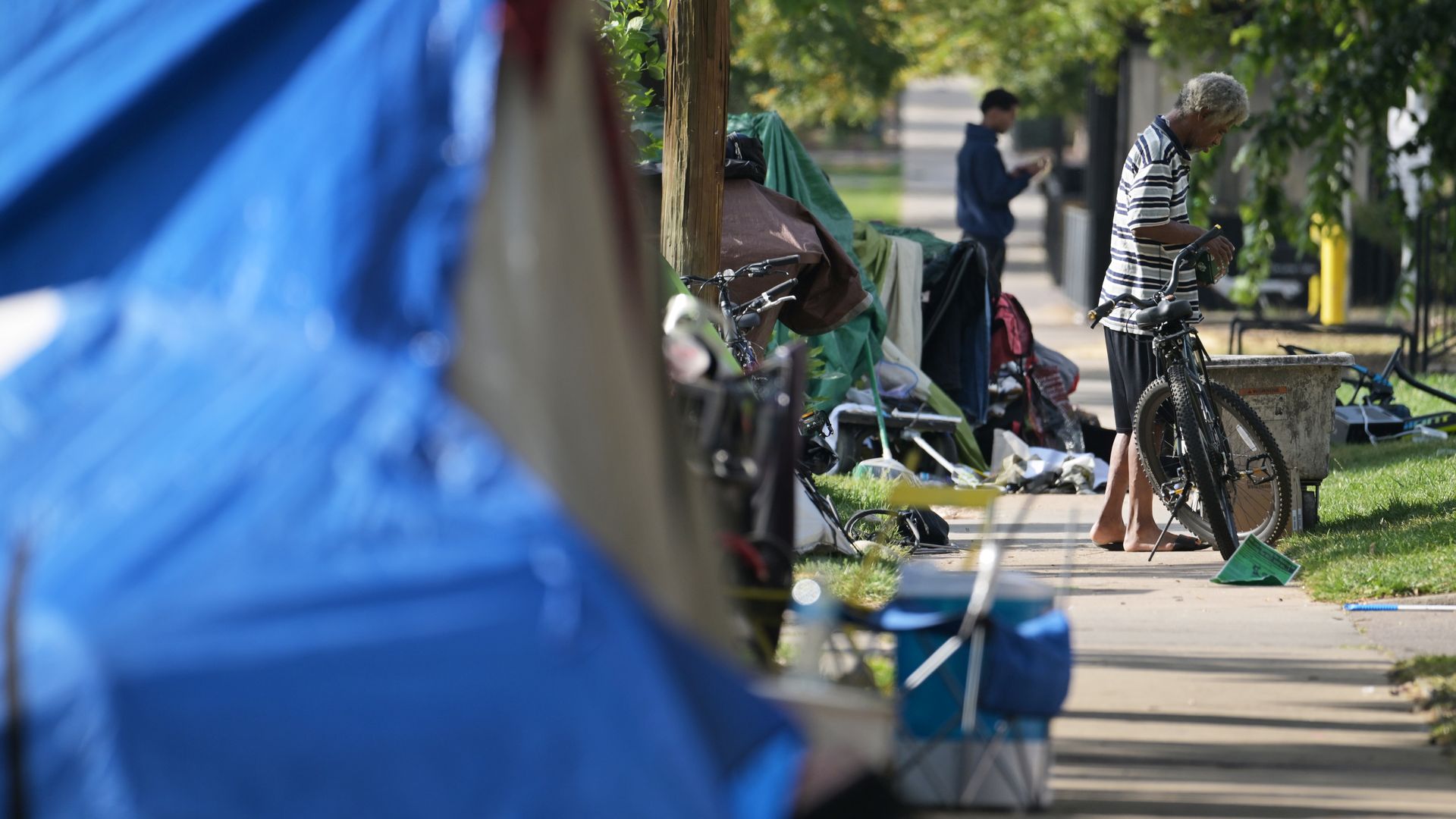
A homeless encampment on Pennsylvania Street between 17th Avenue and 18th Avenue in Denver in 2023. Photo: Hyoung Chang/The Denver Post via Getty Images
Unsheltered homelessness in Denver has dropped to its lowest level in six years, even as overall homelessness across the metro continues to rise, the latest point-in-time (PIT) count released Monday shows.
The big picture: There were 10,774 people experiencing homelessness during this year's count, an 8% jump from 2024, per data from the Metro Denver Homeless Initiative (MDHI), which surveyed people across seven metro counties on Jan. 27.
- The overall rate of increase slowed "significantly" compared to previous years, per a statement from the MDHI, which credits improved coordination and Denver's All In Mile High program for helping reduce unsheltered homelessness.
Why it matters: While fewer people are living on the streets, the data shows homelessness remains a persistent problem in Denver despite tens of millions of dollars annually invested to find a fix.
State of play: Roughly 80% of people surveyed during January's count were considered sheltered, meaning they were staying in emergency shelters or transitional housing.
- The remaining 20% were unsheltered, referring to people living on sidewalks, in cars or parks.
Between the lines: Mayor Mike Johnston's administration eliminated most large encampments in Denver through its rehousing program, bringing nearly 7,000 people indoors over the past two years by enforcing the city's urban camping ban.
- His administration said it only conducted sweeps when shelter space was available, though that didn't always prove to be the case.
Caveat: This year's PIT took place during a frigid night, which likely affected the total number of people in shelters, per the Colorado Sun.
The intrigue: Johnston's administration is taking credit for the steep drop in unsheltered homelessness, in a statement calling it "the largest two-year reduction in street homelessness in U.S. history."
- The data shows a 45% decrease in unsheltered homelessness since 2023, the year the mayor launched his signature program to bring thousands of people indoors.
- Now called All In Mile High, the program costs about $57.5 million a year, a spokesperson for the mayor's office tells us.
- His staff compared similar reductions to larger cities, including Dallas from 2021 to 2025 and Houston from 2020 to 2024, which registered 28% and 33% drops, respectively.
By the numbers: The 785 people counted as unsheltered this year in Denver is lower than similar-sized cities with PIT counts, including Washington, D.C. (798), Atlanta (1,061) and Austin (1,577), per data provided by Denver.
- Overall, 7,327 people reported experiencing homelessness in Denver during this year's count, a 12% increase from 2024.
What's next: The mayor's staff says they're concerned about federal funding cuts due to the Trump administration's targeting of Denver over its immigration policies.
- His staff doesn't yet have an estimate for potential cuts.
Editor's note: This story has been corrected to reflect that unsheltered (not sheltered) homelessness in Denver has dropped to its lowest level in six years.