How George Floyd protests changed Denver — and where the movement stands now

Add Axios as your preferred source to
see more of our stories on Google.
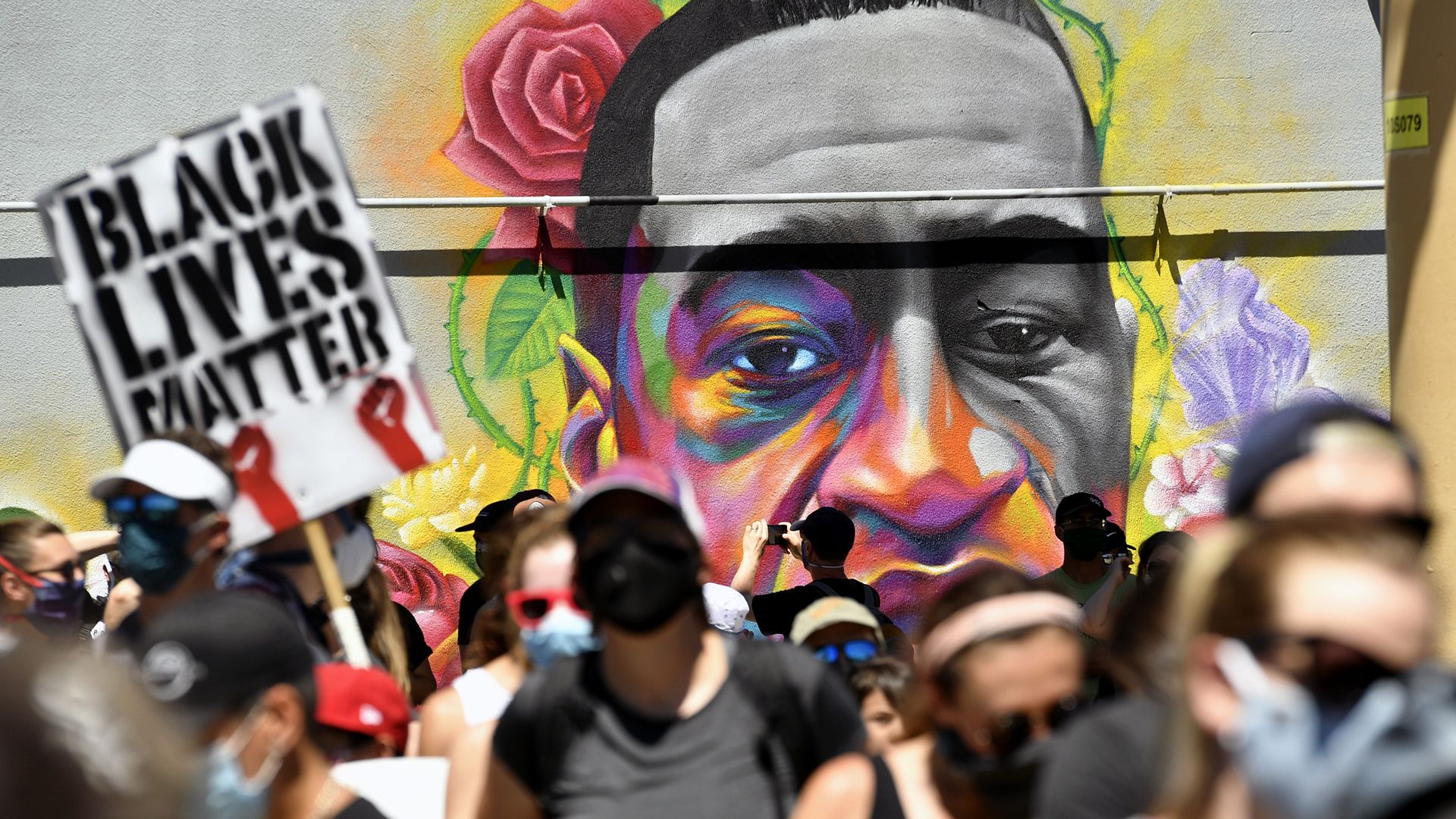
Marchers walk by a mural of George Floyd along Colfax Avenue on June 7, 2020 in Denver. Photo: Helen H. Richardson/MediaNews Group/The Denver Post via Getty Images
Five years ago, George Floyd's murder sparked nationwide protests that morphed into a movement condemning police violence and calling for swift reforms.
Zoom in: Robert Davis, as co-leader of the reimagining police task force, advocated for reforms to improve Denver's policing practices in the aftermath of Floyd's killing.
- He was a key figure in a movement calling for increased accountability and transparency for Denver law enforcement.
Why it matters: Five years after Floyd's death, Davis and other community members have lost optimism in a movement committed to ensuring a death like Floyd's won't happen again.
- The global protests and corporate and institutional pledges have largely collapsed since the start of the second Trump administration.
- In its place is a new political and cultural order backed by the administration rolling back DEI programs, civil rights initiatives and curtailing police reform efforts like consent decrees.
State of play: Lisa Calderon, executive director of Women Uprising, worked alongside Davis on the police task force to craft 112 policy recommendations for Denver law enforcement.
- The recommendations included minimizing unnecessary public interaction with law enforcement and improved funding for alternative response efforts, like STAR.
Calderon namechecked what she considered lasting victories: DPD's limiting of low-level traffic stops and City Council voting to decriminalize jaywalking.
- However, she says more can be done: "We have not seen the transformational changes that we had hoped."
Context: DPD has fully or partially implemented 64% of those suggestions, per their own tracking, though Davis says not all were implemented the way the task force recommended.
- DPD did not immediately respond to a request for comment Tuesday.
Flashback: Floyd's 2020 murder brought renewed attention to Elijah McClain's 2019 death in neighboring Aurora, propelling the case to the national spotlight, and prompting Gov. Jared Polis to appoint a special prosecutor to investigate.
- McClain, who was Black, died after being stopped by police and sedated with Ketamine by paramedics who were later convicted in 2023 for their role in his death.
Threat level: Denver has paid out $18.4 million in settlements related to the 2020 protests, per the latest data from the City Attorney's Office — a tangible reminder of how some officers mishandled George Floyd protest response.
The bottom line: 72% of Americans believe the focus on race and racial inequality following Floyd's killing did not lead to changes improving lives for Black Americans, according to a new Pew Research Center survey.
- Just 52% of Americans — a 15 percentage point drop from June 2020 — expressed support for the Black Lives Matter movement.