U.S. Rep. Evans decries "fear-mongering" despite looming Medicaid cuts

Add Axios as your preferred source to
see more of our stories on Google.
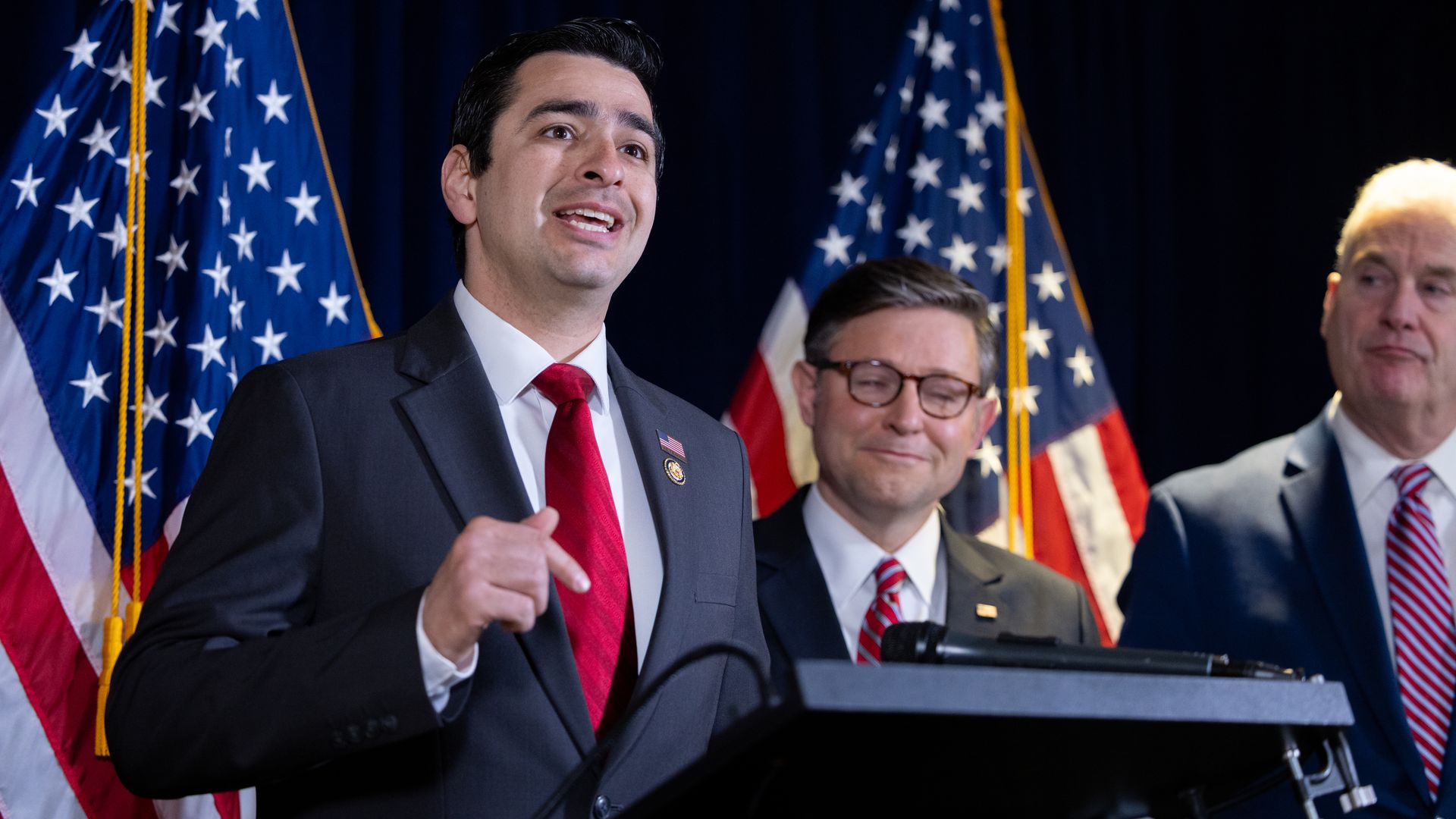
U.S. Rep. Gabe Evans speaks at a press conference with members of House Republican leadership in Washington on March 4. Photo: Nathan Posner/Anadolu via Getty Images
Republican U.S. Rep. Gabe Evans characterized his Wednesday vote advancing a sweeping Medicaid overhaul as helping reducing waste, fraud and abuse in the federal safety net program.
Reality check: It's also a vote projected to prompt $625 billion in reductions over ten years, based on estimates from the nonpartisan Congressional Budget Office (CBO).
- The Medicaid plan is just one part of the Republican tax bill Congress is currently weighing under President Trump's directive.
Threat level: "This would be the biggest rollback in federal support for health care ever," KFF executive vice president for health policy Larry Levitt tells us.
- It would push the number of uninsured people to 7.6 million by 2034, per the CBO.
Why it matters: His vote puts Evans, who represents a Colorado swing district, in a politically fraught position as he looks to retain his 8th District seat after approving spending cuts that are highly unpopular.
State of play: Health care advocates and medical professionals have warned for months that cuts to Medicaid could lead to people losing coverage from the federal safety net program, hurting vulnerable Coloradans.
- Expanding work requirements could mean between 95,000 to 108,000 Coloradans aged 19 to 55 lose coverage, per an analysis from the Urban Institute.
Between the lines: In a statement, Evans said claims suggesting the measure would cut Medicaid spending are "fear-mongering."
- He added the current proposal projects an annual increase in Medicaid spending. According to Levitt, this is accurate.
Yes, but: Levitt noted that although Medicaid funding will increase, the gains will be smaller than they would without the broader plan to cut overall spending.
The other side: A variety of nonprofits lambasted the Republicans' decision to reduce Medicaid spending, noting its potentially ruinous impact on people, especially working-class Colorado residents.
- "Ripping it away would increase homelessness and force families into crisis," Disability Law Colorado executive director Andrew Romanoff said in a statement this week.
How it works: The Republican plan calls for the first-ever federal work requirements for "able-bodied" Medicaid recipients.
- Other requirements include reducing federal government payments to states allowing undocumented immigrants to apply for Medicaid, which Colorado allows.
What's next: The proposal now heads to the House Budget Committee, where it will be combined with the other measures comprising the entire House Republicans' reconciliation bill.