
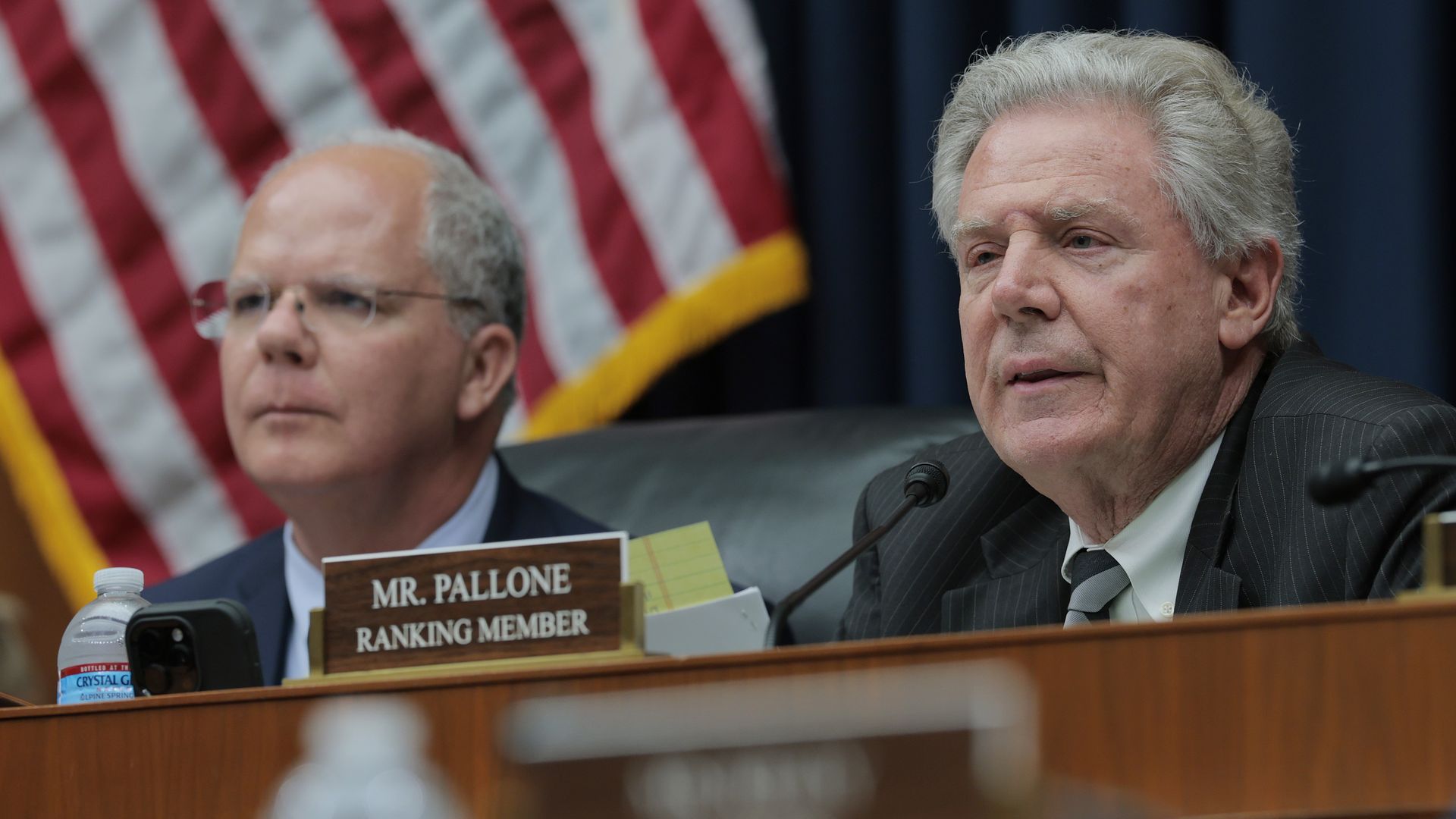
Guthrie and ranking member Frank Pallone during the markup. Photo: Anna Moneymaker/Getty Images
The House Energy and Commerce Committee on Wednesday advanced the biggest Medicaid rewrite in the program's 60-year history, marking a major step in Republicans' efforts to overhaul a safety-net program that covers more than 70 million Americans.
Why it matters: The policy changes, adopted in a 30-24 party-line vote, include the first-ever federal work requirements on "able-bodied" recipients and other provisions that are expected to result in millions of people dropping off program rolls.
- The changes also are expected to generate at least $715 billion in savings for the GOP's tax package.
Driving the news: The markup lasted more than 26 hours, with much of the health portion of the bill being marked up beginning in the early hours of Wednesday morning.
- If the legislation isn't significantly changed, Medicaid enrollees ages 19-64 would have to show they're working or participating in community engagement for 80 hours per month to continue receiving benefits.
- It would also impose cost-sharing on enrollees, cap provider taxes that states use to help fund the non-federal share of the program, and limit new state-directed payments. Eligibility checks would double, and there would be tighter enrollment requirements for signing up for ACA plans.
What they're saying: "All of this is part of our effort to strengthen Medicaid for the people that need it most," Energy and Commerce Chair Brett Guthrie said in his opening remarks.
Democrats unsuccessfully offered numerous amendments that would have watered down Medicaid cuts and ACA provisions and removed a ban on Medicaid funds going to organizations that provide abortions.
- Other amendments would have removed the new limitations on provider taxes and state-directed payments, cost-sharing for enrollees and a GOP provision in the bill that would delay the Biden administration's nursing home staffing mandates.
- Notably, there was no amendment vote on removing the ban for Medicaid funding going toward gender-affirming care.
The intrigue: Republicans and Democrats sparred during the hearing over how many more people will be uninsured under the GOP policies.
- Democrats maintain that almost 14 million would be uninsured, per a preliminary CBO estimate, but that includes around 4 million losing coverage when ACA premium tax credits expire at the end of the year.
- The GOP lawmakers said they expect the number to be close to 8 million, citing another CBO preliminary estimate.
Inside the room: Lawmakers failed to beat the 27-hour timestamp for a markup that E&C had during the 2017 ACA repeal-replace debate.
- At the outset on Tuesday afternoon, protesters interrupted lawmakers' opening remarks to shout "No cuts to Medicaid." At least 25 were arrested by U.S. Capitol police.
Catch up quick: The House Ways and Means Committee separately approved its portion of the reconciliation package, which contained several narrow GOP health care priorities, on Wednesday morning.
- Those provisions included limiting Medicare coverage and ACA tax credits for undocumented immigrants.
- It also would expand health reimbursement arrangements, add flexibilities for health savings accounts, and widen the definition of rural hospitals.
The bottom line: The Medicaid portion of the package marks huge changes ahead if the legislation isn't changed on the House floor and in the Senate, where lawmakers are more leery about Medicaid cuts.
- Before going to the House floor, GOP hardliners may seek deeper cuts.
