70 years after Brown v. Board of Education, Colorado schools remain segregated


Add Axios as your preferred source to
see more of our stories on Google.
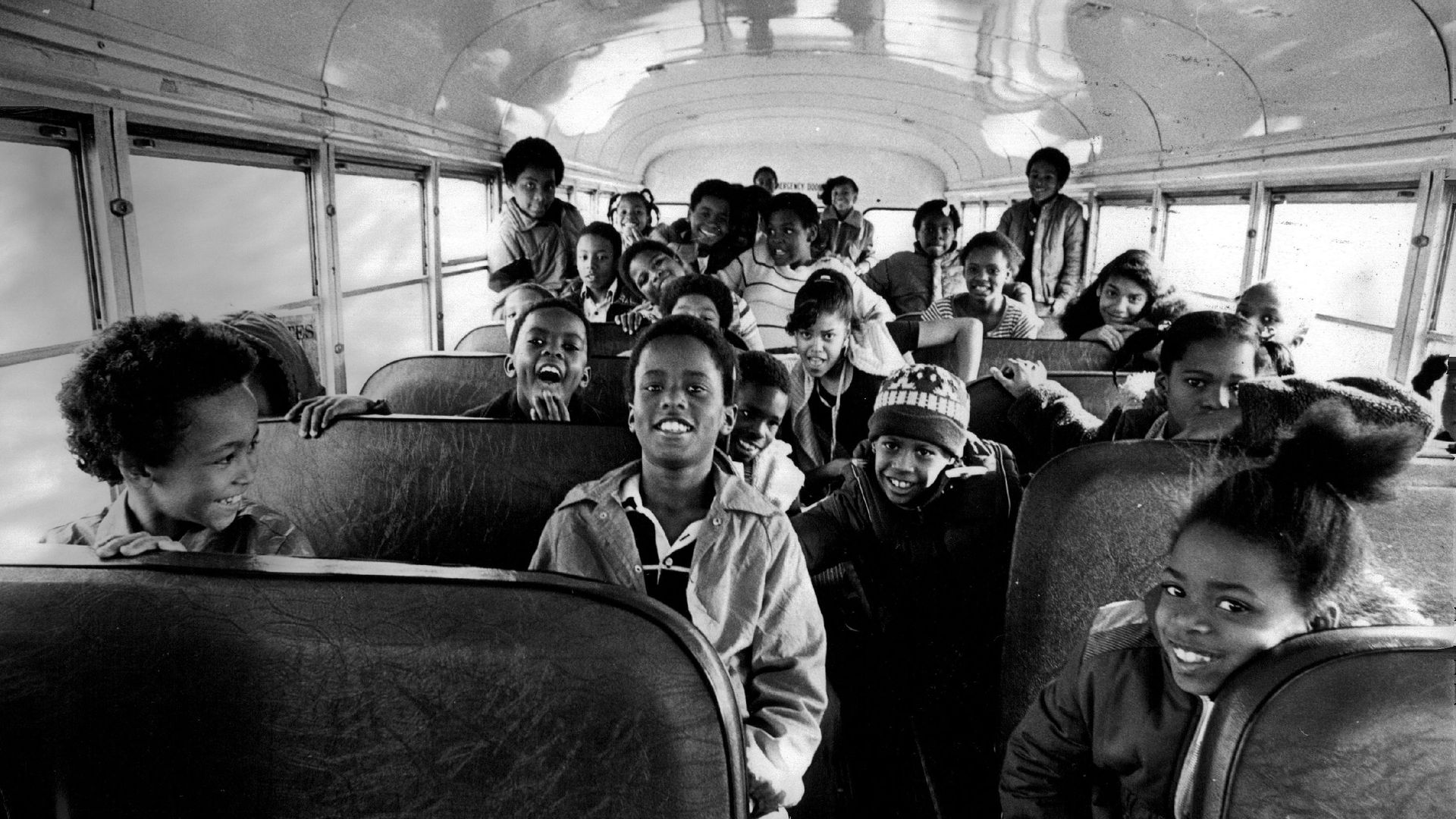
Denver children bused to Sabin Elementary in 1982. Photo: Bill Wunsch/The Denver Post via Getty Images
The landmark Supreme Court Brown v. Board of Education decision turned 70 Friday, but Colorado schools were far more impacted by another federal case, Keyes v. School District No. 1.
Why it matters: Despite those momentous rulings, some Colorado districts remain segregated, which means Black and Latino students especially are more likely to attend schools with fewer resources.
Catch up quick: The Keyes case, decided in 1973, ruled Denver Public Schools was indeed segregated by race. It led the district to integrate its schools through busing.
- The decision marked one of the first times SCOTUS identified segregation in northern schools, and extended integration rights to Latino students, according to Chalkbeat.
The latest: 1 in 10 schools in Colorado today are intensely segregated, according to UCLA senior policy research analyst Ryan Pfleger, who co-authored a report released last month on the issues.
- Intensely segregated means schools where 90% to 100% of its students are non-white.
State of play: Pfleger says Black and Latino students are more likely to attend schools with fewer experienced teachers, less advanced course offerings and lower graduation rates partly because they're more likely to attend poorly funded schools.
- Another significant problem connected to segregated schools in Colorado, he said, is exclusionary discipline, which is serious punishment like suspension or expulsion.
- It can be especially harmful to Black students, who face disproportionate discipline from districts, including Denver's.
Zoom in: A CU Boulder study released last year showed Denver Public Schools, the largest district in the state, remained solidly segregated by race and income, despite years of efforts to improve.
Between the lines: Denver released a report this year detailing ways to improve education for its Latino students, who make up more than half of all pupils in the district.
- The report's suggestions include recruiting more Latino teachers and creating more tutoring and instructional support. Latino students experienced skyrocketing segregation rates over the last three decades.
- DPS last year created an administrative team to help find strategies and practices to improve Black students' academic success, per Chalkbeat, and is led by a current elementary school principal who grew up during the city's busing era.
Zoom out: The UCLA report suggests racial segregation has increased dramatically nationwide over the last 30 years, a trend tied to the rise of charter schools and school choice options.
- The number of intensely segregated schools nearly tripled from 1988 to 2021.
The other side: Debbie Veney of the National Alliance for Public Charter Schools tells Axios neighborhood schools and charters are not causing racial segregation, but simply serving the students who appear at their doorsteps.
- "School choice allows students and families to have equitable educational access and opportunities regardless of where they live," Daniela Di Napoli, a spokesperson for DSST Public Schools, a charter school network in Denver and Aurora, tells us in a statement.
The bottom line: Improving school integration could improve a student's chances at a better life, Pfleger says, and extend to wider societal progress.
- "[If] we can tackle social inequality and segregation, [it] can really be the way to make public schools be a foundation for democracy," Pfleger tells us.