'Mormon crickets' are invading parts of Colorado

Add Axios as your preferred source to
see more of our stories on Google.
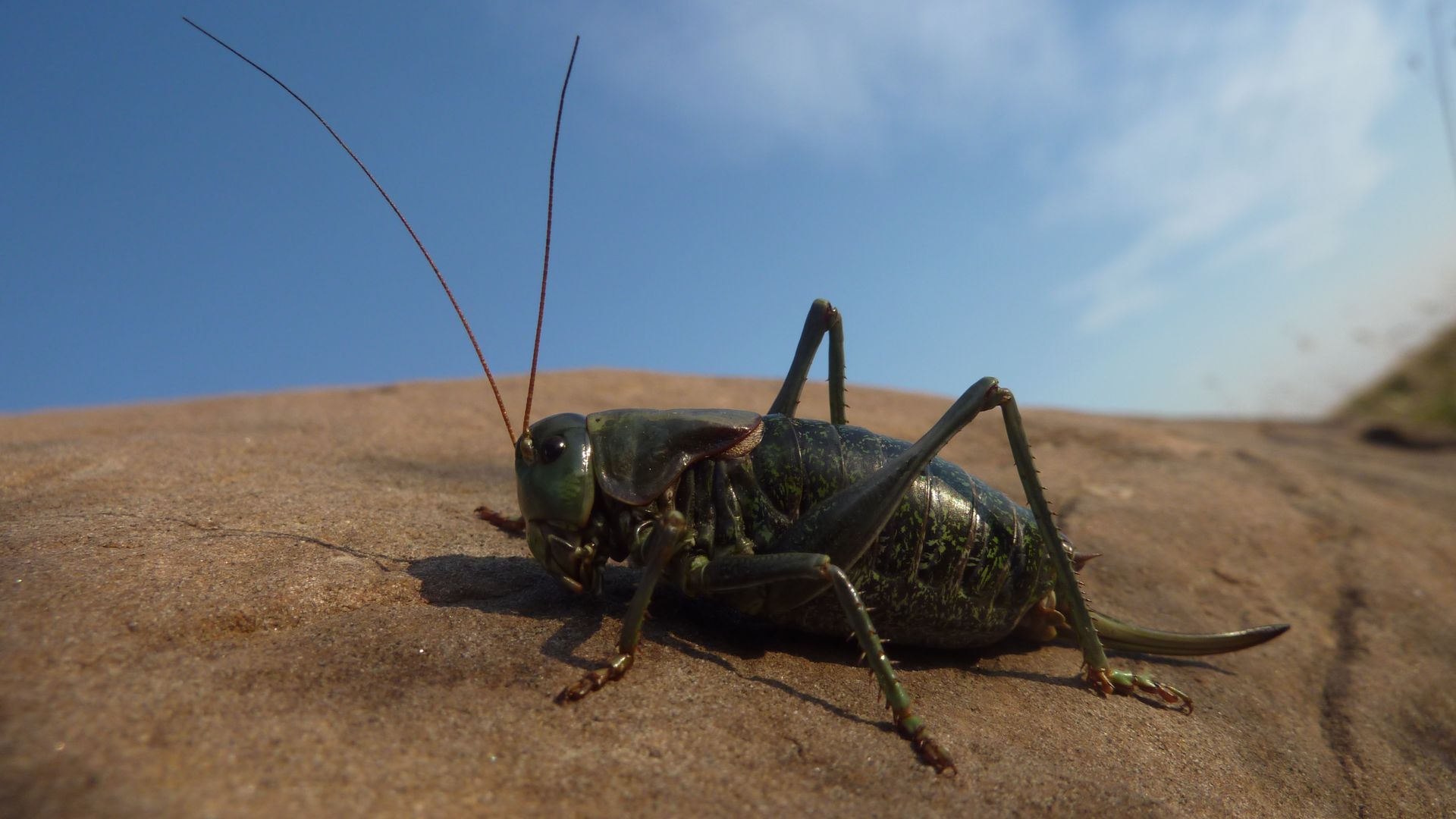
A Mormon cricket. Photo: Wikimedia Commons
First came the miller moths. Now, another insect is invading Colorado.
What's happening: Mormon crickets are marching in massive numbers across much of the northwestern part of the state.
- Their populations are soaring — and swarming — like nothing seen in recent memory, which could threaten farmers' crops, experts say.
- The infestation has gotten so severe that in areas like Rio Blanco County, officials are giving residents free insecticides.
Between the lines: Although "drought encourages Mormon cricket outbreaks," according to the University of Nevada, Reno, some local scientists suspect the recent record rainfall is to blame, the Colorado Sun reports.
- The species turns cannibalistic when grasses, shrubs and crops are scarce — but because plant life is abundant right now, they don't need to eat each other to survive.
What they're saying: The bugs, which can't fly but can travel long distances by hopping and crawling, are "stretched out on [Colorado] 64, for miles, just waves of them," Linda Masters, who directs the Colorado State University Extension office in Meeker, told the Sun.
- "They're crunching under your tires and the road is actually red" from the squashed copper-colored katydids, Masters told CPR.
Yes, but: It could be worse. In Nevada, for example, millions of Mormon crickets have wreaked havoc across densely populated neighborhoods and busy streets.
- So much so, the state's transportation department is using plows to clear their smelly remains and issued a warning about slick driving conditions.
Context: The insects earned their name around the mid-1800s in what is now Utah after infiltrating the crops of Mormon settlers, who thought the bugs sounded like crickets, per Washington State University.
- That event became known as "the Miracle of the Gulls," when flocks of seagulls mysteriously appeared and feasted on the bugs, sparing the settlers' first harvests after fleeing religious persecution.