Colorado museums changing their approach to Indigenous history and culture

Add Axios as your preferred source to
see more of our stories on Google.
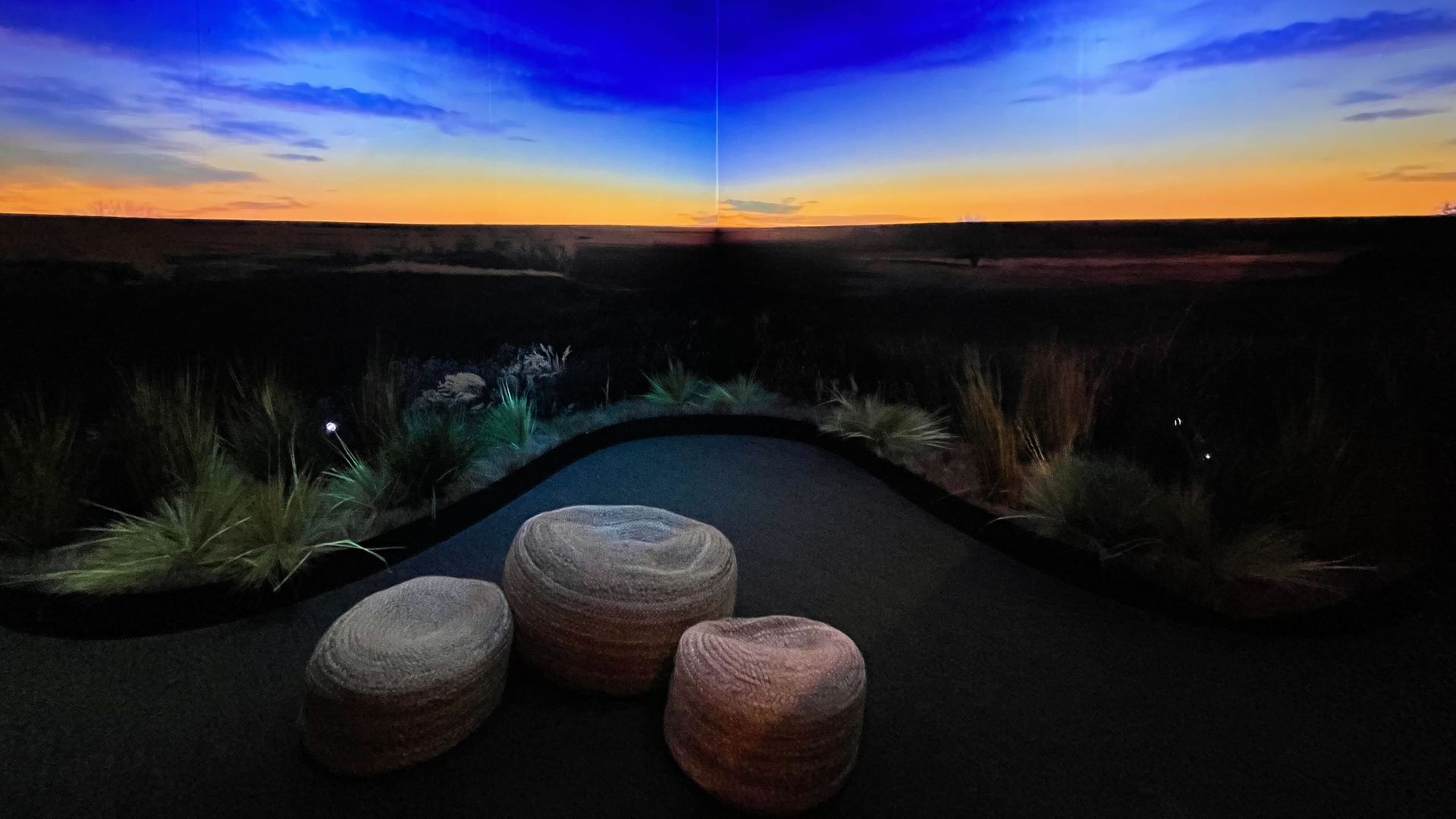
A panoramic view of the modern-day Sand Creek Massacre site in Kiowa County, Colorado, in the Sand Creek Massacre exhibit at History Colorado Center in Denver. Photo: Esteban L. Hernandez/Axios
Two Denver cultural institutions are rectifying how they acknowledge Native American culture.
Driving the news: Last month, the Denver Museum of Nature and Science said it would close its North American Indian Cultures Hall this summer, calling it "problematic," according to the Denver Post.
- Museum vice president Liz Davis wrote in a letter that it reinforced "harmful stereotypes" by showing Indigenous people in dioramas "as if they exist only in the past."
Why it matters: It's the latest example of how museums are rethinking how history is celebrated and displayed.
- It also shows how some exhibits can further marginalize people, including Native Americans, whose cultural contributions can be cast as relics rather than living embodiments.
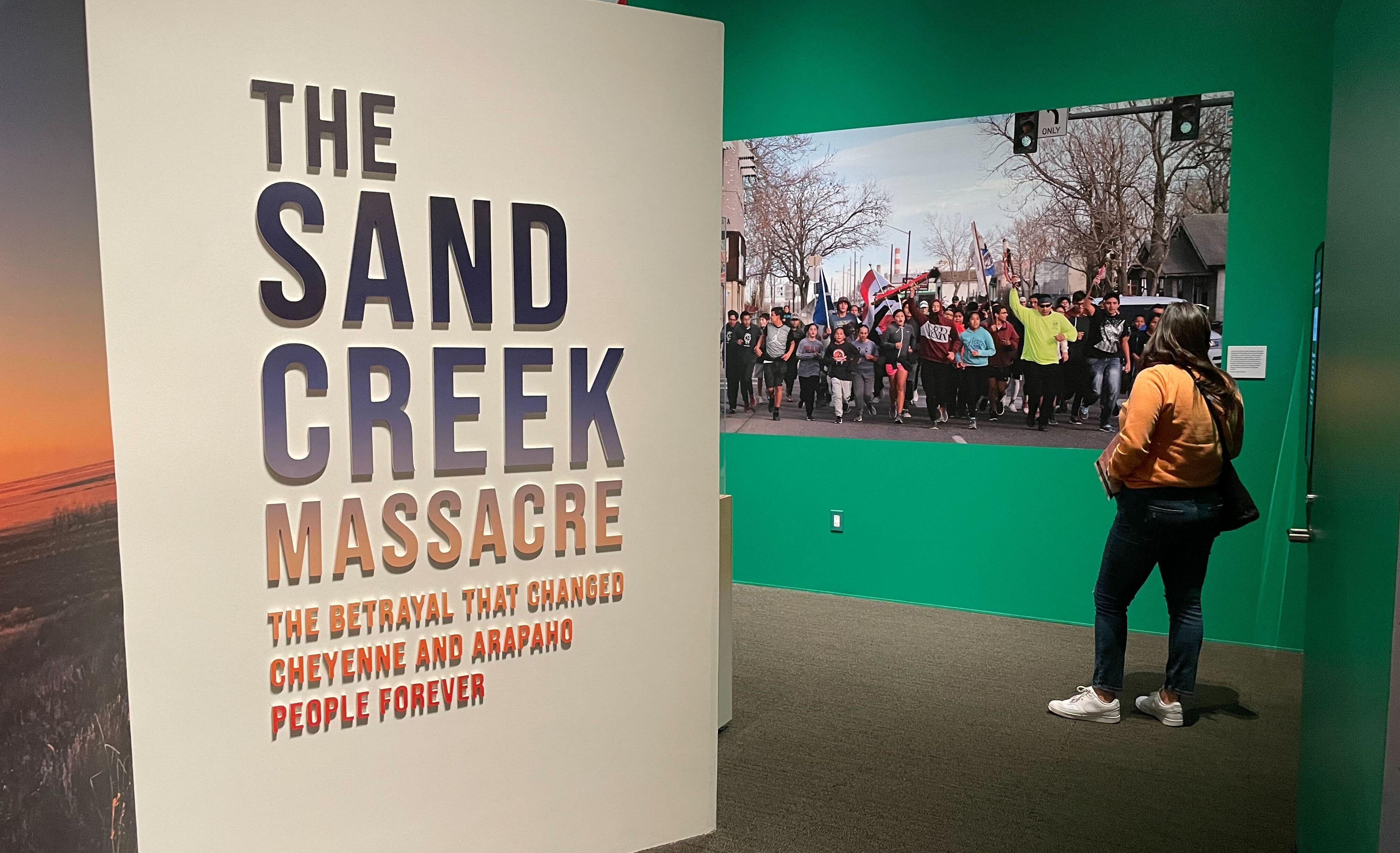
Between the lines: History Colorado Center faced its own reckoning when it closed its Sand Creek Massacre exhibit in 2013 after criticism from Cheyenne and Arapaho people who felt it was missing key information and mischaracterizing the attack.
- The new exhibit premiered last November after consultation with tribal leaders on how to more appropriately recognize the atrocity.
- Executive director Dawn DiPrince says the exhibit makes an effort to tell stories about the "living heritage and culture of Indigenous people today," by including present-day interviews with descendants and modern artwork commemorating the massacre.
The other side: "This exhibit still doesn’t capture the full story behind Sand Creek," Chester Whiteman, who is Southern Cheyenne and helped consult on the new exhibit, told 5280 last year.
- He said he wants Native American stories to be told more widely.
What's happening: Pueblo artist Virgil Ortiz, who has an exhibit at the center, recently participated in a panel during the American Alliance of Museums Expo in Denver discussing how museums work with indigenous people.
- "A lot of the complaints were, museums were not paying attention to [us] — they're talking about us as artifacts, basically, like we're not here," Ortiz tells us.
- Ortiz, who works with ceramics, fashion and digital prints, says he feels lucky since he's had good relationships with most museums, including History Colorado Center.
Details: Ortiz said every museum he's worked with in the past 20 years has "accepted" his work, something he credits to having open communication with curators that allowed him to set a clear vision.
- "I couldn't say that I never got what I wanted because that never happened to me," Ortiz said.
What's next: Jason Hanson, History Colorado Center's chief creative executive, said the soldier statue torn down outside the Capitol during the 2020 protests following George Floyd's murder will be on display for at least one more year.
- "It's exceeded our wildest hopes for becoming a focal point for people to have civic and civil conversations about the roles of monuments," Hanson tells us.