Denver's urban camping ban brings 10 years of turmoil

Add Axios as your preferred source to
see more of our stories on Google.
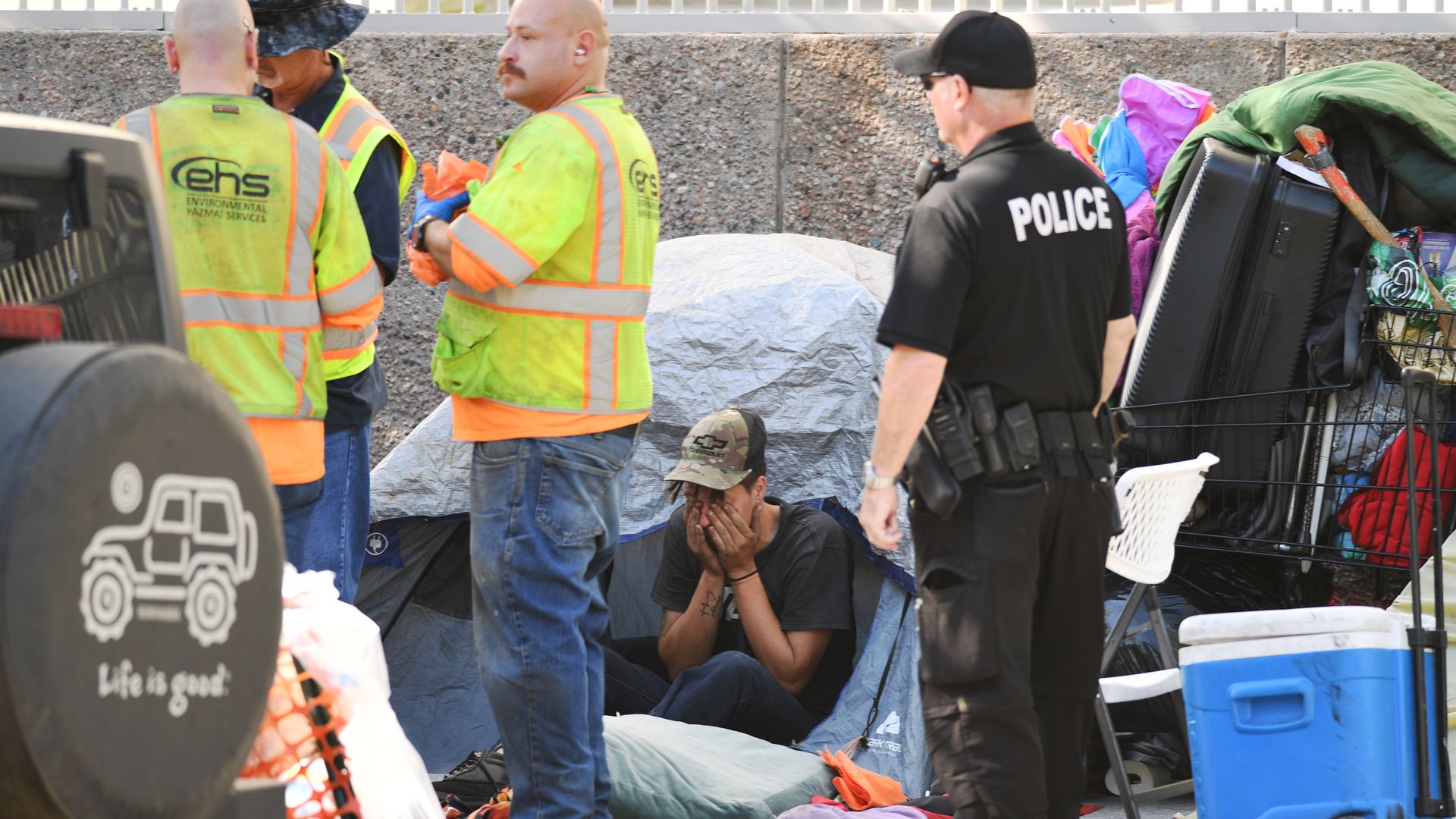
People are asked to leave a homeless campsite by Civic Center Park in Denver last September. Photo: Hyoung Chang/The Denver Post via Getty Images
A decade since Denver banned homeless encampments, little data illustrates the policy's success — or its cost.
The big picture: Colorado's chronically sheltered homeless population grew by 266% between 2007 and 2021 — more than any other state — and the number of people experiencing homelessness for the first time in metro Denver doubled between 2020 and 2021.
- At the same time, the Mile High City ranks among the nation's top 10 most expensive metros, with an average home sales price hitting a record $705,812.
Driving the news: Tuesday marks 10 years since the city's urban camping ban was signed into law by Mayor Michael Hancock.
- The milestone prompted opponents of the policy to don shirts that read "Denver's decade of doom" in a City Council protest last week, causing an hour delay.
What they're saying: "[A]ll the promises that were made have not come true," Terese Howard, an advocate for the homeless, told Denver VOICE.
- "People are still not connected to services, and people are being criminalized and put in jail more so than housing," she added. "It's time to take a new approach."
State of play: Denver leaders still have no idea how much the policy costs taxpayers to clear homeless encampments off public and private property.
- "Regardless of cost, they're necessary to protect public health and safety," Hancock spokesman Mike Strott tells Axios Denver.
- Meanwhile, the city's sweeps have pushed people to other places, like Denver International Airport.
- And Aurora recently passed a camping ban of its own.
The other side: To help address the crisis, Denver this year quadrupled its contract to $4 million with the Colorado Village Collaborative to continue and expand city-sanctioned campsites for unhoused people.
- Hancock also launched the city's second "housing surge" campaign to get at least 400 more people "stably housed" by mid-May.
- And the city is advancing a plan that would require real estate developers to build affordable housing units in new residential projects.
Of note: Denver's housing department received $10.8 million in federal American Rescue Plan aid and is exploring how to spend the funds, including on affordable housing, homeless prevention and the purchase and development of a non-congregate shelter.
What's next: The city's auditor is conducting the first-ever evaluation to determine the impact of the city's management of homeless encampments, including cleanup costs and repercussions for the community.