Growing UFL-to-NFL pipeline sends dozens to training camps

Add Axios as your preferred source to
see more of our stories on Google.
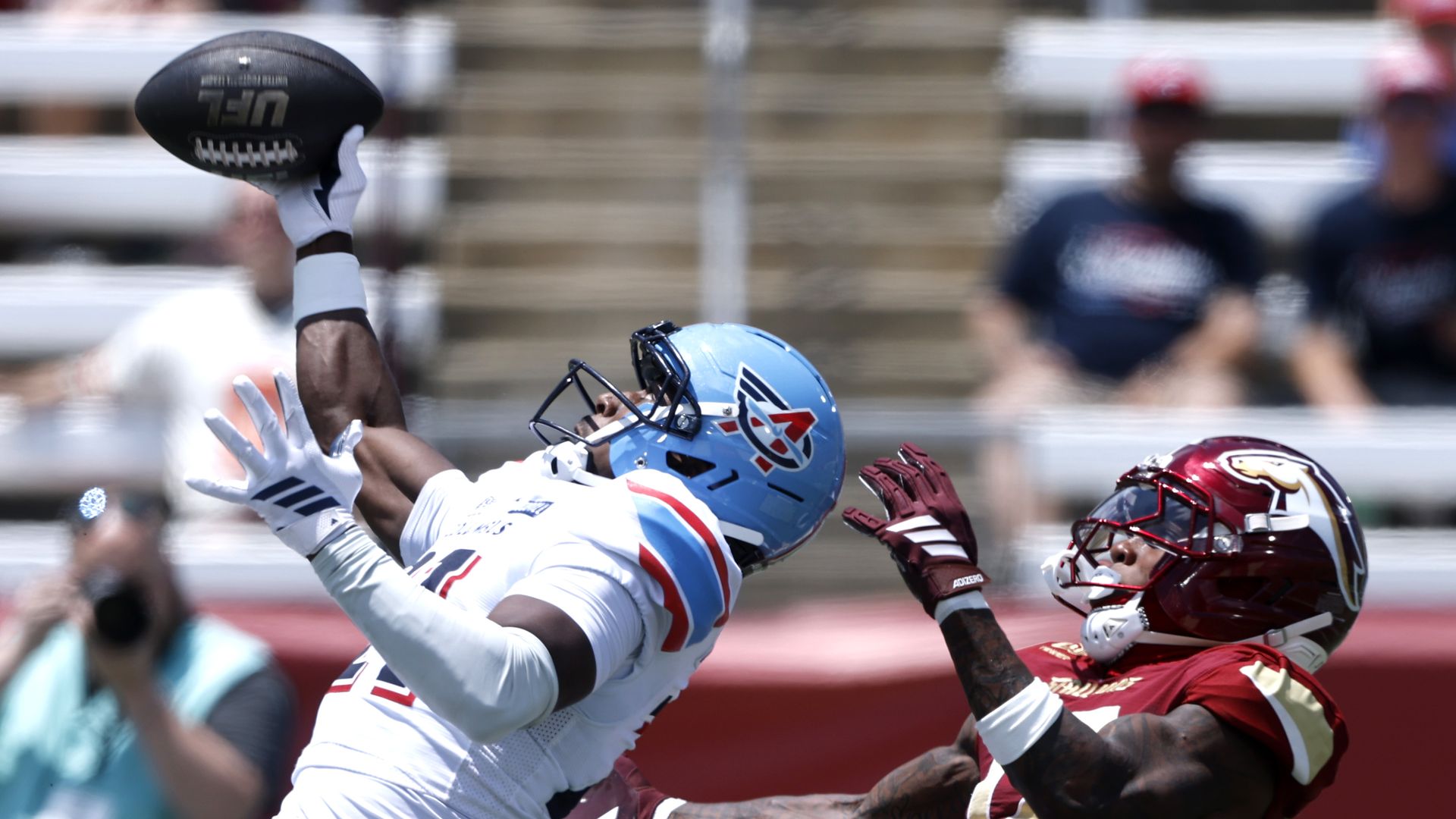
Cornerback DJ Miller is one of eight Columbus Aviators in NFL training camps this summer. Photo: Butch Dill/UFL/Getty Images
NFL training camps give aspiring players a chance to prove they belong in the big leagues — and the United Football League a chance to prove its players do, too.
Why it matters: The Aviators are football-hungry Columbus' first professional outdoor team in 30 years. The league's long-term success depends on proving it can develop NFL talent.
Driving the news: Football's return is inching nearer, and NFL teams are holding training camps across the country.
- At those camps are dozens of UFL players trying to work their way to (or back to) the NFL — a rising number that UFL senior VP for football operations David Dykeman calls "proof of concept."
By the numbers: Nearly 50 players on 2026 UFL rosters were in NFL training camps as of Thursday.
- That includes eight Aviators.
- At least 80 UFL and spring football alumni have NFL contracts, and 22 of 32 NFL teams have now signed a 2026 UFL player.
What they're saying: Those numbers are on pace to beat the mark of 102 players set at the end of the last NFL season, and Dykeman tells Axios the league's reputation has shifted.
- "I started with the XFL in 2022, and back then we were reaching out to agents and players — that pendulum has swung. This has become a real, viable path to the NFL."
Case in point: NFL coaches like Brian Schottenheimer, Dan Campbell and Sean Payton have similarly praised UFL's player development.
Yes, but: Does that make for a better product for fans? Dykeman thinks they appreciate the improving player pool — even if "we hope they're not back next year because they're in the NFL."
- "It's no different than going to a major college game and then seeing a player from Ohio State playing for [an NFL team]."
Zoom in: In their debut season in Columbus, the Aviators averaged 10,362 fans per game, about half of the Historic Crew Stadium capacity.
- That includes drawing 10,705 in their final game despite being the worst team in the league.
- "It's the right market — a place starving for football — and the right venue," Dykeman says. "When you have those, you have long-term success."
What's next: The eight-team league is still growing, with plans to reach 10 teams by 2028, 12 teams by 2030 and 16 teams by 2035.
- "Year-to-year [planning] — those days are over," Dykeman says. "This is long-term sustainability and growth."