Clawed visitors are appearing in Columbus backyards

Add Axios as your preferred source to
see more of our stories on Google.
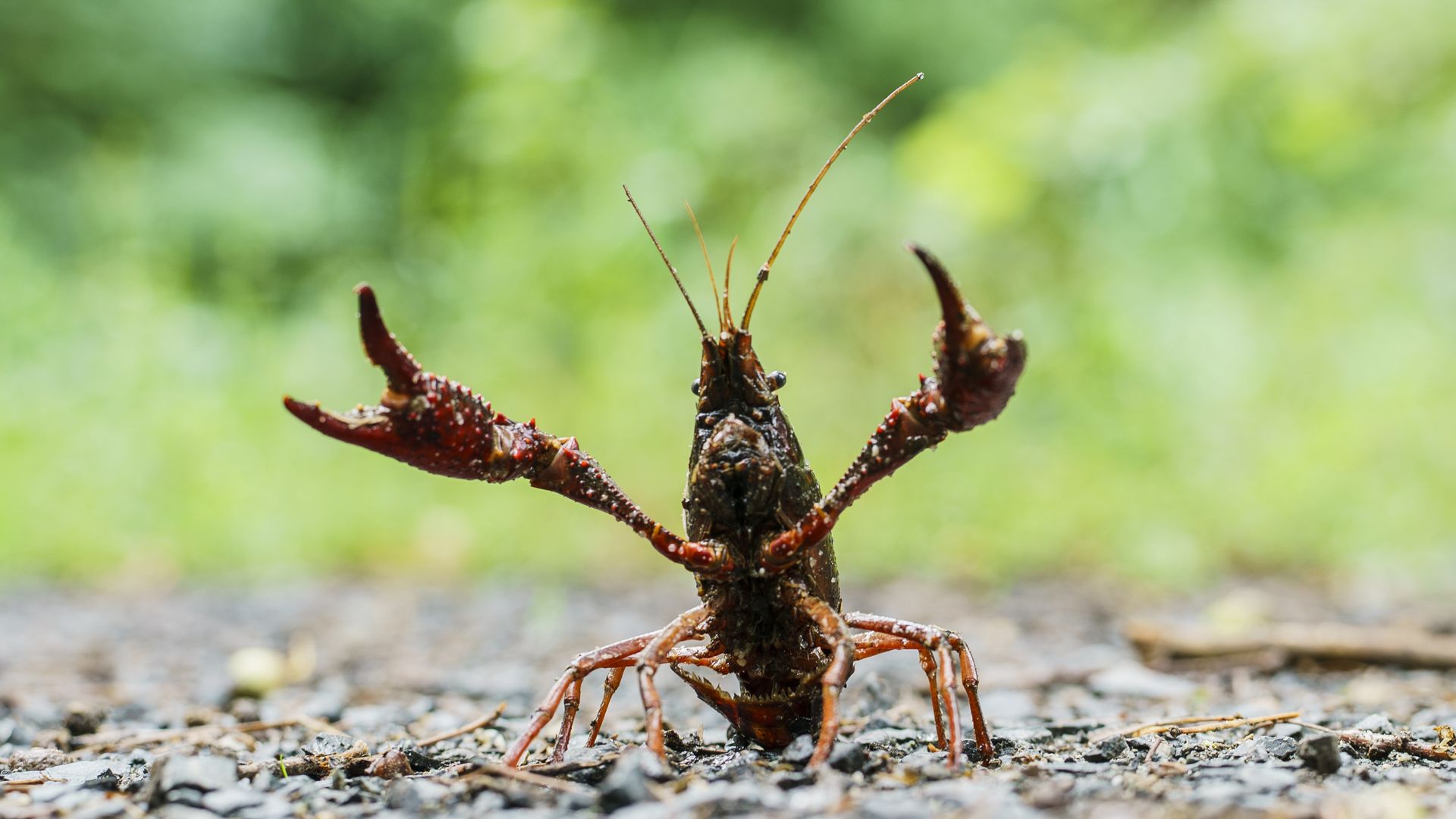
The red swamp crayfish might show up on a patio near you, but there are bigger threats. Photo: Andreas Arnold/picture alliance via Getty Images
The invasive red swamp crayfish is wandering into Central Ohio backyards and patios — but it's not the scariest crustacean staring at us.
Why it matters: Invasive species harm natural ecosystems by pushing out native life, spreading disease and harming vegetation — if uncontrolled, that can affect our waterways.
- And most Ohioans aren't accustomed to finding a clawed crustacean skittering into their yards and garages.
🦐 Driving the news: A few Columbus residents have taken to Reddit to report a funny-looking shellfish in areas usually near water.
Zoom in: These appear to be red swamp crayfish, native to the southern U.S. and Mexico, but were spread by pet stores and other sales channels, which are now banned.
- Also called Louisiana crawfish or mudbugs, they tend to outcompete native crayfish and alter water quality.
- But outside of a problematic population in Sandusky, they struggle to establish themselves long-term in most of Ohio's dense, clay-rich soil, crayfish biologist Roger Thoma tells Axios.
Threat level: These guys might alarm you — but they aren't the species we need to worry about.
Zoom out: The real threat comes from the marbled crayfish, not yet commonly found in Ohio.
- Through the pet trade, it was inadvertently allowed to evolve into a parthenogenetic species, which means it can reproduce asexually.
- This gives it the potential to do massive damage. States have already started banning its possession and trade — and they're enforcing it.
Case in point: In 2022, the Justice Department charged an Ohio woman under the Lacey Act, a national conservation law that prohibits the trade of illegally taken or possessed wildlife.
- She allegedly sold marbled crayfish to buyers in 36 states.
- She pleaded guilty and was sentenced to a $5,000 fine, two years of probation and community service.
What they're saying: Thoma says "no one ever expected" a crayfish to become parthenogenetic, which means agencies have to act fast if it begins to spread.
- "If they become aware of an established population, they're going to have to immediately go in and try to kill everything."
🦞 The big pincher: A red swamp crayfish catching you off-guard might be alarming, but it's not an existential threat.
- "It's not a death sentence like some of these marbled crayfish could be," Thoma says.
The bottom line: Report either of these crustaceans to the Ohio Department of Natural Resources.