Help Ohio find missing veteran graves this Memorial Day weekend

Add Axios as your preferred source to
see more of our stories on Google.
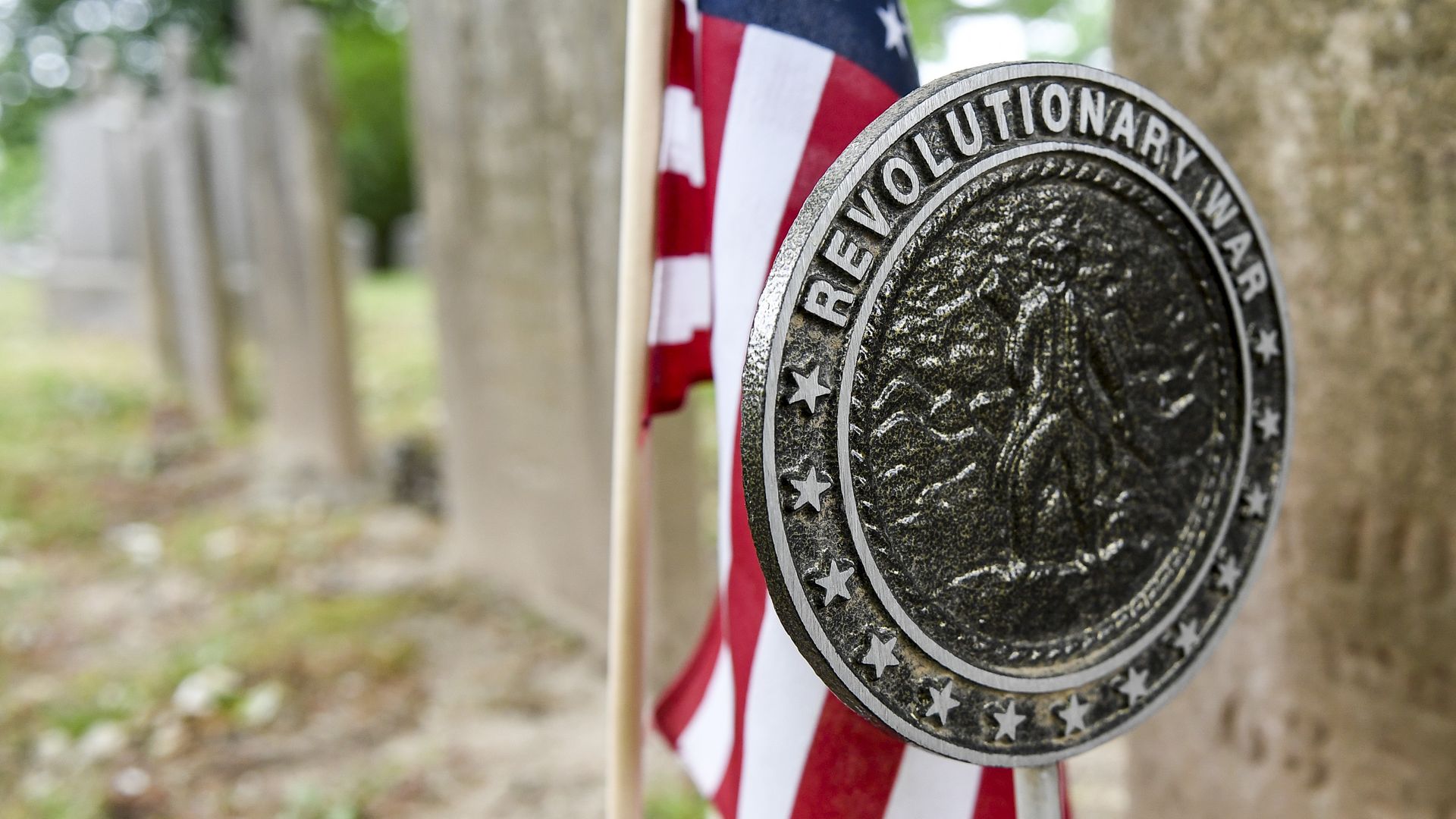
A marker on a Revolutionary War veteran's grave. Photo: Ben Hasty/MediaNews Group/Reading Eagle via Getty Images
If you're visiting family in Cincinnati or Youngstown over Memorial Day weekend, a grave-tracking project honoring our nation's earliest veterans could use your help.
Why it matters: Revolutionary War soldiers were among Ohio's first settlers, but their graves are deteriorating, disappearing and often difficult to track down.
- Over 400 volunteers have documented thousands over the past year, and the state will use the data to make an interactive online map and database.
The latest: Collection wraps up Monday ahead of a July Fourth reveal coinciding with America's 250th birthday.
The big picture: Ohio didn't become a state until 1803 — 20 years after the Revolutionary War ended — but thousands of soldiers migrated here and died in old age.
- Many were given land as back pay for their service.
- The Sons of the American Revolution estimates about 7,000 are buried here, including 169 in Franklin County. The group's massive list documents presumed locations but doesn't track their conditions — a gap project organizers hope to fill.
By the numbers: Volunteers have already recorded over 4,100 graves across 1,400 cemeteries, according to a live preliminary dashboard.
- That includes 129 in Franklin County.
- The Cincinnati, Youngstown and Marietta areas have the largest estimated concentration of graves — over 1,000 total — but less than half have been recorded so far.
How to help: Download a free phone app to submit photos.
- Use historical records, like the list above or others listed here, to figure out where to start looking.
Pro tip: Check the dashboard first to see whether the site has already been recorded.
- Some graves are duplicates and now must be consolidated as a consultant reviews the data, says project manager Krista Horrocks, with the State Historic Preservation Office.
What they're saying: In addition to historical record keeping, organizers also hope to help communities look to the future.
- The project may spur discussions about cemetery upkeep or how to honor veterans whose markers are missing, Horrocks says.
The bottom line: "Maybe someone will have gravestones put in for them, so they won't be forgotten," she says.