The century-old LeVeque Tower needs some work

Add Axios as your preferred source to
see more of our stories on Google.
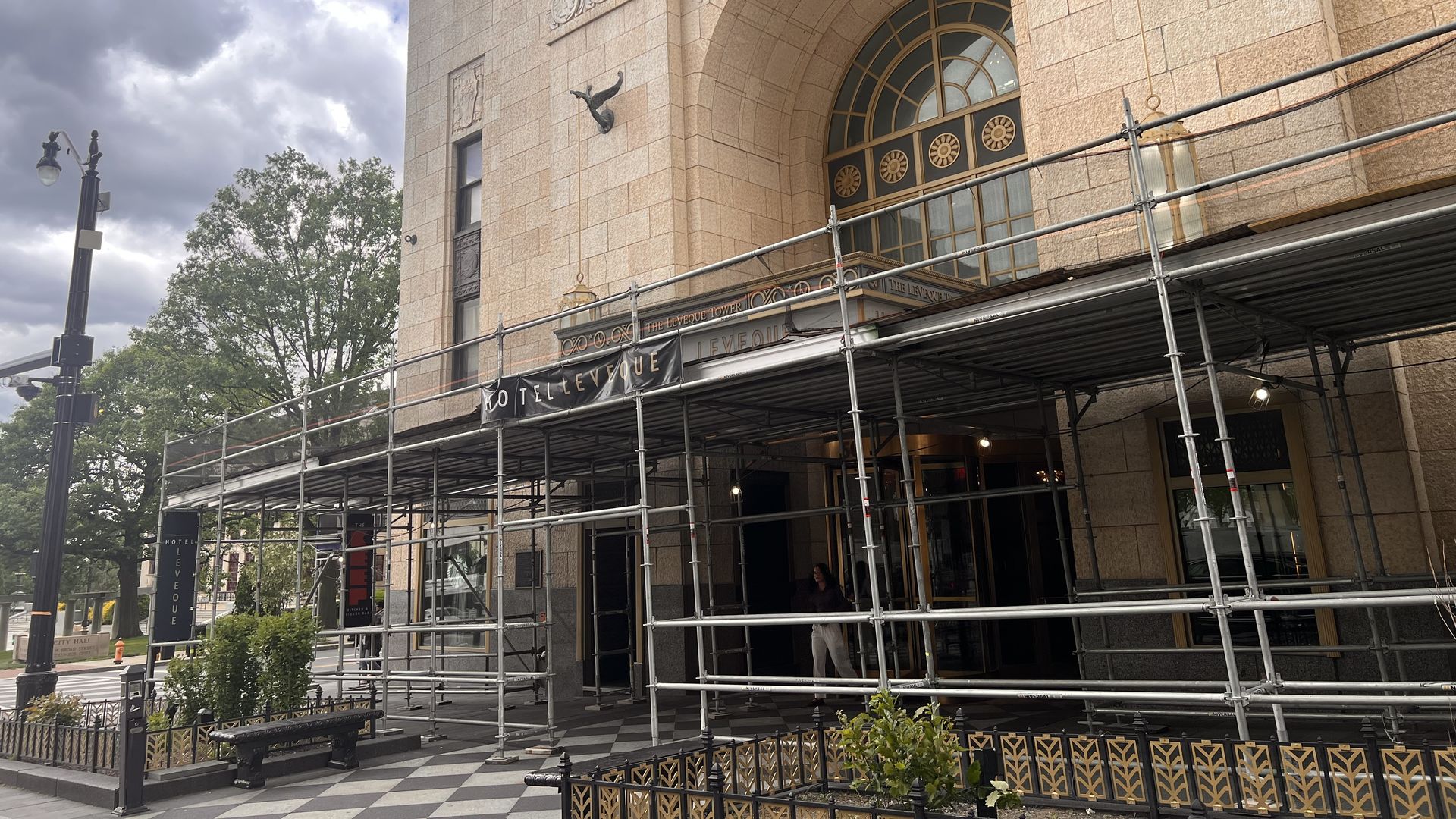
The LeVeque Tower's grand entrance is currently obscured by scaffolding. Photo: Andrew King/Axios
The signature silhouette of the Columbus skyline has become something of a pedestrian eyesore, wrapped in cheap metal and wood to ensure no one is hit by falling debris.
Why it matters: The LeVeque Tower isn't just any downtown building, it's the city's most iconic structure and a reminder of a time when we built skyscrapers with aesthetics in mind.
The intrigue: But today, buzz about the famous structure largely centers on the temporary scaffolding erected around its base.
- Quiet, opaque ownership makes it difficult to learn how long that scaffolding will last or how the facade will be updated to remove it.
Flashback: The building opened in 1927 as the American Insurance Union Citadel, the fifth-tallest building in the world at the time.
- Unique terracotta architecture gave it staying power downtown, surviving a variety of tenants, owners, uses and restorations.
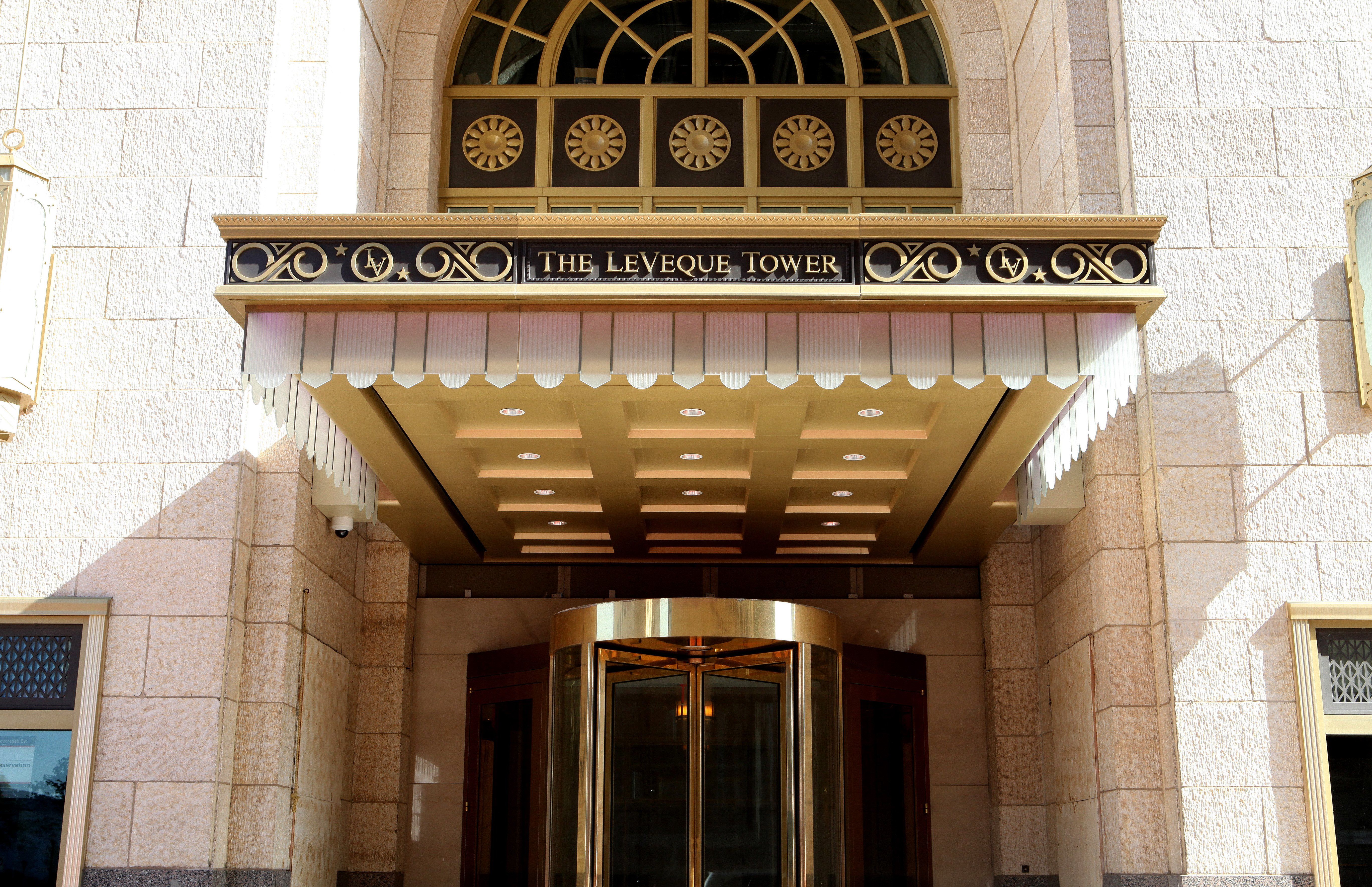
Its current era began in 2011, when a group of investors formed Tower 10 LLC and bought the building, launching a $27 million restoration helmed by Columbus architecture firm Schooley Caldwell.
- That group included real estate investor Robert Meyers, Kaufman Development and Chicago-based First Hospitality.
State of play: The tower is mostly condominiums, apartments and hotel space, along with some office floors.
- There's a first-floor Starbucks and The Keep Kitchen & Liquor Bar on the mezzanine level.
Yes, but: Why the scaffolding? "Out of an abundance of caution," says Schooley Caldwell architect Sam Rosenthal, who has worked on the LeVeque since 2011 and is its de facto spokesperson and advocate.
- "We've been working to find a safe and structurally sound way to have facade access to the upper elevations to finish restoration of the building."
- He says he's not aware of anything falling onto the scaffolding since it was erected last year.
The nearly 100-year-old building was not designed for safe window washing and maintenance, let alone modern safety features and equipment.
- "You got a guy on a bosun's chair or something, and you'd just hang out the window," Rosenthal says.
Threat level: Within 20 years of opening, Rosenthal says, pieces of the building were falling off and going through car roofs.
- "There's always been a history of things having to come off of it because of how it was built."
- Every five years, Columbus requires a critical observation report from 20-year-old buildings, with requirements to protect pedestrians underneath.
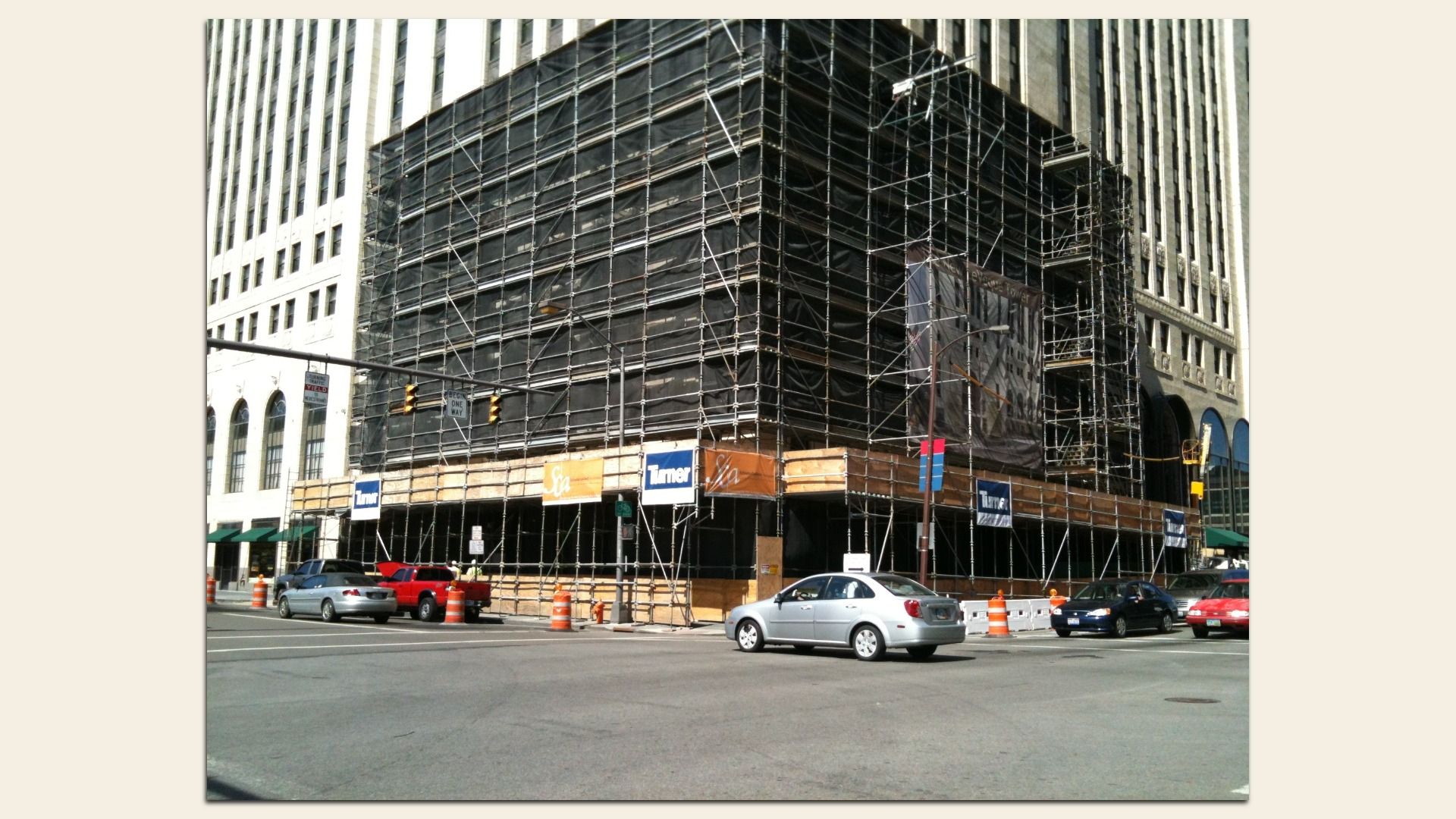
Ownership and architects now need to find a solution for that century-old problem, and Rosenthal says there's "no magic bullet."
- The most "straightforward" approach would be "biting the bullet" and embarking on a massive, expensive update of the facade.
- That work would need to be repeated every 20 years or so, and it would make the current scaffolding look minor.
- "If you had a big Hydro Mobile, I think we might be talking about taking a lane out of the street."
Who will decide what comes next? It's not clear, even to Rosenthal.
- He agrees that decision-making and ownership is "pretty opaque," but has faith in a group that "started investing in it immediately" and "have done a ton of work to repair this building."
- Meyers has not given interviews to Columbus media, and Axios could not reach any Tower 10 leadership for comment.
The bottom line: The LeVeque is expensive, outdated and problematic — but Rosenthal says it "defines our skyline."
- It represents a type of architectural beauty that's disappearing from the world, and that makes it worth saving today.
- "There just isn't as much of a willingness to make things special. It's, 'Let's make them fast, make them cheap and save money.'"