Columbus Landmarks wants help saving these historic buildings

Add Axios as your preferred source to
see more of our stories on Google.
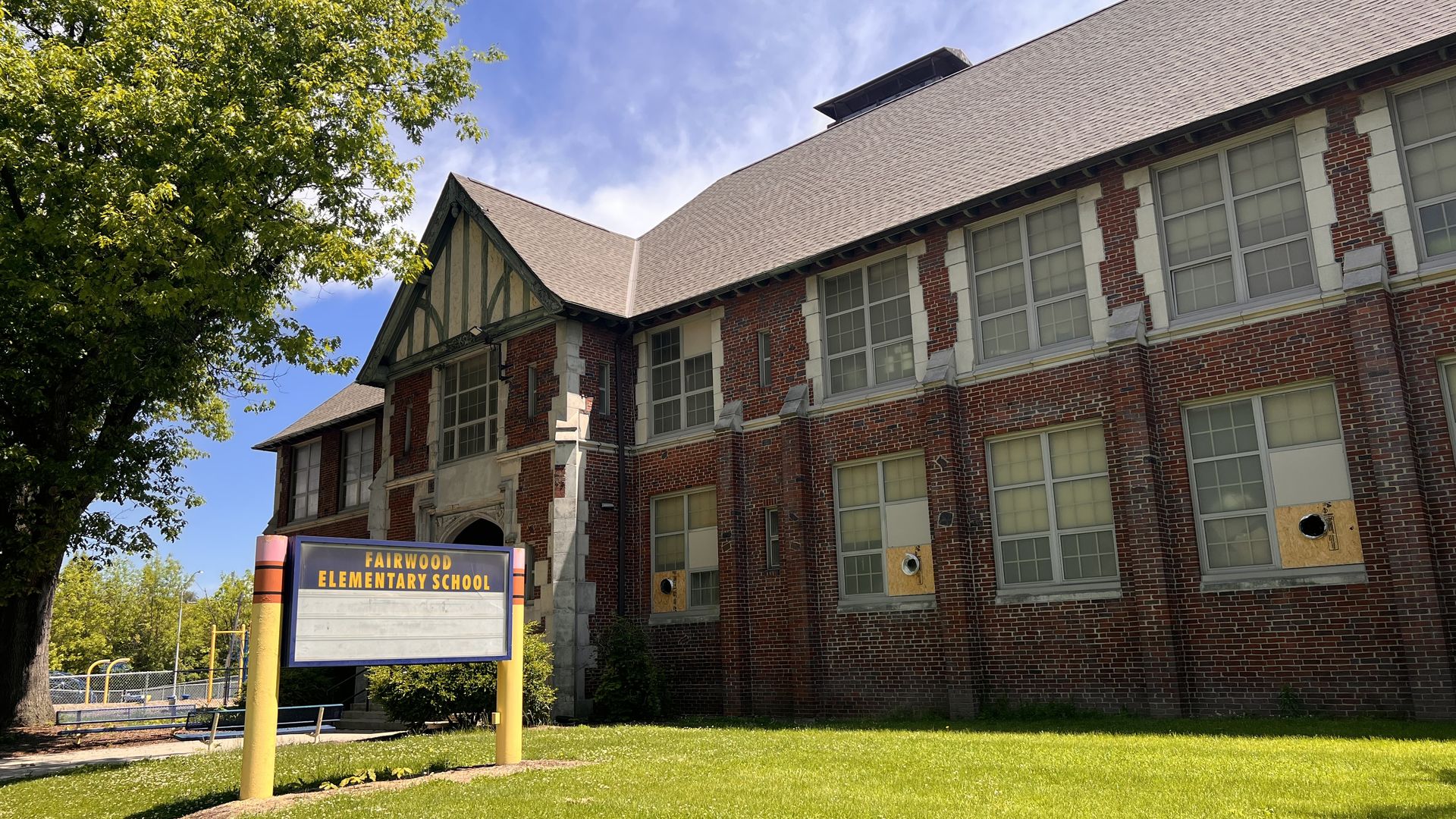
Fairwood Elementary School, designed by Ohio Stadium architect Howard Dwight Smith, is one of this year's "Most Endangered Sites." Photos: Andrew King/Axios
Central Ohio historians and preservationists have new marching orders this week, with the arrival of a new list of Columbus' "Most Endangered Sites."
Why it matters: The annual list attempts to save pieces of local culture and heritage at risk of disappearing, along with the histories within their walls.
- This year's collection includes a pair of old schools, German Village homes and a recognizable downtown building.
The big picture: Columbus Landmarks is a nonprofit focused on preservation of places and neighborhoods through support and awareness.
- The group helps owners through its home preservation program, hosts tours and coordinates advocacy around particular historic sites.
How it works: Since 2014, the group has selected an annual list of nominated buildings that may be under some kind of pressure, such as a planned development or demolition.
- Importantly, it's designed to spread the word, not criticize the upkeep or current condition of the buildings within.
- "It's not at all meant to be pejorative; it's not meant to be shaming or anything like that," director of preservation services Nathan Bevil tells Axios.
The intrigue: The list has created real change over the years.
- Multiple sites have leveraged publicity to find new owners, secure historic status or seek preservation.
Case in point: The Nagy Brothers Shoe Repair building on Parsons Avenue in Hungarian Village was on the 2020 list, and was eventually directly saved by Columbus Landmarks itself.
- Originally a service station built in 1932, the structure spent 63 years as a shoe repair shop.
- The nonprofit worked with the Nagy family to purchase the building, and has since gotten it onto the Columbus Register of Historic Properties and put a protective easement on the property.
Between the lines: Districts like Victorian Village often have their own protective frameworks and groups dedicated to maintaining historic sites — but Bevil says the process can be a struggle in other neighborhoods, whether due to development pressure or a lack of recognition.
- "They might want it saved, but how do they go about doing that? If you were to talk to someone on the street, they may not know," he tells Axios. "It's not in their face, and they don't know to advocate for it."
What we're watching: Columbus Landmarks will host a tour of the five sites this summer.
The buildings
This year's list is a diverse group of five structures:
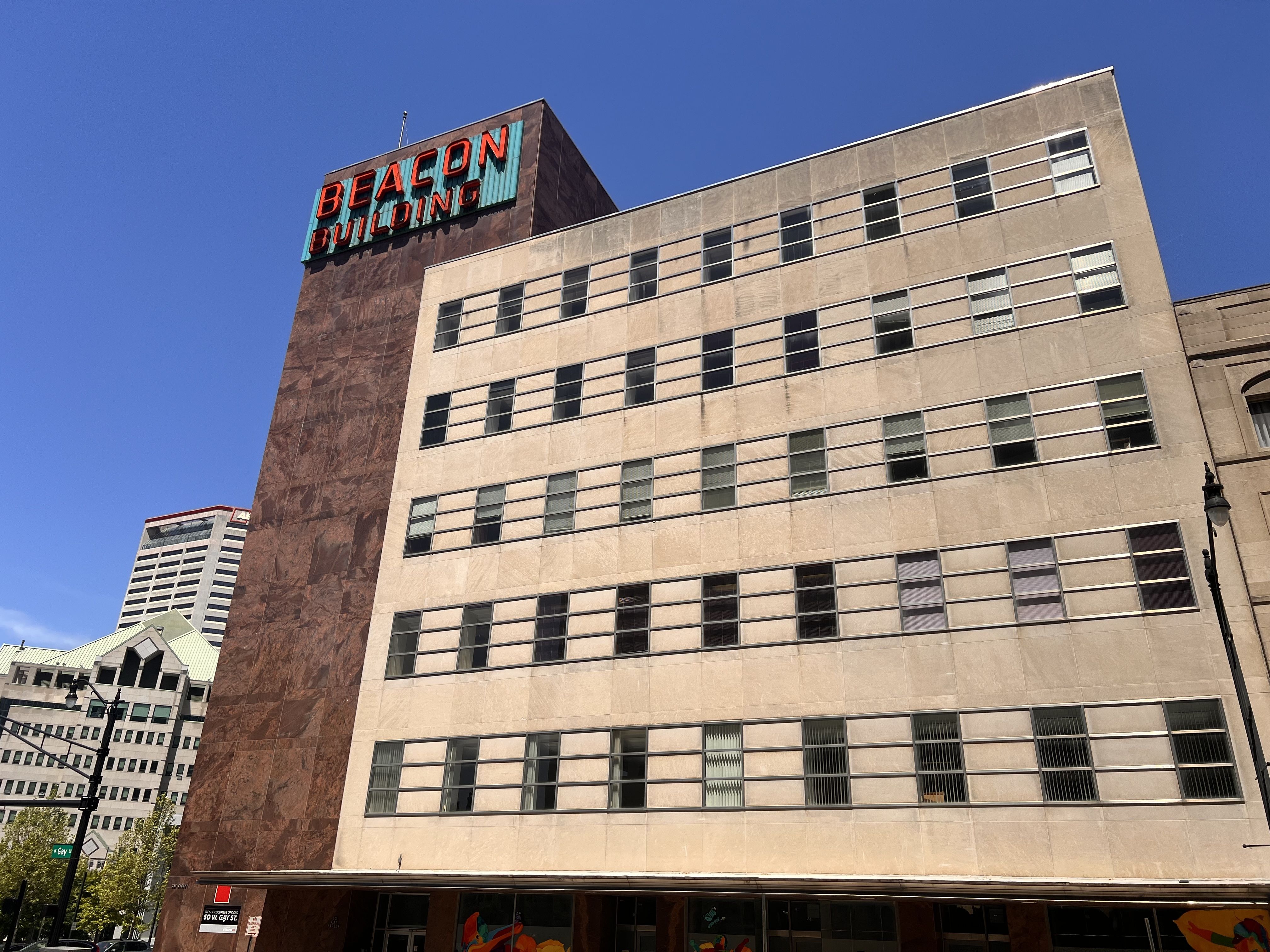
The Beacon Building, 50 W. Gay St.: This mid-century modern office building downtown was designed as the headquarters of Beacon Mutual Indemnity Co. before serving a variety of office uses.
- It's now owned by the city of Columbus, but has sat unused for years.
Fairwood Elementary School, 726 Fairwood Ave.: It opened in 1924 as one of the first purpose-built schools for Black students in Columbus and was designed by Howard Dwight Smith, the same architect who designed Ohio Stadium.
- It is one of four Columbus schools slated for demolition as part of budget cuts.
Courtright School, 1712 Courtright Road: Smith also designed this school that opened in 1927.
- The unique building features a pylon-style entryway with stylized columns and an Egyptian Revival architectural style uncommon to Columbus.
Houses at 147 and 157 Thurman Ave.: These old German Village homes have "been neglected for quite some time" and are abandoned and deteriorating, according to Columbus Landmarks.
- They've been included in multiple redevelopment proposals, but none have taken shape.
871 Carpenter St.: This simple but dilapidated 700-square-foot building is at least 115 years old, and once served as a warehouse for local tradespeople.
- According to Columbus Landmarks, it was built by "prominent local merchant" Theodore Butler.