Why we don't talk about COVID anymore

Add Axios as your preferred source to
see more of our stories on Google.
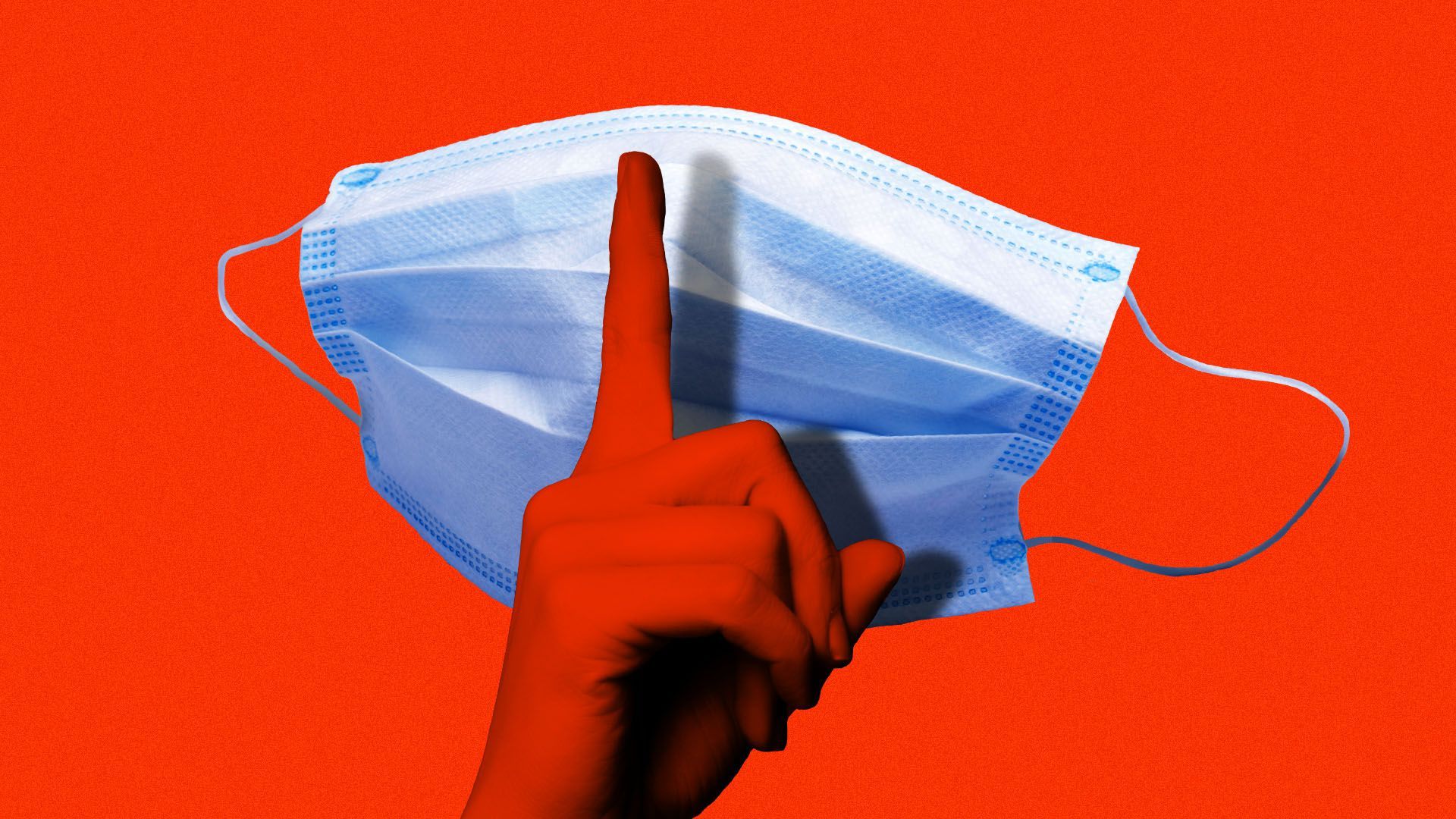
Illustration: Sarah Grillo/Axios
Six years ago this week, COVID-19 dominated daily life. Schools closed, headlines tracked cases, and Ohio reported its first deaths and postponed a primary election.
Why it matters: Today, the pandemic that killed over 1 million Americans and reshaped society has largely faded from public conversation.
- That silence isn't unusual — but it could have real consequences, an Ohio State University public health historian says.
Driving the news: Associate professor Marian Moser Jones and other researchers have interviewed over 120 local and state health officials across the U.S. to document how they navigated the pandemic.
- They hope to create a historical record before memories fade and society moves on.
- "There's almost been a consensus — in a time when we don't have consensus about a lot — that we're going to move on and not talk about this anymore," Moser Jones tells Axios.
What they've found: Many health care workers witnessed traumatic scenes, including patients dying alone, and endured months of fear and uncertainty before vaccines and treatments existed.
- And officials, once praised as heroes, became targets of anger and blame.
- The urge to suppress painful experiences is deeply human, Moser Jones tells Axios.
Flashback: There was a similar desire to move on after the 1918 influenza pandemic, which killed about 675,000 Americans and intertwined with World War I.
- It was also a tense, politicized time full of unrest, misinformation and, yes, mask resistance.
- Ohio-born President Warren G. Harding won in 1920 on a "return to normalcy" campaign, and society shifted focus into the Roaring Twenties.
Case in point: The library's Dispatch archives show references to "Spanish flu" or "Spanish influenza" — the virus' original misleading name — waned by the 1930s and then mostly disappeared for decades.
- In 1964, the newspaper's magazine published a four-page retrospective.
Between the lines: A politicized pandemic is hard to collectively mourn, Moser Jones says. Unlike wars or other tragedies, there are no remembrance days or memorials.
- And by its nature, an endemic virus has no true "end."
Yes, but: Putting the pandemic behind us too quickly makes it hard to assess what worked and what didn't — and whether public health officials are equipped for the next crisis.
The bottom line: "People are going to want to know what happened," Moser Jones says.
- "Pandemics are going to come back, whether we repress our memories or not."
Do you want to talk about COVID?
Though the pandemic isn't a part of everyday conversation anymore, it changed people's lives in ways that still linger.
Tell us what you remember most, six years later.
- What did you learn?
- How did the experience change your life?
- Was it all bad or did any good come of it?
📬 Email [email protected] with your story. We'd love to hear from you.