Food stamp benefits at risk for 1.4 million Ohioans

Add Axios as your preferred source to
see more of our stories on Google.
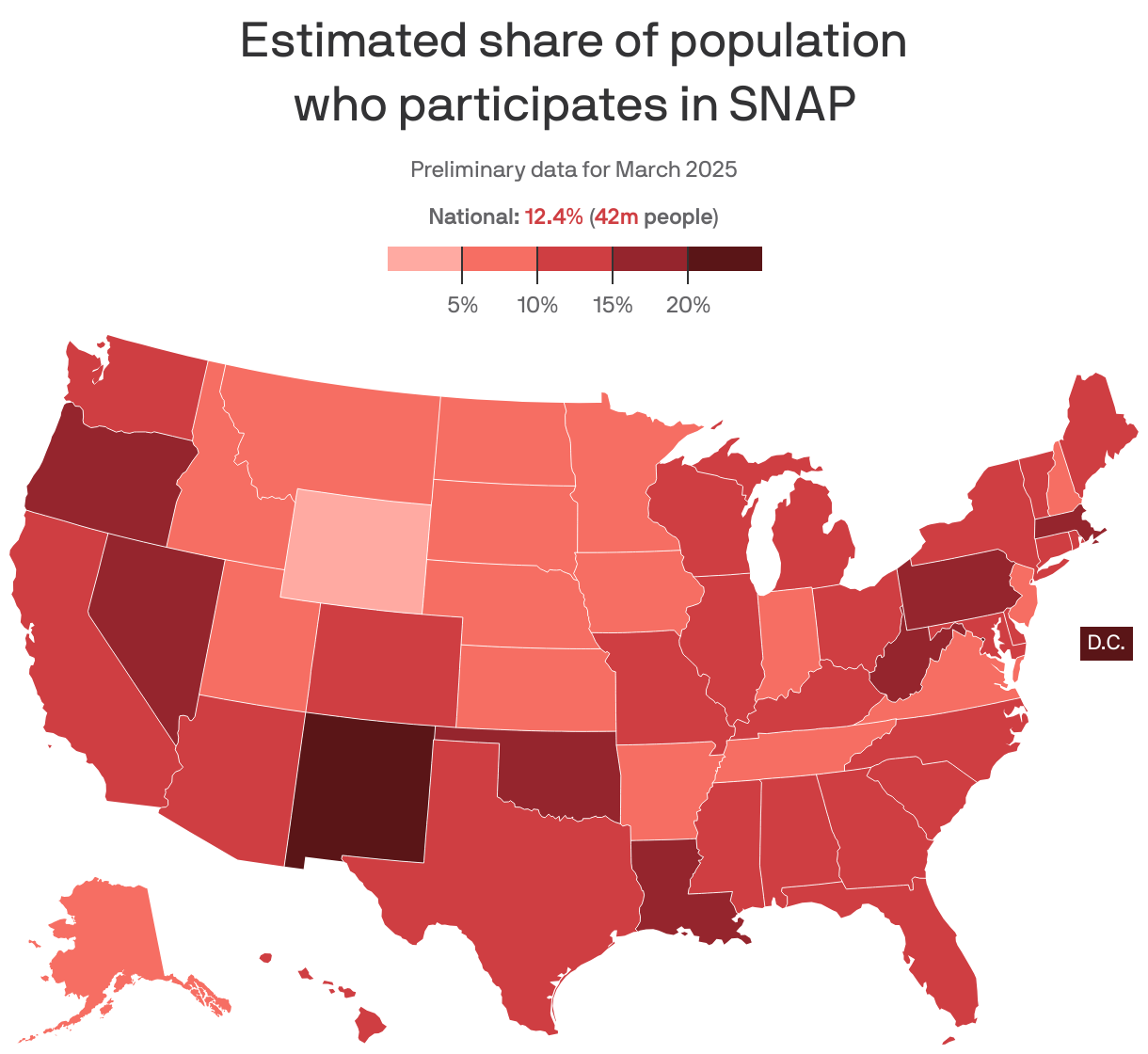
More than 1.4 million Ohioans are at risk of losing federal food aid this weekend if Congress doesn't reach an agreement to end the government shutdown.
Why it matters: Local families are being "put in the center of a political battle" and are scared and angry, Franklin County Job and Family Services spokesperson Bart Logan tells Axios.
- Food pantries are bracing for the increased demand but warn they won't be able to fill the gaps on their own.
Threat level: For every one meal a food bank provides, the Supplemental Nutrition Assistance Program provides nine, per the national Feeding America network, illustrating the crisis that's looming.
The big picture: Funding for SNAP, which serves 42 million Americans, runs out Saturday.
- The timing coincides with SNAP changes from President Trump's Big Beautiful Bill that include increased work requirements and a provision removing benefits from refugees and other noncitizens, also effective Saturday.
Zoom in: In Franklin County, about 180,000 people — including around 4,000 refugees — receive SNAP benefits.
The latest: On Monday, Columbus City Council approved $25,000 for the Grove City-based Mid-Ohio Food Collective, in hopes of inspiring others to help.
- The Columbus Foundation announced Tuesday it will send $500,000 to 21 area pantries.
What they're saying: "Until or unless Congress solves this issue they've created, or some big support comes from the Statehouse, we're going to have to handle this locally," Mid-Ohio Food Collective spokesperson Mike Hochron tells Axios.
- The food bank helps supply more than 600 pantries and other partners in 20 counties.
- Its demand is up 58% since the pandemic's peak, amid higher costs and funding cuts.
Between the lines: State Rep. Latyna Humphrey (D-Columbus) introduced a bill this month to allocate state funds to continuing SNAP and other aid programs, but it hasn't had a hearing.
- The federal government says it won't reimburse states that cover expenses on their own.
The bottom line: "As a community, we're going to have to come to terms with what it looks like when America's biggest defense against hunger goes away," Hochron says.