Joe Burrow injury highlights the dangers of turf toe

Add Axios as your preferred source to
see more of our stories on Google.
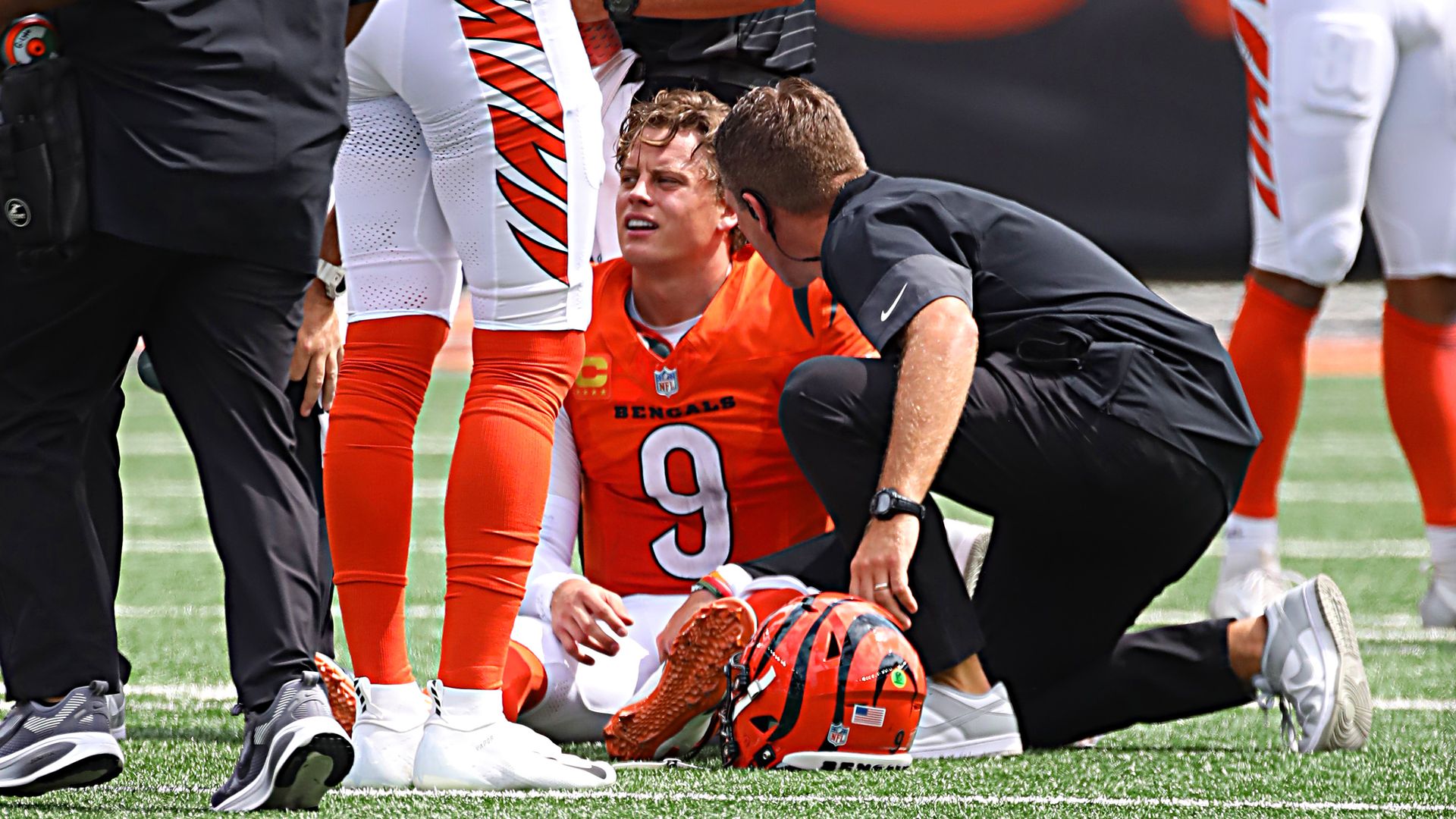
Cincinnati Bengals quarterback Joe Burrow. Photo: Jeff Moreland/Icon Sportswire via Getty Images
A toe injury may sound less severe than a knee or ankle, but orthopedic experts know it can result in serious, long-term issues — and not just for professional athletes.
Why it matters: Such an injury forced the Cincinnati Bengals' $275 million quarterback Joe Burrow off the field Sunday, and he's now expected to miss most of the NFL season after having surgery.
How it works: An injury to the first metatarsophalangeal (MTP) joint of the big toe is colloquially known as "turf toe," largely because it often occurs when athletes strain the toe on a field surface harder than grass.
- Strains can occur when the heel raises and the toe stays planted, stretching or tearing toe ligaments.
- The injury has three grades of severity, and can require surgery in serious cases.
Its longest-lasting complications often come from a lack of immediate treatment.
- If not handled properly, toe injuries can recur.
Threat level: The injury has drastically affected the careers and lives of many players, including three Hall of Famers.
- NFL legend and Colorado University coach Deion Sanders discovered that playing through multiple turf toes meant his foot had been dislocated for nearly 20 years. He wound up needing toes amputated.
- Steelers linebacker Jack Lambert was so determined to play through it that his shoe was fitted with a plaster cast. The toe failed to heal, and he retired at the season's end.
- Electrifying kick returner Devin Hester scored 35 touchdowns between 2006 and 2014, but after injuring his toe in 2015, he never scored again and retired two years later.
Yes, but: Regular people can injure their toes or wear down ligaments over time by walking in flip-flops, tripping or working out.
Case in point: OhioHealth orthopedic surgeon Brian Steginsky specializes in foot issues like turf toe.
- He's seen the injury in athletes and non-athletes alike, and in cases stemming from something as innocuous as a bad step off the pull-up bar.
- Most patients don't need surgery, he tells us, but unaddressed turf toe issues can develop into more problematic conditions like chronic instability, pain, stiffness and even arthritis.
🔎 What they're saying: Turf toe isn't easy to spot, and Steginsky recommends seeing a sports medicine specialist if you're concerned.
- "These are really tricky to diagnose," he says. "It really is important to get to a physician that treats them."
The bottom line: Big toes are important for everybody — and if yours hurts, it's worth taking seriously.
- "It's really important for function and being able to push off of your foot," Steginsky says.