Franklinton fixture Pilot Dogs' new era after 75 years

Add Axios as your preferred source to
see more of our stories on Google.
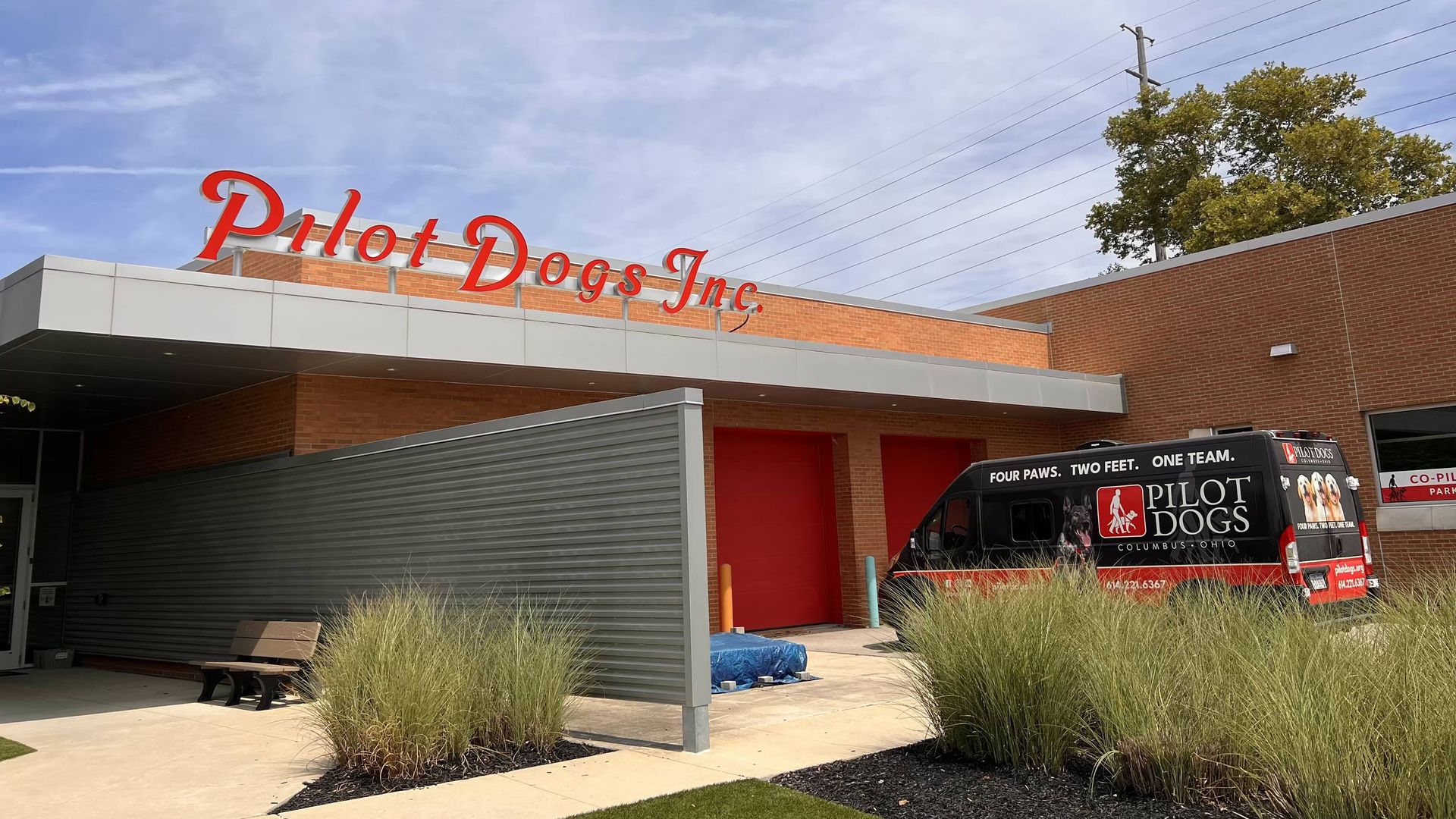
Pilot Dogs makes a national impact from its Franklinton home. Photos: Andrew King/Axios
Pilot Dogs, one of the nation's oldest and most well-regarded service dog trainers, has been in Franklinton for over 70 years and is evolving amid a new era.
Why it matters: Service dogs are crucial for many people with disabilities, but trainers face higher demand than ever, and the pandemic exacerbated an ongoing shortage.
Context: Although "assistance" dog and other terms are used colloquially, the ADA defines "service" dogs as canines "individually trained to do work or perform tasks for an individual with a disability."
- "Support," "therapy," "comfort" or "companion" animals have other purposes and different protections by the state.
- "Guide" dogs — Pilot Dogs' specialty — are service animals trained to help visually impaired people.
Flashback: The nonprofit was chartered in 1950 as the sixth service dog training center in the country, responding to demand from soldiers injured in the World Wars.
- The organization moved to 625 W. Town St. in 1952 and has called Franklinton home ever since.
Today, Pilot Dogs trains service animals for people across the country.
- Those in need — known as "students" — are flown in to stay on campus for about three weeks as they become a "team" with their dog.
- "This is a very unique place in the world of what we do," director of advancement Jason Clayton tells Axios.
Between the lines: More than 100 dogs are on campus at any given time, but only about half will become guide dogs.
- The others, whose temperaments miss the mark or who can't perform certain tasks, are known as "career change" dogs.
- They could work in hospitals, police stations, or with the Columbus Division of Fire.
- A strong prey drive can be useful in a role like bomb-sniffing or fire detection, rather than disqualifying in a service dog capacity.
Case in point: Some go to Nationwide Children's Hospital's Butterfly Paws program, which uses service dogs and therapy dogs.
- "Research shows that just five minutes with a dog can lower cortisol and stress — in a high-stress environment, that affects everyone," Butterfly Paws director Melissa McMillen says.
State of play: Pilot Dogs executive director Jim Alloway, an internationally recognized trainer, took the helm in 2021 after longtime leader Jay Gray retired.
- That change signaled a new era — two years later, Pilot Dogs announced plans for a $15 million expansion that's nearing completion.
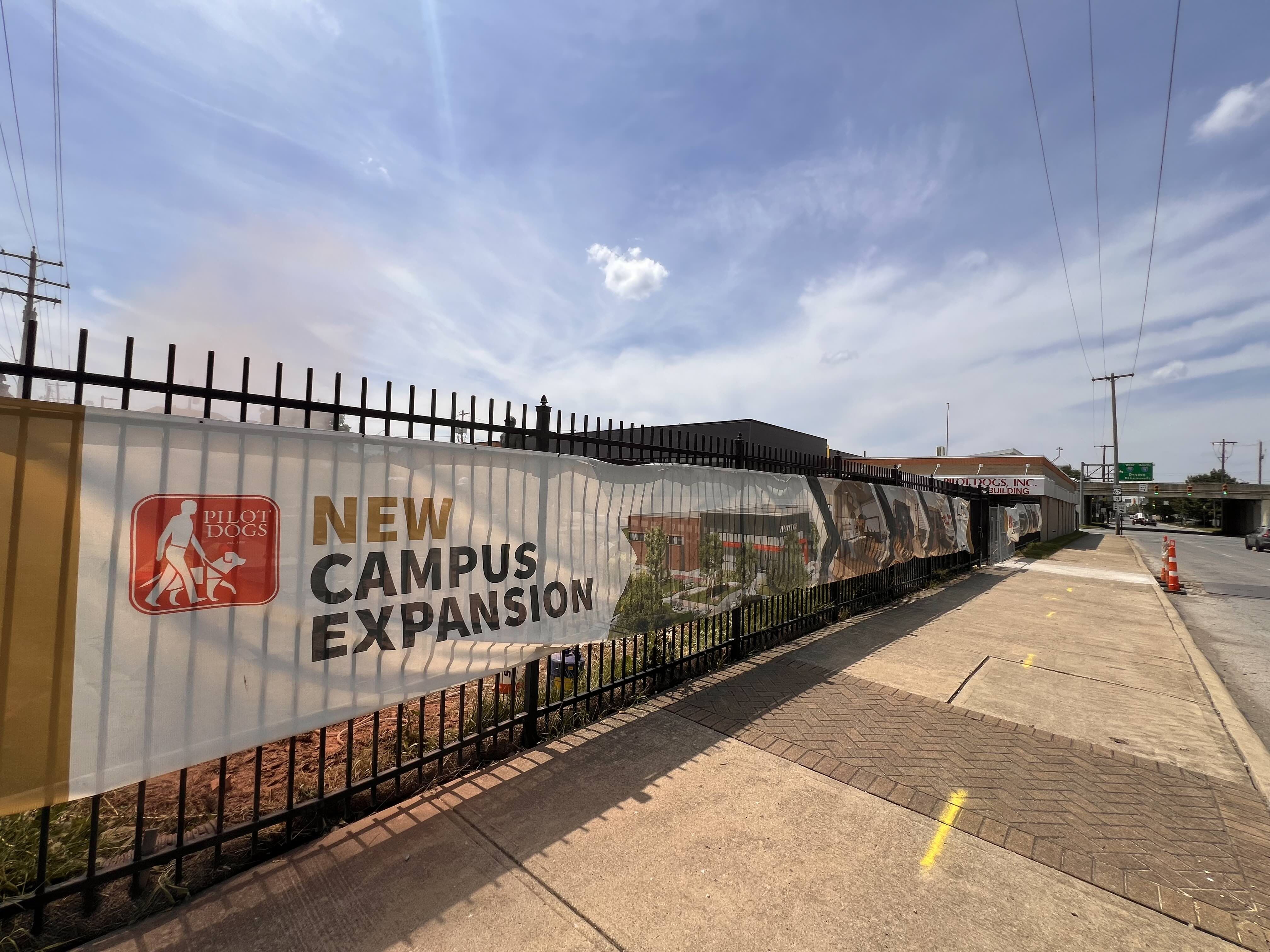
What's next: This also comes with an expansion of scope.
- The nonprofit is working toward providing PTSD-focused dogs, an emerging field with expensive training, and sees increasing demand from people with autism.
What they're saying: "Our mission has always been to help people," Clayton says. "That started with the blind and visually impaired, but really the goal is to leverage the skills of these amazing dogs."
The training process
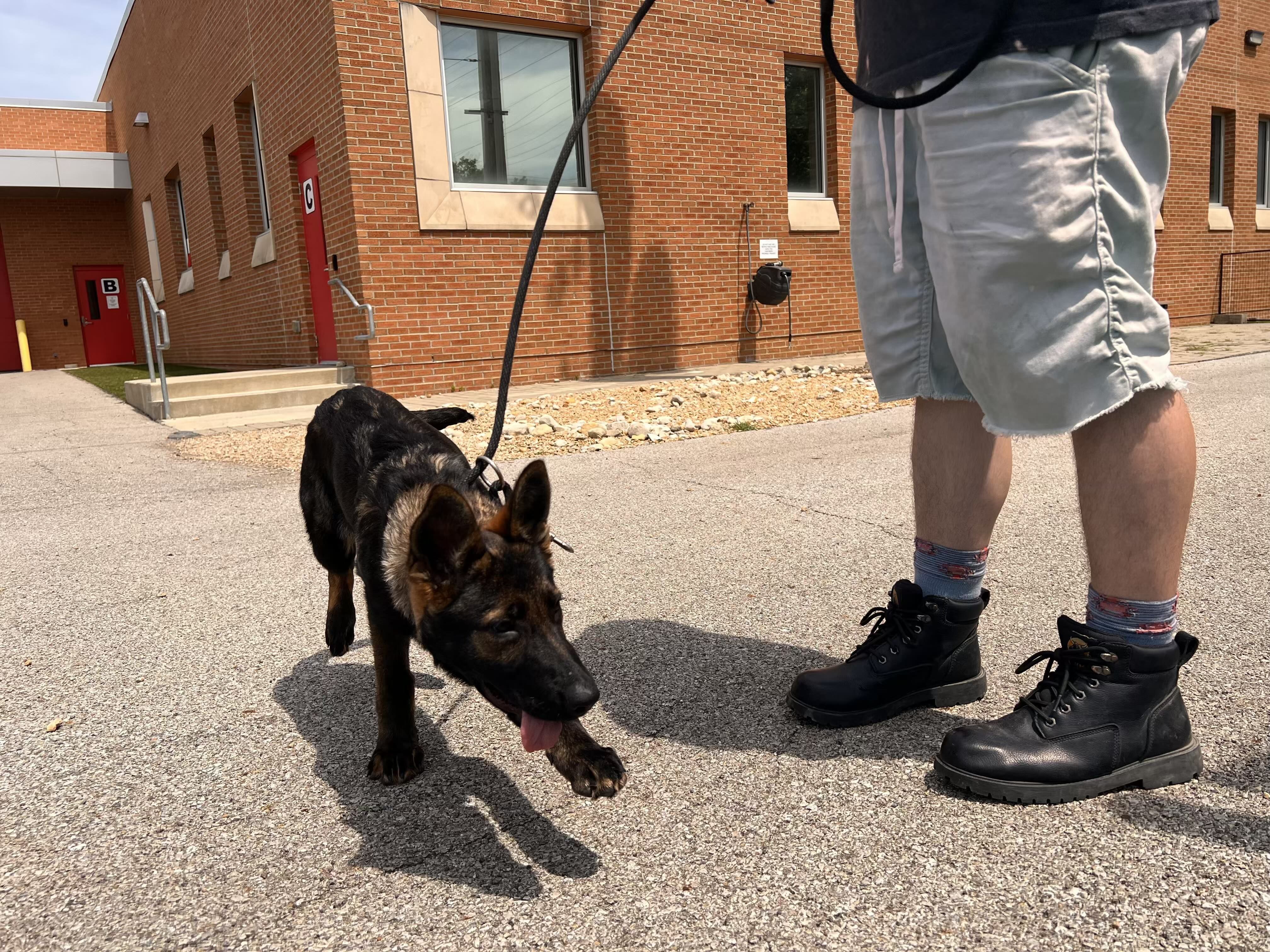
There's a 12- to 18-month wait for Pilot's guide dogs because of the lengthy process of breeding, raising, training and pairing.
How it works: Because of the importance of health and temperament, Pilot breeds most of its own dogs, almost all Labrador mixes.
- Their newest breed focus is the "golden cross," a Lab-golden retriever mix.
- A new breeding and genetics space will come with the expansion.
Puppies live on site for three months, learning the basics and getting socialized, before more intensive training begins.
- From months three to about 18, dogs train during the day and live with volunteers who take them everywhere to maximize exposure and socialization.
Finally, the best of the best enter guide dog training, an intense period of about five months.
- They navigate buses, traffic, doors, escalators and other challenges of city life, making Pilot Dogs' downtown location critical to its success.
The bottom line: When dogs are ready, they spend three weeks living and pairing with a student, doing customized training focused on terrain, obstacles and dangers that they could encounter in that person's life and home.
- "This is really the highest level of service dog," Clayton says.
Yes, but: The process is long for dogs, and even longer for people who train them.
- It takes at least five years to be a trainer, with education, apprenticeships and plenty of kennel cleaning along the way.
- Pilot Dogs has about 30 employees, with plans for around 50 after expansion.
Follow the money: It costs $50,000 to raise a dog, but students don't pay a dime.
- Pilot Dogs pays for nearly its entire operation through donations and fundraising.
- Clayton credits "very, very loyal donors," but admits he was shocked by how little the organization had previously done to seek funding.
- "They've done a really good job of being quiet over here."