
Columbus is piloting a clothing recycling program

Add Axios as your preferred source to
see more of our stories on Google.
Ripped, stained and worn-out clothes usually end up in a landfill. But a new local recycling program could give them a second life as soundproofing foam, furniture filling, or even cushioning inside an eco-friendly coffin.
Why it matters: The pilot is a first for our state, officials say — if all goes well, it could lead to permanent textile recycling sites in Central Ohio.
The big picture: There's growing interest in reducing clothing waste, especially following the rise of fast fashion, but options are still limited in the U.S.
- Unlike bottles or cans, clothes are made from blended materials that are difficult to separate for recycling.
- Over 85% of textiles nationwide end up in landfills or incinerated, which emits harmful greenhouse gases, per EPA estimates from 2018.
Threat level: Textiles made up 4% of all landfill waste in Franklin County, the most recent Solid Waste Authority of Central Ohio (SWACO) study found in 2019.
- That adds up to nearly 100 million pounds per year, SWACO senior programs manager Andrew Booker tells Axios.
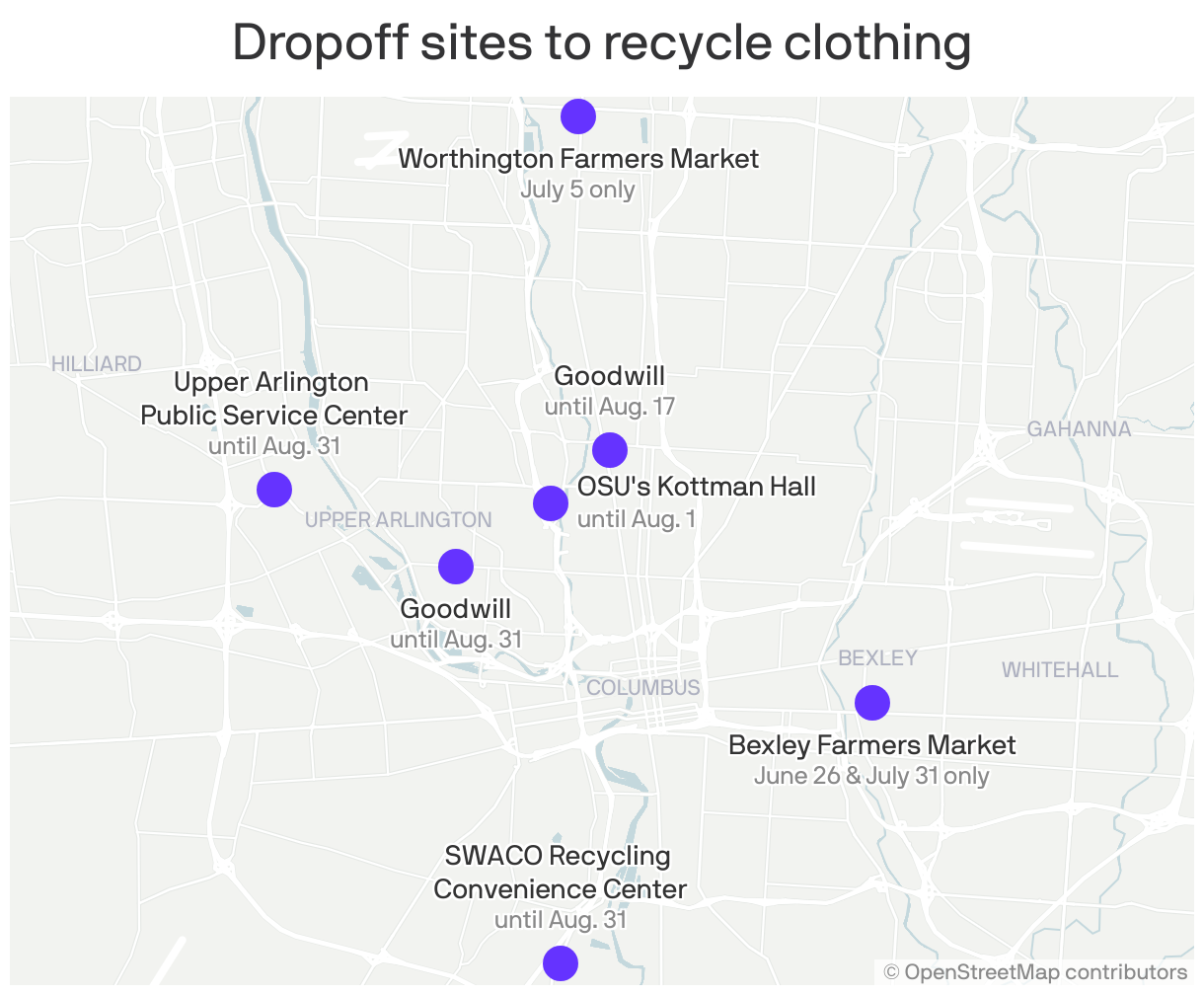
How it works: SWACO is leading the pilot with help from local startup Circular Thrift. Five clothing dropoff sites will be open for three months, and two farmers markets will also collect items on select July dates.
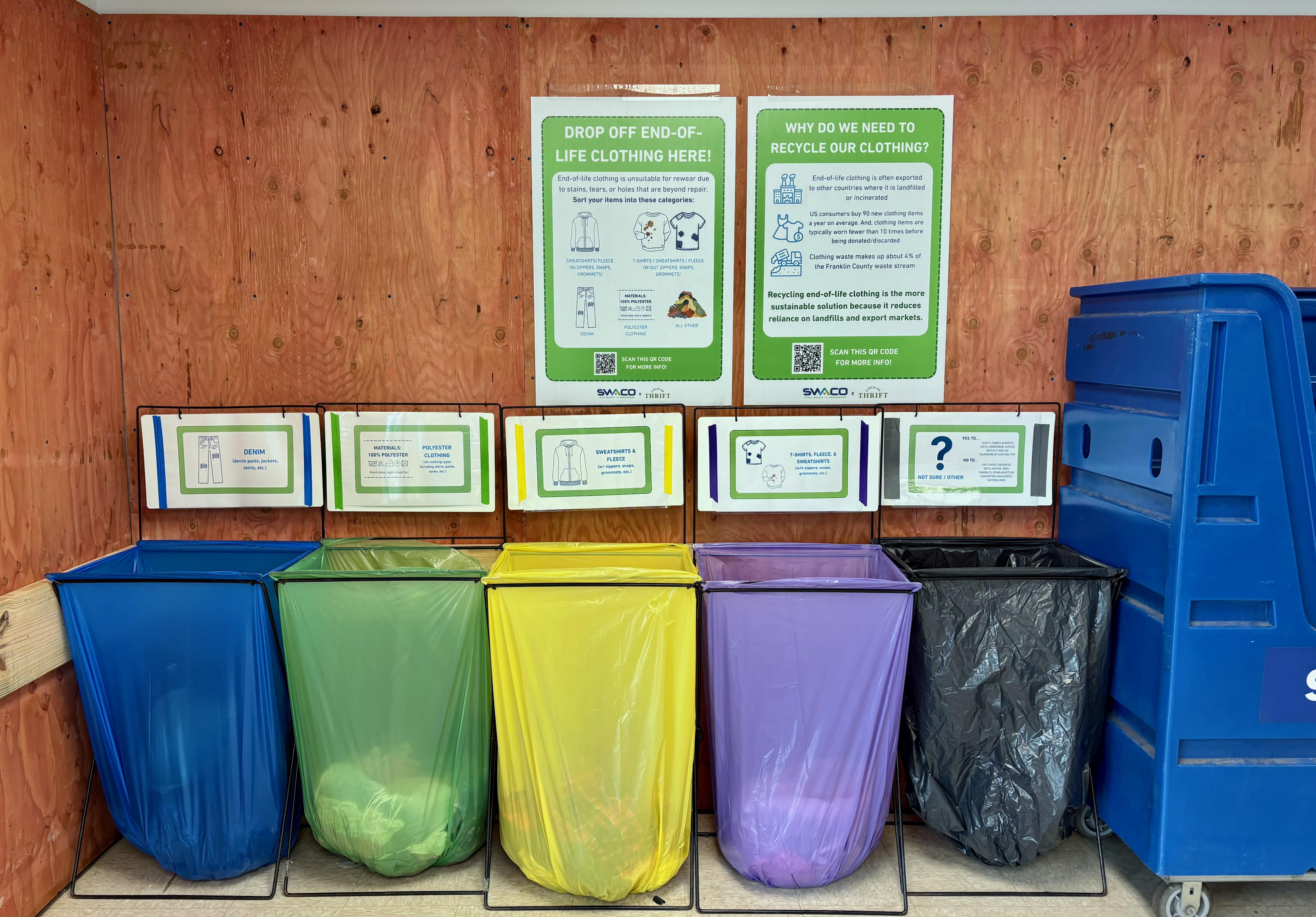
- Donors sort unbagged items by material into four bins.
- They'll then go to Leigh Fibers in South Carolina, the country's largest textile recycling company, which will repurpose them.
Currently, if Goodwill receives clothes that can't be sold or reused, stores must sort and figure out what to do with them.
- Some go to recyclers, but it can be hard to trace where they end up.
- "This provides another outlet, and a really incredible one," Goodwill Columbus spokesperson Katie Muller-Girard tells Axios.
What's next: The program will run through August. SWACO will collect data to determine the feasibility and potential costs of recycling clothes permanently.
The bottom line: "We know it's not a simple solution," Booker says, "but we have to do something."