A Columbus Zoo gorilla expert's take on the "1 gorilla vs. 100 men" debate

Add Axios as your preferred source to
see more of our stories on Google.

Illustration: Lindsey Bailey/Axios
The internet's latest obsession is a wild hypothetical: 100 unarmed men versus one gorilla, who wins?
Why it matters: It probably doesn't, but nothing brings people together like a wacky online debate. So we asked the Columbus Zoo and Aquarium's expert to weigh in.
The big picture: Gorillas live in African rainforests and are the largest primates on Earth. A silverback, a group's dominant male, tops out around 450 pounds.
- But they're "gentle giants," making the scenario of a fight even more unimaginable, zoo vice president of animal care and conservation Jan Ramer tells Axios.
"They'll shove and punch or make a big display if their family is threatened, but we'd do the same," says Ramer, a gorilla keeper for many years who worked in Africa with the Gorilla Doctors conservation group.
Case in point: There has never been a documented instance of a gorilla killing a human.
Reality check: Gorillas don't fight people, they fight for their survival. All four gorilla species are endangered (three critically) due to habitat loss, disease and poaching.
- That means if you decided to challenge one, there would be serious consequences.
Yes, but: The International Union for Conservation of Nature downlisted mountain gorillas from critically endangered to endangered in 2018 due to increasing numbers.
- "That's thanks to the great efforts of over 100 good humans," Ramer says, including the zoo's ongoing support of conservation efforts in Africa.
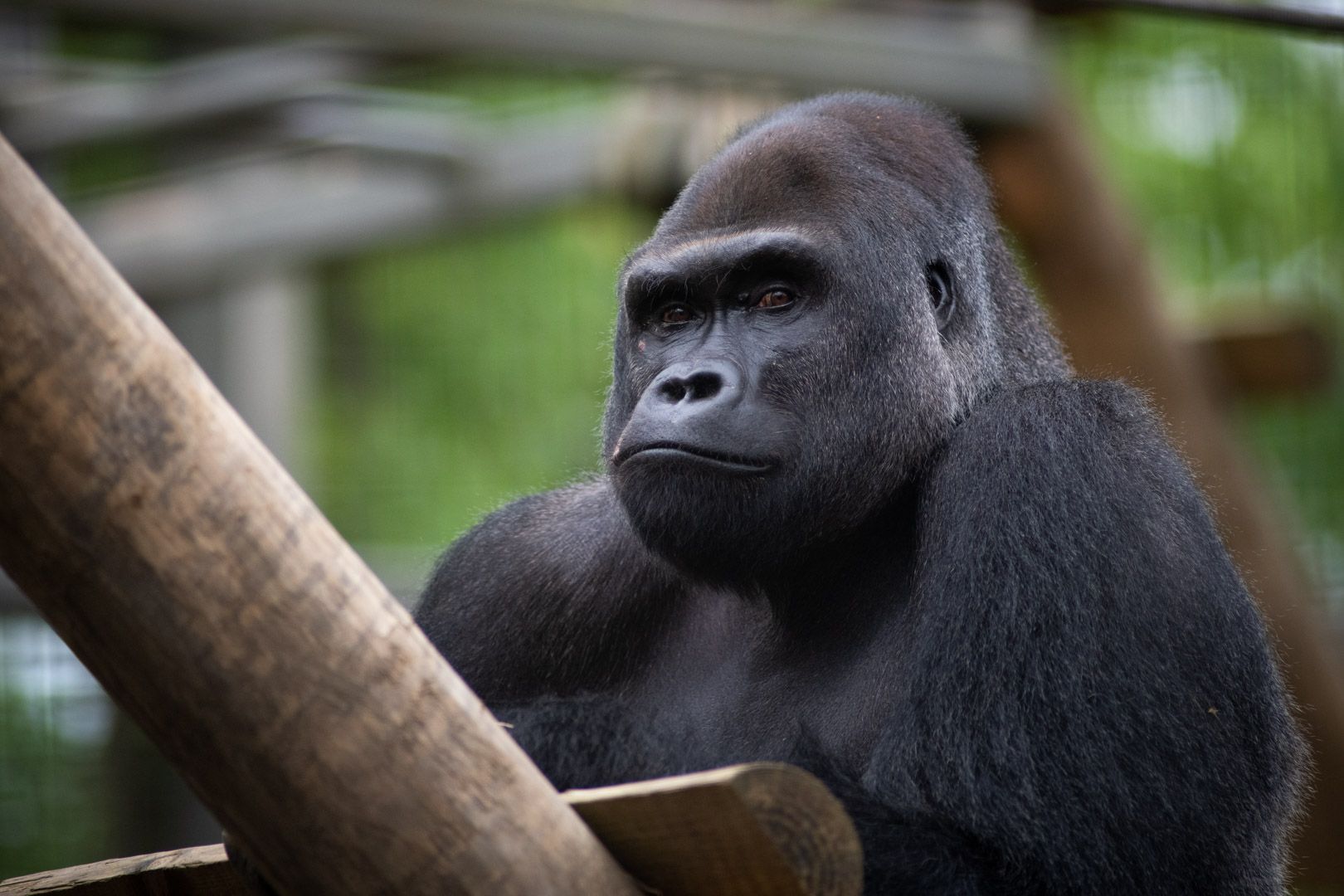
So, back to the original question: Who would win? Well, it depends on the competition.
What they're saying: "If it's a chess match, the human wins. If it's surviving alone in a forest for 10 years, the gorilla wins. If it's tug-of-war, I think the 100 men are probably going to win," Ramer says.
- "Pure strength? One-on-one, the gorilla is going to win, hands down."
- But a gorilla being so outnumbered makes the hypothetical a little more complicated.
The bottom line: "Instead of 100 men versus a gorilla, let's talk about how much 100 men could do to help a gorilla continue to thrive in its natural habitat," Ramer suggests.
Colo's legacy at the Columbus Zoo

The Columbus Zoo has quite a reputation in the zoological world for its gorilla care.
Flashback: The zoo was home to the first gorilla born in captivity, the world-famous Colo, in 1956.
- She was born prematurely at about 4 pounds and spent time in an incubator from a local hospital.
- Keepers hand-raised her "as we would a human baby," per news stories at the time, including dressing her in diapers and clothes and feeding her baby formula. (Today, they prioritize a more natural approach.)
Colo died in 2017 at age 60, after making history again as the oldest gorilla in captivity at the time.
The latest: Today, Colo has a long lineage living in Columbus and zoos across the country: three children, 14 grandchildren, 14 great-grandchildren and four great-great-grandchildren, per zoo records.
- And Columbus has recorded 35 total gorilla births, making it one of the nation's top breeding facilities.